Answering the search intent: these wind turbine power generators offer scalable options for off-grid living, cabins, boats, and homes. The top picks below cover high-capacity systems, compact models for RVs and boats, and educational kits to demonstrate renewable energy concepts. Designed for buyers seeking reliable wind-powered electricity, each product is evaluated for best use-case, installation practicality, and potential limitations.
| Product | Best For | Why Picked |
|---|---|---|
| 3000W Wind Turbine Generator Kit | Homes, Cabins, Terraces | High output and durable three-phase PMG for steady power. |
| VEVOR 12V-500W Wind Turbine | RVs, Boats, Small Homes | MPPT controller and versatile wind range for varied sites. |
| Fablestoryem 14000W Kit | Mid-to-large remote setups | High wattage with versatile voltage options and quiet operation. |
| Tsampa Vertical Axis 20000W | Large energy needs | High capacity vertical design with low wind-start and quiet operation. |
| VEVOR 800W Wind Turbine | Homes, Farms, RVs | Balanced size, MPPT control, low-start wind. |
3000W Wind Turbine Generator Kit
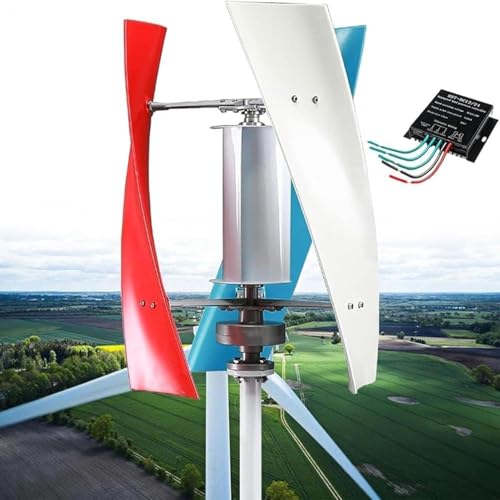
Category: Vertical Axis with three-phase AC PMG. Start wind speed is 2 m/s; rated wind speed is 10 m/s, with a maximum wind rating up to 45 m/s. The kit uses FRP blades with aerodynamic spirals for quiet, smooth rotor operation. Best for buyers needing a robust, high-capacity system for homes or cabins where wind is consistently available.
Who it’s best for: homeowners or remote cabins seeking high output and long service life. Why selected: the design aims to maximize wind energy capture and provide stable annual generation with low start torque and vibration.
Caution: data notes a maximum wind rating; install in a location with secure mounting and wind exposure to prevent damage during extreme storms.
VEVOR 12V-500W Wind Turbine Kit

Key features: 12V three-phase AC permanent magnet generator with MPPT controller. Start-up wind speed at 2.5 m/s and rated wind speed at 12 m/s. Operating range 3-25 m/s, designed to maximize energy capture in moderate wind sites and deliver efficient power to various circuits.
Best for: small homes, RVs, boats, or farm outbuildings where space is limited but consistent wind is available. Why selected: compact, efficient, and adaptable to a broad range of small-scale applications.
Limitation: tower or pole mounting and system integration are required; the kit does not include a tower.
Thames & Kosmos Wind Power V5.0 STEM Kit

Educational kit to build a 3-foot-tall wind turbine model. Optimized for indoor and outdoor use, it teaches renewable energy concepts through hands-on exploration. Best for students, classrooms, and hobbyists who want a tangible demonstration of wind energy technology.
Best for: educational settings and curious learners. Why selected: provides a practical, visual understanding of turbine components and energy conversion without needing to install a full-scale system.
Limitation: not designed to power household loads directly; use for demonstration or small-scale experiments.
Fablestoryem 14000W Wind Turbine Kit
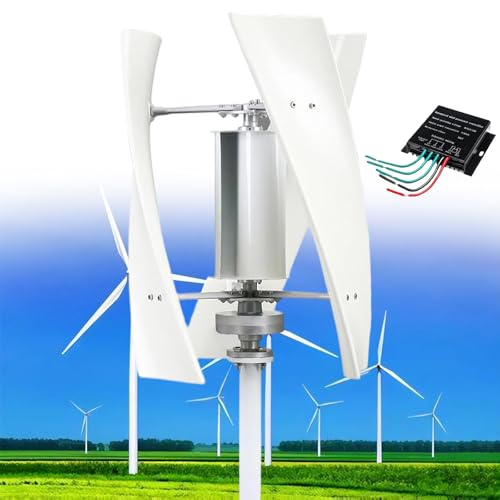
Vertical turbine with reinforced nylon blades and aerodynamic design. Works across wind directions with no yaw system, starting at about 2 m/s. Provides a broad voltage range (12V/24V/48V/110V/220V) and is suitable for home energy sourcing, especially where higher energy demands exist.
Best for: larger off-grid installations or homeowners seeking significant wind power. Why selected: high capacity and multi-voltage options enable flexible integration into different electrical setups.
Caution: may require more complex installation and electrical safety consideration due to higher output levels.
VEVOR 800W Wind Turbine Generator

800W system with 2.5 m/s startup speed, MPPT controller, and a 12V three-phase generator. The design emphasizes quiet operation (about 58 dB) and a durable build with weather-resistant housing. Suitable for home, farm, RVs, and boats where moderate wind is common.
Best for: users needing an approachable, mid-size wind solution. Why selected: balance of energy output, noise control, and durability in varied environmental conditions.
Limitation: tower pole is not included; installation requires separate mounting components.
Buying Guide: Key Considerations For Wind Turbine Generators
- Power needs: Match turbine capacity to daily energy consumption. Higher wattage suits larger homes or several devices; smaller kits fit RVs or sheds.
- Wind resource: Assess average wind speed at your site. Start-up speeds and rated winds determine how often the turbine generates meaningful power.
- Voltage and compatibility: Ensure the turbine’s voltage output matches your battery bank or inverter. MPPT controllers optimize charging in variable winds.
- Maintenance and durability: Look for reinforced blades, corrosion-resistant housings, and robust bearings to minimize downtime in harsh weather.
- Installation: Consider mounting hardware, tower/pole requirements, and wiring. Some kits assume outdoor mounting; others need indoor accommodations.
- Noise and aesthetics: Vertical axis models tend to produce less noise in residential settings. Consider neighborhood impact and visual fit with property.
- Safety and safety equipment: Ensure over-load protections, lightning protection, and proper grounding for reliable operation and safety during storms.
FAQ
- What wind speed is needed to start generating power?
Most turbines start around 2–2.5 m/s, but actual output depends on blade design and controller settings. - Do I need a tower for all these turbines?
Some models include integrated mounting options, while others require a separate tower or pole. - Can these systems run directly to household appliances?
Typically no; most require a battery bank and inverter to supply AC power safely. - Are vertical axis turbines quieter than horizontal ones?
In many cases yes, vertical designs produce less noise and are suited for residential areas. - What maintenance is needed for wind turbines?
Regular inspections, bearing lubrication, blade checks, and wiring audits help prevent failures.
MPPT continuously adjusts the electrical load to maximize power output as wind varies.