Yes, you can power small devices and learn energy conversion with compact wind turbine motors. This guide highlights five practical wind turbine motor generators ideal for DIY projects, education, and experiments. They’re best for students, hobbyists, makers, and educators who want hands-on learning about turbine-driven electricity generation. The list emphasizes clear use cases, limitations, and how each model stacks up for different wind setups and voltages.
| Product | Best For | Key Strength | Notes |
|---|---|---|---|
| QINIZX Small Wind Turbine Generator | Tinkerers & Teens (non-natural-wind setups) | High blade count and adjustable output | Requires fan/blower for best results; not a toy |
| RIYIN DC Motor Wind Turbine Generator | School projects & makers on a budget | Compact, versatile wind-to-power module | Small scale; suitable for DIY experiments |
| VEVOR 500W Wind Turbine Generator | Home, farm, RV, boats requiring more power | High efficiency with MPPT and 12V generator | Larger system; includes MPPT controller |
| EUDAX Mini Generator Motors (Set) | Educational kits & classroom demos | Multiple voltages with LED lighting options | Multi-piece beginner kit; includes motor mounts |
| Sntieecr 6 Set Mini Generator Motors | Hands-on physics experiments | Six motors with various propeller configurations | Colorful set; geared for modular builds |
QINIZX Small Wind Turbine Generator

Best for education and hands-on experimentation in types of wind power. This kit uses a 280 DC motor with a 17.5 cm blade diameter and 11 blades for enhanced wind capture. It is best driven by a fan or blower at a right angle rather than relying on natural wind alone, and it demonstrates how wind energy becomes electrical energy. The featured motor supports 0–36V, with higher output at higher wind speeds. Users should note that small natural wind may not light LEDs without sufficient air flow. It’s suitable for teens and adults; keep away from younger children due to its non-toy design.
- Best for: classroom demos, teen science projects, and DIY wind experiments that require visible power generation.
- Limitations: Natural wind alone may not produce noticeable output; risk of underpowering LEDs at low wind.
- Bottom line: Choose this if you want an interactive wind-to-electricity demonstration with adjustable blade performance.
RIYIN DC Motor Wind Turbine Generator

This unit is compact and intended for DIY energy projects and experiments. It generates DC power and is designed to pair with wind turbines or other wind-driven setups. It’s versatile for students and hobbyists exploring different wind speeds and integration with custom power generation systems. The metal housing can add durability for lab or classroom use, though it’s best used where wind sources are controllable or simulated.
- Best for: affordable, adjustable wind energy experiments and small DIY builds.
- Limitation: Primary use is experimental power generation; real-world wind performance depends on airflow.
- Bottom line: Choose this if you want a straightforward wind-to-DC power module for demonstrations or small projects.
VEVOR 500W Wind Turbine Generator

Best for higher power needs in homes, farms, RVs, and boats. The 500W wind turbine uses a 12V three-phase AC permanent magnet synchronous generator and features an MPPT controller to optimize power output across varying wind speeds. It operates quietly (approximately 55 dB) and supports a wide wind speed range from 2.5 m/s startup to higher speeds. This model is best for practical wind power installations with a stable electrical system and proper mounting.
- Best for: off-grid or hybrid setups needing reliable wind energy with adaptive control.
- Limitation: Higher upfront size and complexity; requires appropriate mounting and electrical integration.
- Bottom line: Choose this if you want a robust, more powerful wind turbine solution with MPPT control.
Small Wind Turbine Generator 36W 40W (BUBUQD)
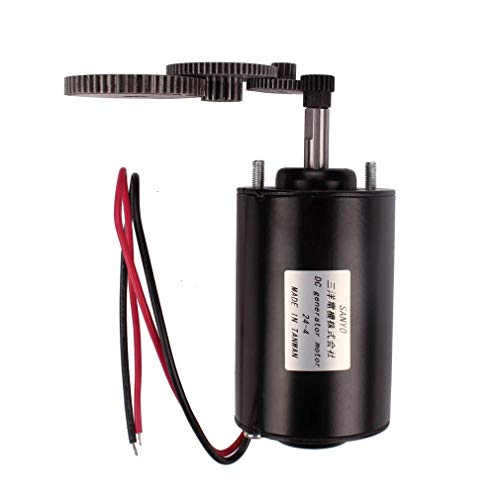
Best for compact projects needing low-power outputs, educational demonstrations, and simple wind-to-electricity experiments. This device emphasizes low power consumption with large torque and low noise in a small form factor. It’s well-suited for small electric machines, models, and basic wind-powered experiments, but may require careful load management to prevent overloading the motor during higher wind.
- Best for: small-scale demonstrations and multi-purpose wind power experiments.
- Limitation: Limited power output; not ideal for higher-demand applications.
- Bottom line: Choose this for compact, quiet demonstrations and educational kits.
EUDAX Mini Generator Motors Set (Plastic Holder)

Best for classroom kits and beginner projects. This set includes six mini DC motors with mounting brackets and propellers for wind-turbine demonstrations. It supports multiple voltages (3V, 4.5V, 12V) and speeds, enabling students to observe how voltage relates to rotational speed. It’s a practical, affordable option for hands-on physics lessons and STEM activities.
- Best for: STEM classrooms and home learning with repeatable experiments.
- Limitation: Requires careful assembly and power sources to reproduce expected outputs.
- Bottom line: Choose this if you need a modular, educational wind power kit for demonstrations and experiments.
Sntieecr 6 Set Mini Generator Motors
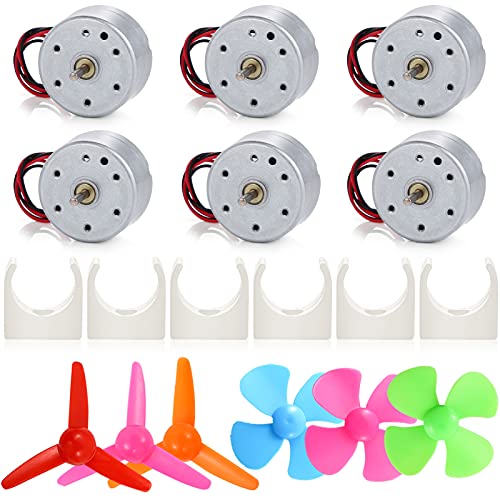
Best for physics experiments and modular wind-turbine builds. This six-pack includes varied propellers and motor configurations designed to illustrate energy conversion. It’s suitable for demonstrations and projects where different vane counts or motor responses are explored. The kit emphasizes a two-way energy concept: motion can generate electricity and electricity can drive motion through the motor’s bearing.
- Best for: multi-configuration experiments and class-wide activities.
- Limitation: Color variations and small parts may require careful handling in classroom settings.
- Bottom line: Choose this for diverse wind-energy experiments and modular learning kits.
Buying Guide: Wind Turbine Motor Generators
What should I consider when choosing a wind turbine motor generator?
Size, voltage range, and wind source are primary. For experiments with natural wind, look for units designed to operate at moderate wind speeds. For controlled demonstrations, consider compact modules that work well with fans or blowers. If you need more power for home or off-grid applications, prioritize MPPT control, higher wattage, and robust mounting.
What kind of wind source will I use?
Natural wind varies by location and weather. If you’re indoors or in light wind environments, a fan or blower setup helps achieve consistent output. Outdoor setups require sturdy mounting and weather protection.
What voltages and safety considerations matter?
Voltage ranges vary by motor design. Ensure your load matches the generator’s output and include protection for overvoltage and short circuits. Keep electrical connections secure and, when in doubt, consult a qualified technician for higher wattage systems.
Are these suitable for education or hobbyists?
Yes. Each product is suitable for hands-on learning, classroom demonstrations, or simple DIY projects. Kits with multiple voltages or configurable blades allow exploring how design changes affect output and efficiency.
How do I compare products effectively?
Look at: power rating, wind startup speed, compatibility with load types, mounting options, and included accessories (propellers, brackets, connectors). Favor models with clear documentation and safe, modular components for repeated experiments.
What are common limitations to expect?
Small wind power systems may struggle in calm conditions and produce inconsistent outputs. High-wattage systems require proper installation and electrical integration. Always consider the intended use, whether educational demonstrations or off-grid power generation.
FAQ
- Can these generators run on natural wind alone? Some units require higher wind speeds or a directed airflow (fan/blower) to produce noticeable output. Check each product’s notes for wind requirements.
- Is MPPT necessary for educational kits? MPPT optimizes output under varying wind, but many classroom kits work well without it for demonstrations and experiments.
- What voltages can these motors generate? Voltages vary by model; examples include 3V, 4.5V, 12V, and higher, depending on wind speed and rotor design.
- Are these suitable for real off-grid power? Larger models like the VEVOR turbine are designed for practical setups, while smaller kits are primarily educational or for hobby projects.
- Do these kits include safety features? Some kits emphasize safe operation with clear handling instructions; always ensure proper insulation and protective gear during experiments.
- Which kit is best for a classroom? Multi-motor sets (like Sntieecr or EUDAX) provide diverse configurations ideal for group demonstrations and student-led projects.