When selecting a wind turbine grid-tie inverter, look for units that deliver clean sine-wave output, MPPT efficiency, and protection features tailored to wind-dominant setups. This guide highlights five practical options for residential wind-to-grid integration, from compact 300–1000W models to larger grid-ready kits. Best for small- to mid-size wind projects, these inverters help maximize energy capture, maintain grid compatibility, and provide safe operation in variable wind conditions.
| Product | Brand | Key Features |
|---|---|---|
| Y&H 2000W Grid Tie Inverter Power Limiter LCD Display | Y&H | DC input 45–90V, limiter sensor, MPPT up to 99%, compatible with 240V grid, stackable units |
| Solinba 300w Grid Tie Inverter for Wind Turbine | Solinba | 110V DC to AC, pure sine wave, connects directly to home grid, simple installation |
| Marsrock 1000W Wind Grid Tie Inverter with Limiter | Marsrock | Limiter sensor, MPPT, pure sine wave output |
| Y&H 1200W Grid Tie Inverter Power Limiter LCD | Y&H | DC input 55–90V, limiter sensor, MPPT display, compatible with 48V/60V batteries |
| TINGEN 1200W Grid Tie Inverter with LCD | 55–90V solar input, 48V battery option, MPPT above 99%, multiple operating modes |
Y&H 2000W Grid Tie Inverter Power Limiter

The Y&H 2000W grid-tie inverter accepts a DC input of 45–90V (startup at about 49V) and delivers AC output aligned to American 240V grids. It supports a solar input power of 1000W or more and can be paired with panels of similar specifications. An integrated MPPT controller provides efficiency up to 99%, and multiple inverters can be stacked to increase total power. Best for mid-size PV-and-wind hybrid setups that require scalable power output and robust grid synchronization.
Best for homeowners who want a high-capacity, expandable solution that can work with a 240V grid and higher-widelity MPPT performance. Limitations include the need for compatible input voltage range and potential breaker requirements when battery power is used.
Solinba 300W Grid Tie Inverter for Wind Turbine

The Solinba WGT3-12V-US converts 12V DC from a wind turbine to 110V AC pure sine wave suitable for connection to a home grid. It monitors voltage, frequency, and phase to ensure compatibility with the grid, and it supports straightforward plug-and-play installation. Best for small wind setups and beginners seeking a simple grid-tie solution for 110V households.
Trade-off: limited power output means it’s best for modest wind resources or supplemental generation. Avoid for larger turbines or higher-energy homes where more juice is needed.
Marsrock 1000W Wind Grid Tie Inverter

The Marsrock unit includes a limiter to match output with the load, uses MPPT to optimize harvest, and delivers a pure sine-wave output. It suits mid-range wind installations with battery or direct-grid configurations. Best for homeowners who need a protective limiter and efficient power conversion for wind-generated energy.
Limitation: data notes focus on core features; ensure proper protection devices are in place when battery discharge mode is active and verify compatibility with local grid rules.
Solar Micro Grid Tie Inverter by MHBXYZ

Designed as a micro grid tie solution, this inverter incorporates an LCD display for monitoring voltage, power, frequency, and current. It emphasizes aluminum construction for durability and offers high efficiency with MPPT to maximize panel output. Best for compact wind-plus-solar microgrids where real-time monitoring is valuable.
Limitation: primarily a micro-grid option; verify size and output to match wind-turbine specifications and local interconnection rules.
Y&H 1000W Grid Tie Inverter Power Limiter
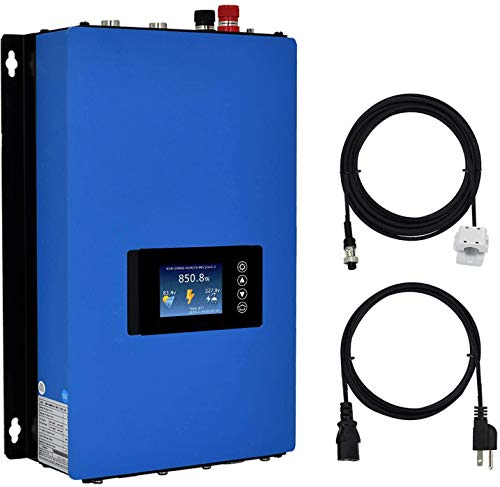
This 22–60V input inverter includes a limiter sensor to deliver only the power required by the load, with recommended 200W minimum panel power and a 38–60V open-circuit voltage. It uses MPPT technology with up to 99% efficiency and a peak conversion rate around 80%. Best for smaller wind systems connected to a battery-ready 36V/48V bank, but ensure battery charging and wiring distances comply with guidelines.
Limitation: open-circuit voltage and panel-matching requirements may constrain panel choices; plan for proper cable runs and protection devices.
Y&H 1200W Grid Tie Inverter with LCD

Equipped with a limiter sensor and an LCD that shows inverter status, this unit supports MPPT with a wide input range of 76–90V for the panel and controls for PV or battery modes. Best for homeowners needing a solid mid-range grid-tie option with clear operation status. It’s important to verify battery compatibility if you plan to run in battery mode.
Limitation: requires careful configuration to ensure the MPPT range aligns with your solar panel array and wind-turbine output.
TINGEN 1200W Grid Tie Inverter with LCD
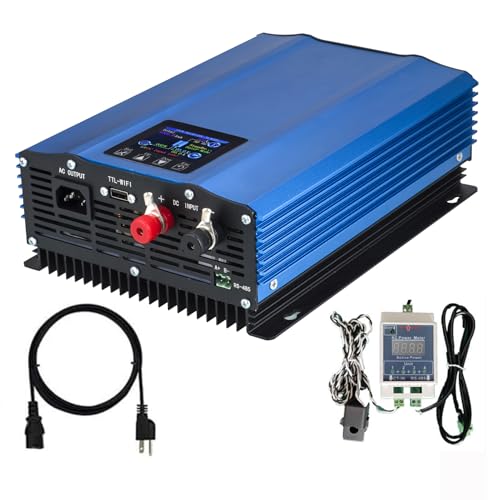
TINGEN’s 1200W model features an LCD display, 55–90V solar input, 48V battery compatibility, and an AC output of 90–140V. It includes four modes (PV, PV limiter, battery, battery limiter) to tailor operation for wind-plus-battery systems. Best for users needing flexible operating modes and clear feedback on grid status.
Tip: with multiple modes, ensure proper switching logic and safety interlocks for seamless wind-to-grid operation.
Buying Guide: Wind Turbine Grid Tie Inverter Essentials
- System voltage and compatibility: Match inverter input voltage ranges to your wind-turbine DC output and any battery bank you plan to use. Check open-circuit voltage limits with your panels or turbine.
- MPPT efficiency and power handling: Higher MPPT efficiency means more energy captured, especially in variable wind. Consider whether the unit supports stacking or merging multiple inverters for higher total output.
- Limiter and protection features: A limiter sensor helps prevent overloading the grid or battery, while circuit breakers and protective interlocks enhance safety in wind-dominant systems.
- Grid compatibility: Ensure the inverter’s output phase, frequency, and voltage align with your local grid requirements (e.g., 120/240V split in the US).
- Monitoring capabilities: LCD displays and data monitoring help you track voltage, frequency, and current, aiding maintenance and optimization.
- Durability and installation: Look for aluminum or robust casings, ease of mounting, and clear wiring guidelines for outdoor or semi-outdoor installations.
- Scalability: If you anticipate growing your wind capacity, choose models that allow stacking, parallel operation, or modular expansion.
- Battery readiness: If you plan to use a battery bank, verify supported voltages (e.g., 36V, 48V, 60V) and protection requirements for safe operation.
FAQ
- Do wind turbine grid tie inverters require batteries? Some models support battery operation for discharge control, while others are grid-only. Check each unit’s battery support and safety requirements.
- What MPPT range should I look for? Aim for MPPT efficiency near or above 99% and a wide MPPT voltage range that matches your turbine’s DC output and panel array.
- Can I connect multiple inverters to increase output? Yes, several models are stackable or support parallel operation, but follow manufacturer guidance and local electrical codes.
- What safety features are essential? Look for limiter sensors, circuit breakers, proper grounding, and protection against overvoltage, short circuits, and grid faults.
- How do I know which inverter is best for my wind site? Consider wind resource, turbine voltage, battery plans, and whether you prioritize monitoring visibility or maximum scalability.
- Are these inverters compatible with 240V US grids? Some models target 240V grid output or compatible configurations; verify grid voltage requirements before installation.