Discover a curated look at practical wind generator tower kits and STEM-friendly wind turbine projects. This guide highlights five standout options, explaining how each kit supports learning about wind power, turbine design, and electrical generation. Whether for classrooms, makerspaces, or home experimentation, these kits demonstrate how blade design, hub geometry, and tower height influence performance in indoor and outdoor settings.
The following quick-reference table summarizes the featured products, emphasizing purpose, notable strengths, and typical use scenarios. Use it to compare at a glance before diving into detailed sections.
| Product | Brand | Power Focus | ||
|---|---|---|---|---|
| Wind Power V5.0 STEM Experiment Kit | Thames & Kosmos | Education, 3 ft model turbine | Indoor & Outdoor | Updated blade hub and gear ratio |
| Wind Power V4.0 STEM Experiment Kit | Thames & Kosmos | Electricity generation, 3 ft turbine | Outdoor ready | Single-piece blade construction |
| Nextake Wind Turbine Model | NEXTAKE | Wind-up rotatable blades | Educational STEM | Wind-up design, tall tower |
| VEVOR 500W Wind Turbine | VEVOR | 500W high-efficiency output | Home, farm, RVs | MPPT controller, adjustable windward direction |
| OSKOPWRC 800W Wind Turbine | OSKOPWRC | 800W robust power | Home, off-grid | 6 blades, low start-up wind |
Thames & Kosmos Wind Power V5.0 STEM Kit

The Fifth-Generation Thames & Kosmos Wind Power V5.0 kit updates a popular wind-energy STEM program. The project guides users to assemble a three-foot-tall wind turbine, then explore clean energy concepts through hands-on testing. Indoor and outdoor usability is enhanced by a redesigned blade hub and adjusted gear ratio, which can influence performance when wind conditions vary or when using a fan for indoor demonstrations. The kit emphasizes learning about turbine technology, historical context, and contemporary uses of wind power.
Key features emphasize practical assembly, experimentation, and exploration of wind energy principles. Students and hobbyists can observe how blade geometry, gearing, and load affect electricity generation, battery charging, and overall system efficiency. The hands-on nature of the kit supports inquiry-based learning and real-world context for renewable energy studies.
Thames & Kosmos Wind Power V4.0 STEM Kit
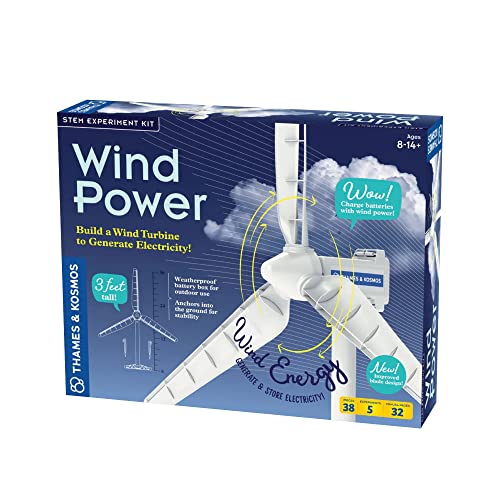
The V4.0 kit allows builders to construct a three-foot-tall wind turbine designed to generate electricity and power a small model car. It features durable, single-piece blade construction to enhance aerodynamics and resilience in varied wind setups. This kit emphasizes practical electricity generation, enabling students to observe how wind energy translates into stored or used electrical power and to compare performance under different wind conditions or turbine configurations.
Designed for education and exploration, the V4.0 kit helps learners connect wind science concepts with real-world energy needs. It supports inquiry into the relationships among blade shape, tower height, and electrical output while providing a tangible example of renewable energy in action.
NEXTAKE Wind Turbine Model

The NEXTAKE Wind Turbine Model offers a large, tall tower design with wind-up rotatable blades. It provides an engaging way to study wind-driven generation without reliance on remote weather conditions. The kit emphasizes mechanical-to-electrical energy transfer and can be a compelling classroom or home project for demonstrating fundamental wind energy concepts. Assembly is described as straightforward, with independent parts enabling step-by-step construction and exploration.
Educational benefits include observing rotor dynamics, gear interactions, and the impact of wind-induced motion on a generator. The wind-up feature adds a hands-on element that helps learners visualize energy conversion, even when wind levels are limited during indoor demonstrations.
VEVOR 500W Wind Turbine Generator

The VEVOR 500W Wind Turbine Generator combines a high-power output with MPPT control for optimized energy harvest. With 2.5 m/s startup wind speed and a 12 m/s rated speed, this turbine targets wind-rich locations while maintaining efficiency across a broad wind range. The system relies on a three-phase AC permanent magnet generator and a robust, weather-tolerant build to support continuous operation in homes, farms, RVs, boats, or off-grid setups. The MPPT microprocessor helps adapt current and voltage to varying electrical loads, maximizing usable power.
Users assess performance through real-world wind data and site conditions. While not as compact as some indoor kits, the VEVOR option is well-suited for permanent installations where steady wind access exists. Durability, low-noise operation, and modular components make it a solid reference point for understanding large-scale wind power principles.
Portable Dynamo Generator Kit

This kit offers a compact wind turbine generator with a 12V target motor, capable of operating as a wind-driven generator when blades are attached. The kit includes a compact motor with a 25 mm diameter, 31 mm length, and a 60 mm leaf paddle diameter, designed for easy experimentation in smaller spaces. A broad power voltage range (0-20V) provides flexibility for various educational demonstrations, though optimal performance typically centers around 6-9V.
Educational applications emphasize adaptability and safe, compact design. Learners can study voltage, current, and load relationships, and experiment with different blade configurations or wind sources in controlled environments. The kit is well-suited for hands-on lab sessions and demonstrations of fundamental wind-to-electric energy conversion.
OSKOPWRC 800W Wind Turbine

The OSKOPWRC 800W wind turbine kit features a six-blade configuration to maximize wind energy capture. With a low startup wind speed and a wide operating range, this turbine is designed to perform in varied conditions. The reinforced fiberglass nylon blades provide durability and weather resistance, making the unit suitable for off-grid or home energy projects. A robust die-cast plastic body contributes to longevity in outdoor environments, while the 12V system supports a range of electrical applications.
Considerations for use include evaluating wind resource, mounting options, and electrical load compatibility. The six-blade design can improve low-wind capture, but users should plan for structural support and safe integration with storage systems or loads. This kit serves as a strong reference for scalable wind energy demonstrations and practical energy harvesting in off-grid contexts.
Buying Guide: Key Purchase Considerations and Comparisons
When selecting a wind generator tower kit, consider mechanical design, learning objectives, and real-world applicability. The following perspectives help balance educational value with practicality.
- Learning goals: If the aim is classroom demonstration and concept visualization, opt for kits that emphasize blade design, gear ratios, and turbine-to-generator relationships, such as the Thames & Kosmos V4.0 or V5.0.
- Wind conditions and usage: For indoor demonstrations with fans, prioritize kits that perform well with low-flow air and simple power output measurements. For outdoor use, choose kits with durable housings and higher wind capture capacity, like the VEVOR or OSKOPWRC options.
- Engineering realism: Look for features that mirror real systems—blade hub design, single-piece blades for better aerodynamics, MPPT controllers, and multi-blade configurations that influence efficiency and stability.
- Educational scope: Some kits focus on wind energy history and technology context, while others emphasize hands-on construction and electrical generation. Depending on the audience, mix theory with practical experiments.
- Safety and assembly: Check for clear instructions, included hardware, and safety considerations when mounting towers and handling rotating components. Simpler kits enable quick-start demonstrations, while more complex kits suit deeper projects.
- Power applications: Consider intended loads, such as charging batteries or powering small devices. Some kits are designed to demonstrate energy generation with visible indicators, while others target higher power outputs for more ambitious projects.
- Durability and weather resistance: Outdoor-friendly kits should use weatherproof materials and robust connectors. Indoor-focused kits can prioritize ease of setup and repeatable experiments.
In summary, the best wind generator tower kit depends on how you plan to explore wind energy—whether you want quick demonstrations, classroom-ready experiments, or longer-term off-grid learning projects. The included options cover a range of power levels, assembly complexities, and educational angles to support varied learning environments.