If you want uninterrupted power during outages, a whole house standby generator is the solution. This article highlights five top options, explaining who each is best for and why. Whether you’re safeguarding a busy home office, a family with medical equipment, or a large property, you’ll find clear guidance to match your needs.
Overview of featured products:
- Generac Guardian 10kW with 100 Amp transfer switch
- Generac Guardian 22kW with 200 Amp transfer switch
- Generac 14kW with built‑in cellular connectivity
- Generac 10kW with 16 circuit transfer switch and cellular connectivity
- Kohler 20kW with 200 Amp transfer switch
| Product | Power Output | Transfer Switch | Connectivity | Best For |
|---|---|---|---|---|
| Generac Guardian 10kW (100 Amp) | 10 kW | 100 Amp | Wi-Fi Enabled | Smaller homes, single‑level layouts |
| Generac Guardian 22kW (200 Amp) | 22 kW | 200 Amp | Wi-Fi Enabled | Large homes, multi‑level needs |
| Generac 14kW with Cellular | 14 kW | Built‑in cellular control | Cellular connectivity | Anyone wanting remote monitoring on the go |
| Generac 10kW with 16 Circuit | 10 kW | 16 circuit switch | Cellular connectivity | Compact, practical backup for medium homes |
| Kohler 20kW with 200 Amp | 20 kW | 200 Amp TS | Standard transfer switch included | Higher power with flexible fuel options |
Generac Guardian 10kW With 100 Amp Transfer Switch

Best for smaller homes or single‑story layouts that still require reliable whole‑house power. This unit uses a 100 Amp, 16‑circuit transfer switch to manage essential circuits and ensure continuous operation during outages. It includes Mobile Link Wi‑Fi connectivity so you can monitor status and maintenance alerts remotely. A 5‑year limited warranty adds long‑term assurance. Caution: suited for lighter loads; consider a larger model if you anticipate higher electrical demand or future expansion.
Generac Guardian 22kW With 200 Amp Transfer Switch
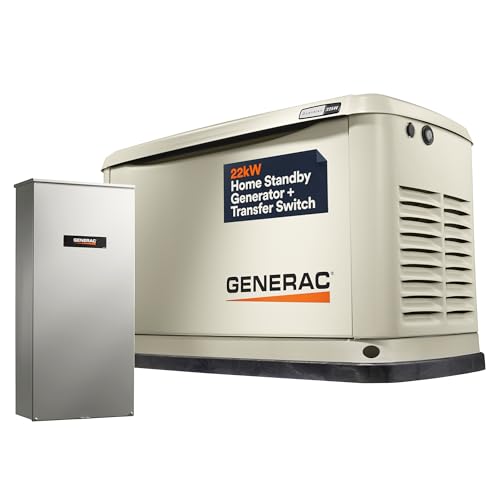
Best for larger homes or properties with heavy electrical loads. The 22kW unit paired with a 200 Amp NEMA 3R smart switch provides comprehensive protection and robust performance. It supports remote monitoring via Wi‑Fi and carries a 5‑year warranty. Choosing this model is advantageous when you anticipate running multiple high‑demand circuits simultaneously. Limitation: higher upfront and installation complexity due to the larger transfer switch and generator footprint.
Generac 14kW Home Standby Generator With Built‑In Cellular
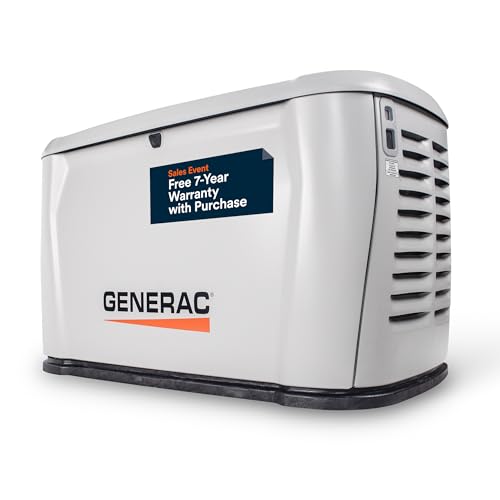
Best for buyers who want strong whole‑home coverage and the convenience of remote monitoring without extra equipment. The built‑in cellular connectivity enables real‑time performance updates via the Mobile Link app, even when you’re away. It touts automatic outage detection for seamless power restoration. The trade‑off is the subscription requirement for premium Mobile Link features, which could affect long‑term operating costs for some households.
Generac 10kW With 16 Circuit Transfer Switch
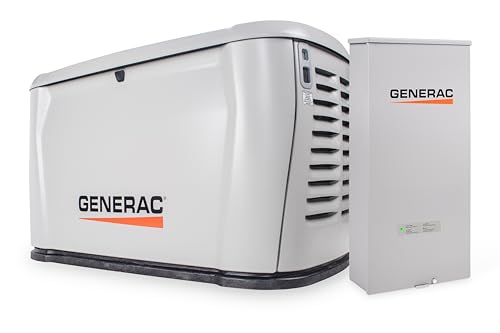
Best for medium‑sized homes where a balance of power and circuit control matters. This model pairs a 10kW generator with a 16‑circuit transfer switch and cellular connectivity. It emphasizes low‑cost ownership through efficient fuel use and ongoing maintenance visibility via the Mobile Link app. Limitation: the premium Mobile Link subscription may be necessary for full remote management features.
Kohler 20kW With 200 Amp Transfer Switch

Best for households with higher electrical loads and a need for quick restoration. The 20kW Kohler model includes a 200 Amp outdoor‑rated automatic transfer switch, enabling rapid transfer from grid to generator within seconds. It supports natural gas or propane, offering fuel flexibility. A consideration is ensuring your gas line and space meet installation requirements for a larger unit and transfer switch.
Buying Guide: Key Considerations for Whole House Standby Generators
- Power needs: Assess square footage, appliances, HVAC loads, and any medical equipment to determine the minimum wattage you require. Larger homes may justify 20–22 kW models, while smaller homes often do well with 10–14 kW units.
- Transfer switch capacity: Choose a switch that can handle your critical circuits without overloading. A 200 Amp transfer switch provides substantial headroom for high‑demand homes.
- Connectivity and monitoring: Wi‑Fi or cellular connectivity helps you track performance and maintenance. Consider whether you want real‑time alerts and whether a premium subscription is necessary for full features.
- Fuel type and availability: Natural gas offers continuous fuel supply in many areas, while propane provides fuel flexibility if gas service isn’t available. Some models support both.
- Installation considerations: Larger units require more space, venting, and weather‑resistant enclosures. Ensure you have proper outdoor clearances and electrical service capacity.
- Warranty and service: Most options offer multi‑year warranties. Check what is covered and how service is handled in your area.
- Budget and total cost of ownership: Include installation, permits, potential gas work, and ongoing fuel costs when evaluating options. More powerful units incur higher upfront and maintenance costs but can handle bigger homes more reliably.
FAQ: Quick Answers for Buyers
- What size generator should I choose for a typical 2,000–3,000 square foot home? – A 10–14 kW unit is often sufficient for smaller homes with essential loads; 20–22 kW suits larger homes with multiple high‑demand appliances.
- Do I need cellular connectivity for a standby generator? – Cellular or Wi‑Fi monitoring helps with proactive maintenance and remote status checks, but essential operation does not require connectivity.
- Can I run a standby generator on propane instead of natural gas? – Many models support both fuels; check the model’s fuel compatibility and local fuel availability.
- Is a 200 Amp transfer switch always better? – A 200 Amp switch provides more headroom and future expansion but may be unnecessary for smaller homes and increases installation complexity and cost.
- How long does a standby generator take to restore power after an outage? – Modern systems typically switch within seconds to grant continuous power to selected circuits.
- Should I hire a professional for installation? – Yes. A licensed electrician or generator installer ensures code compliance, proper venting, gas connections, and safe electrical integration.