When outages strike, a whole house gas-powered generator can keep lights on, essential appliances running, and climate control uninterrupted. This guide compares five highly capable options to help homeowners choose the right size, fuel flexibility, and installation readiness. Best for: homeowners needing automatic standby power, portable backup for larger homes, or flexible fuel choices for extended outages. The table below highlights key attributes to compare at a glance.
| Product | Fuel Type | Power Type | Best For | BW Notes |
|---|---|---|---|---|
| Generac Guardian 10kW | Natural Gas / Propane | Standby | Small to mid-sized homes, automatic transfer | Wi-Fi monitoring, 100 Amp transfer switch |
| Westinghouse 14500/4500 | Gas / Propane / Natural Gas | Portable | Larger homes needing portable backup | Long run times, comprehensive outputs |
| DuroMax XP13000EH | Gas / Propane | Portable | Full-home backup with transfer switch readiness | Dual fuel flexibility |
| Westinghouse 12500 Dual Fuel | Gas / Propane | Portable | Temporary or mobile power source with switch prep | Remote Start, multiple outlets |
| Generac Guardian 22kW | Natural Gas / Propane | Standby | Larger homes requiring robust automatic power | 200 Amp transfer, Wi-Fi |
Generac Guardian 10kW Standby System

This 10kW standby model runs on natural gas or propane and pairs with a 100 Amp transfer switch to provide whole-house coverage. It supports remote monitoring via Wi-Fi, enabling status checks and maintenance alerts from anywhere. Best for: small to mid-sized homes needing automatic backup and remote visibility. Caution: installation requires proper natural gas or propane supply and approved outdoor enclosure.
Westinghouse 14500 Peak Watt Tri-Fuel Portable
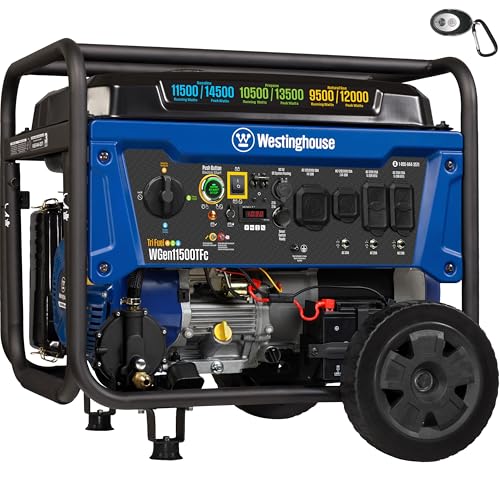
This portable unit delivers up to 14,500 peak watts and 11,500 running watts on gasoline, with strong performance on propane and natural gas. It’s fuel-flexible and well-suited for larger homes as a backup source, with a long runtime on a full tank. Best for: homes needing portable power with long run times and transfer switch readiness. Limitation: portability means manual transfer and setup are required during outages.
DuroMax XP13000EH Dual Fuel Portable

The XP13000EH offers 13,000 watts of power with dual-fuel capability and electric start, suitable for whole-home backup needs and transfer switch readiness. It’s a flexible option for those who want gasoline or propane depending on availability. Best for: larger homes where a portable unit can be positioned for convenience. Caution: check local regulations for portable installations and fuel storage.
Generac Guardian 22kW Standby System
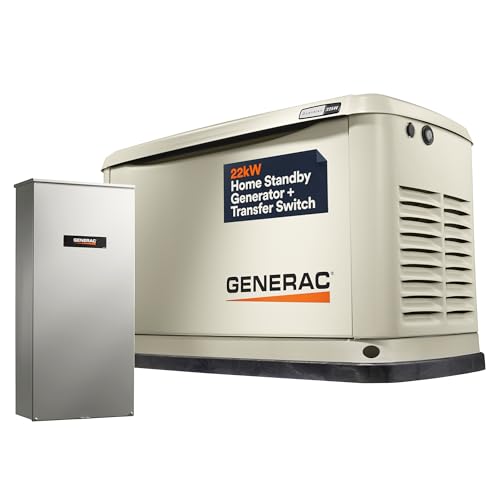
This 22kW standby generator provides robust whole-house coverage with a 200 Amp transfer switch and outdoor-rated aluminum enclosure. It includes Wi-Fi monitoring for proactive maintenance and status updates. Best for: larger homes or properties with high power needs and long outage durations. Caution: installation requires a more substantial fuel supply and professional wiring for the transfer switch.
Buying Guide
Fuel type and transfer capability are the two most critical factors. Standby models with automatic transfer switches ensure seamless switching during outages, while portable models offer flexibility for different situations. Consider home size, running watts, and peak watts to match the generator’s capacity with your essential loads. For fuel, propane offers cleaner burns and stable shelf life, while natural gas eliminates fuel storage concerns. Remote monitoring adds convenience for maintenance and diagnostic alerts. Finally, installation cost and local permitting should be factored in when evaluating a whole-house solution.
Key Purchase Considerations
- Power output: Match to your home’s essential and peak loads.
- Fuel availability: Gas, propane, or dual fuel options.
- Transfer switch capacity: Ensure alignment with service panel ratings.
- Installation requirements: Professional hookup, permits, and outdoor enclosure.
- Remote monitoring: Wi-Fi or mobile app support for status checks.
- Warranty and service: Look for a long-term, reputable brand with local support.
FAQ
- What size generator do I need for a whole-house backup?
- Is a standby generator worth the installation cost?
- What is the difference between standby and portable generators?
- What fuels are commonly supported?
- Do these require professional installation?
- Can I monitor the generator remotely?
Calculate total running watts of essential circuits and compare to the unit’s running watts. For most homes, 10kW–22kW standby systems cover essential loads during outages; larger homes may require more capacity.
Yes for homes in high-risk outage areas, remote locations, or when automatic power restoration is essential for safety and comfort.
Standby generators are permanently installed with automatic transfer switches; portable units require manual setup and transfer. Standbys provide instant power restoration.
Natural gas and propane are common; some models offer dual-fuel or tri-fuel capability for flexibility during shortages.
Yes, for safety, code compliance, and to ensure proper transfer switch wiring and exhaust routing.
Many models offer Wi-Fi or mobile connectivity for performance and maintenance alerts.