Answering the need for reliable home power during outages, these options cover true whole-house battery backup, portable-solar hybrids, and automatic standby generators. The best picks suit different buyers: homeowners seeking high-capacity battery backup, rural or off-grid dwellers, and households that want automatic, weatherproof standby units. This guide compares five strong choices, highlighting who they’re best for and where to use them most effectively.
| Product | Best For | Key Advantage |
|---|---|---|
| EF ECOFLOW DELTA Pro Ultra | Large homes with high load needs | Expandable to 90kWh, 7200W AC, fast recharge |
| EF ECOFLOW DELTA Pro Ultra With Extra Battery | Extended outages, multi-room power | Extra battery expands capacity beyond base unit |
| Generac Guardian 10kW | Automatic standby for outages | Wi-Fi monitoring, turnkey home protection |
| GROWATT HELIOS 3600 | Compact, scalable whole-home backup | Expandable, dual-unit 240V/7200W option |
| ABOK Ark3600 | Portable backup with high life cycle | LiFePO4 3840Wh, fast charging, UPS |
EF ECOFLOW Delta Pro Ultra Power Station

The Delta Pro Ultra combines an inverter and battery to form a true whole-house capable power source. It supports 120V and 240V with a peak 7200W output, enough to run heavy loads like air conditioning. It scales to 90kWh with additional battery packs, enabling months of essential power for a large home during outages. It charges quickly, with a full recharge in about two hours for a 6kWh unit, and allows charging from multiple sources, including solar and wall outlets. Best for households seeking high, flexible power with fast charging.
Who it’s best for: homeowners needing substantial resilience for main loads and future expansion. Why selected: unmatched base output and scalable capacity suit large homes and critical circuits. Caution: the initial outlay is higher, and multiple charging sources require proper setup to optimize charging times.
EF ECOFLOW Delta Pro Ultra With Extra Battery

This variant adds an extra 12V/24V battery option to the Delta Pro Ultra system, effectively increasing total storage and extending run times during outages. It retains the same 7200W AC output and 90kWh expandable capacity with additional packs. Best for homes that want longer backup without reducing essential loads, or for multi-day outages. Caution: expanded systems require careful wiring and charging management to maximize efficiency.
Who it’s best for: households seeking longer resilience and more room to power essential appliances. Why selected: the extra battery directly extends uptime without sacrificing peak power. Limitation: setup complexity can increase with extra packs and charging sources.
Generac Guardian 10kW Home Standby Generator

This is a natural-gas or propane-powered standby generator with automatic transfer switch for seamless house-wide power during outages. It includes remote monitoring via Wi-Fi, making status checks and maintenance alerts accessible from anywhere. Best for homes that want hands-off reliability with automatic restoration. Caution: fuel source (gas) readiness and outdoor installation requirements must be planned in advance.
Who it’s best for: homeowners seeking automatic, low-maintenance backup with remote visibility. Why selected: powerful 10kW capability paired with a robust transfer switch and monitoring. Limitation: fuel and installation require professional handling and ongoing maintenance considerations.
GROWATT Helios 3600 Portable Power Station
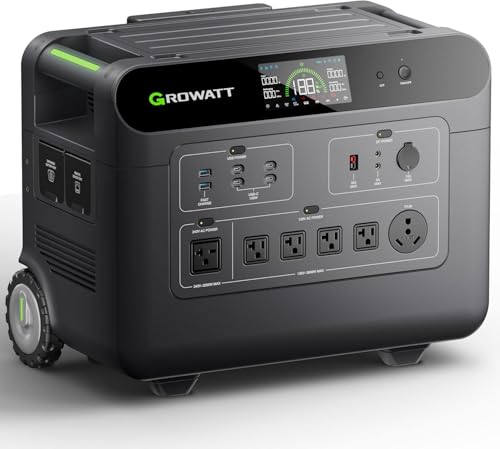
The Growatt Helios 3600 provides a compact, expandable approach to whole-home backup. A single unit offers 3600W continuous output and 3600Wh, with the option to connect a second unit for 240V/7200W and deeper capacity, expandable up to 36kWh. It includes 15ms automatic transfer-like switching and is designed to operate in extreme weather. Best for smaller homes or remote locations where modular expansion and weather resilience matter. Caution: may require pairing with another unit for full home coverage.
Who it’s best for: households needing scalable backup with straightforward expansion. Why selected: modular, dual-unit capability allows tailored resilience without overspending on capacity upfront. Limitation: not a single-unit solution for very large homes unless paired with another unit.
ABOK Ark3600 Portable Power Station

The Ark3600 provides a robust LiFePO4 battery with 3840Wh capacity, expandable to 11520Wh, and 3600W rated output (4500W peak). It supports multiple charging methods (AC, PV, car) and includes UPS features with a fast charge time. Best for portable backup that can form part of a wider home-energy plan, with long battery life. Caution: not a dedicated stationary whole-house unit; best when used alongside another system or as a supplemental backup.
Who it’s best for: buyers needing a capable, portable backup that integrates with solar or vehicle charging. Why selected: strong energy density and versatile charging options give solid, flexible resilience. Limitation: portability means smaller single-unit household coverage unless paired with additional capacity.
Buying Guide: Key Purchase Considerations
What size and capacity do you actually need?
Estimate your essential loads (refrigeration, heating, medical devices, lighting) and add a buffer. For larger homes, aim for 60–90kWh total capacity with high continuous power (6–7kW+) and fast recharge capability. Smaller homes or apartments can prioritize 3–6kWh to cover basics with solar input.
How important is automatic transfer and monitoring?
Automatic standby generators restore power without manual intervention, ideal for busy households or remote locations. Wi‑Fi or cellular monitoring helps you track performance and alerts, reducing uncertainty during outages.
What charging sources should you expect to use?
Solar compatibility, wall outlets, and vehicle charging can dramatically reduce downtime. A system that supports multiple charging paths enhances reliability in varied weather and seasons.
Is expansion or modularity a priority?
If you anticipate longer outages or growing loads, choose units that scale with additional batteries or multiple modules. Modularity keeps initial costs manageable while expanding resilience over time.
What are the long-term costs and maintenance considerations?
Consider fuel type, maintenance needs, warranty, and service access. Battery life cycles (LiFePO4 vs other chemistries) influence replacement intervals and total cost of ownership over years.
What constraints should you plan for during installation?
Standby generators require outdoor space and proper ventilation; battery systems need safe wiring, grounding, and potential electrical panel integration. Professional installation ensures code compliance and optimal performance.
FAQ
- What is a whole-house battery generator? It’s a system that stores electrical energy in batteries and delivers power to most or all home circuits during outages.
- Do I need a professional to install? Yes, for safety, code compliance, and to ensure proper integration with your home electrical system.
- Can these systems power critical loads only? Yes, many setups prioritize refrigerators, HVAC, sump pumps, and essential lighting.
- Which is best for long outages? Systems with large expandable capacity and multiple charging paths, such as Delta Pro Ultra with extra batteries, are well suited.
- Are portable options enough for a large home? Portable units can supplement, but a dedicated standby or high-capacity battery system is typically needed for full-home coverage.
- Can I expand capacity later? Many models support additional batteries or modules to grow capacity as needed.