Answering your search for reliable vertical axis wind turbine generators, this guide highlights five top options suited for different needs—from high-wower home setups to compact off-grid applications. Each product is evaluated for suitability, durability, and whether it’s best for residential rooftops, cabins, boats, or small commercial use. The buyer-friendly comparisons help you choose based on wind conditions, installation space, and energy goals.
| Product | Best For | Key Benefit |
|---|---|---|
| Lbxlhr 12000W Vertical Axis Kit | High-wind homes, hybrid wind-solar systems | High power, MPPT controller |
| 20000W Vertical Axis Wind Turbine Kit | Larger energy needs, multi-environment use | Nylon fiber blades, versatile applications |
| 3000W Vertical Axis Wind Turbine Kit | Small to medium homes, boats, cabins | Three-phase PMG, low vibration |
| Lizponaza 500W Vertical Axis Turbine | Low-wind locations, off-grid micro-systems | Efficient in low wind, quiet operation |
| Fablestoryem 14000W MPPT Kit | Residential or small commercial off-grid | High power, vertical design, wide voltage range |
Buyer note: Each listed unit is designed for vertical-axis operation with MPPT or smart regulation. Consider wind speed averages, installation space, and whether you need 12V, 24V, 48V, or higher system voltages. The following sections detail five top options with practical, comparison-driven insights.
Lbxlhr High-Power Vertical Wind Turbine, 12000W

This turbine uses injection-molded high-strength FRP blades with spiral aerodynamics for smooth, reliable rotation. It adapts to wind from all directions without a yaw system, making it suitable for open rooftops or exposed fields where wind direction is variable. The Maglev generator reduces start torque and extends service life, with a claimed design life of about 10–15 years and a protective RPM limit of 300. Best for: large residential properties or hybrid wind-solar setups in moderate to strong wind areas. Limitation: maximum RPM protection could limit peak output during brief gusts; ensure mounting is robust enough for high winds.
20000W Vertical Axis Wind Turbine Kit
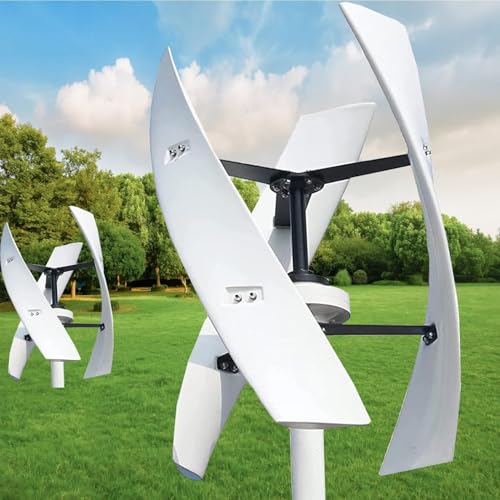
Designed with nylon-fiber blades and precision injection-molded components, this kit targets higher energy demands. The blades are optimized for wind resource utilization and can operate across diverse settings—from homes to small commercial sites. The nylon blades handle broad temperatures (-40℃ to 80℃) and start capturing wind from as low as 2 m/s, which is favorable for moderate-wind environments. Best for: households with substantial energy needs or off-grid cabins needing steady supply. Better for: environments where year-round performance matters; avoid this if you require ultra-quiet operation in dense urban areas due to higher nominal power.
3000W Vertical Axis Wind Turbine Kit
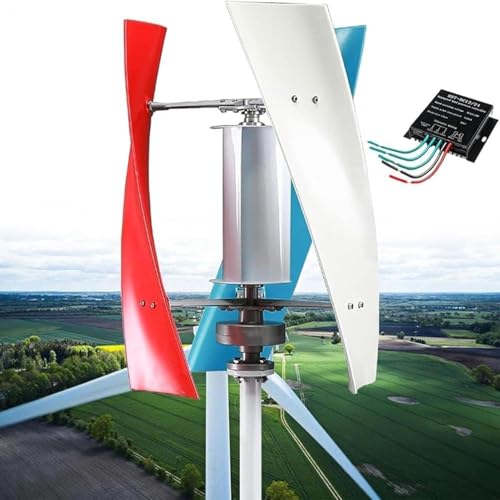
This kit uses a Maglev three-phase PMG for low starting torque and efficient regulation of current and voltage. With a rotor and triple-bearing design, it minimizes vibration and improves wind resistance for stable operation. The setup lists a 2 m/s start wind speed, 10 m/s rated wind speed, and a maximum wind speed of 45 m/s, making it well-suited for moderate climates and smaller properties. Best for: boats, terraces, cabins, or small homes needing a compact yet capable wind generator. Limitation: smaller diameter blades mean lower peak output under very strong winds compared with larger units.
Lizponaza 500W Helical Vertical Turbine

The Lizponaza turbine uses an advanced helical design with two aluminum blades and a permanent magnet generator. It achieves efficient operation in low wind speeds and is noted for low-noise performance—an important attribute for residential settings. It supports up to 500W and winds up to 42.65 ft/s. Best for: off-grid micro-systems, tiny homes, or rural properties with consistent breeze but limited space. Caution: lower power ceiling means it’s not ideal where high daytime energy is required in a short period.
Fablestoryem 14000W MPPT Kit
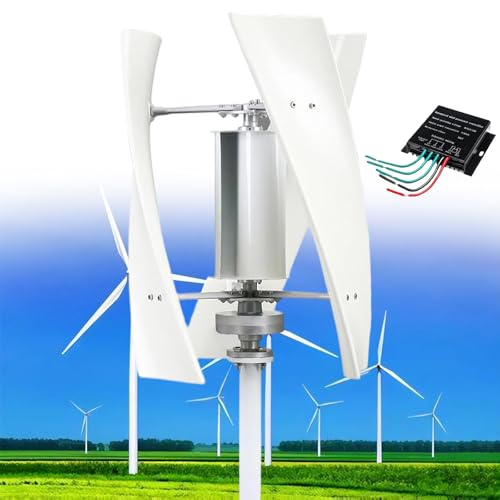
Fablestoryem’s 14000W kit combines vertical turbine blades with nylon fiber construction and an MPPT controller to optimize energy production across a wide voltage range (12V–220V). It emphasizes a 360° wind capture capability without yaw and is designed for residential or small commercial off-grid use. Best for: households seeking higher off-grid generation in moderate-wind zones; avoid if you need ultra-quiet operation in densely populated areas due to higher output potential.
Buying Guide: Key Purchase Considerations
- System voltage and compatibility: Decide whether you need 12V, 24V, 48V, or higher. MPPT controllers may support multiple voltages, expanding compatibility with inverters and storage.
- Wind resource and site conditions: Higher-wattage units are better in steady, strong winds; smaller units suit low-wind or urban rooftops with intermittent breezes.
- Blade design and materials: Nylon or FRP blades offer durability and corrosion resistance. Helical designs can improve low-wind performance but may be noisier in certain assemblies.
- Maintenance and lifespan: Look for Maglev or low-torque generators that reduce mechanical wear. Plan for periodic blade inspections and mounting checks.
- Noise and aesthetics: Vertical-axis turbines generally operate quieter than horizontal designs, but blade shape and mounting can influence perceived noise. Consider the installation environment (rooftop, garden, or open field).
- Installation footprint: Larger units demand more space and robust mounting. Confirm roof or ground mounting suitability and structural support.
- Warranty and service: Evaluate any included guarantees and the availability of replacement parts and controllers in your region.
Frequently Asked Questions
- What is a vertical axis wind turbine (VAWT) best used for? VAWTs are well-suited for variable wind directions and constrained spaces, making them good options for rooftops, cabins, and off-grid setups where wind direction changes often.
- Do vertical axis wind turbines require yaw control? No, many VAWT designs capture wind from any direction without a yaw system, simplifying installation and reducing mechanical complexity.
- What is MPPT and why is it important? MPPT stands for Maximum Power Point Tracking. It optimizes the electrical output from a wind turbine by adjusting the electrical load to harvest the maximum energy at varying wind speeds.
- Are VAWTs noisy? Generally quieter than some horizontal-axis models, but noise levels depend on blade design, rpm, and mounting. Consider location and neighbor guidelines when installing.
- What maintenance is required? Regular inspections of blades, bearings, and mounting hardware; ensure electrical connections are secure and that the controller is functioning properly.
- Can these turbines power a home by themselves? Most residential systems require battery storage and an inverter to provide usable AC power and meet demand during low-wind periods.