Answering the search for reliable, ready-to-use solar power, these RV solar panel kits and related systems are designed for off-grid living, camping trips, boats, and RVs. The top picks emphasize ease of installation, durable construction, and solid daily outputs in typical sun conditions. This guide highlights who benefits most from each kit and explains key trade-offs to help buyers choose wisely.
| Product | Best fit | Key point |
|---|---|---|
| ECO-WORTHY 200W Kit (Panel + Controller) | Best for all-in-one RV setups | High efficiency panel with robust frame; 30A PWM controller |
| Renogy Adventurer 200W Kit | Best for small-to-mid RVs or boats | Compact footprint with easy mounting and LCD controller |
| Renogy 100W Starter Kit | Best budget starter kit | UL/CSA safety certifications; reliable 22.5% efficiency |
| Renogy 400W RV Kit | Best for larger power needs | High total wattage with mounting options and BT Bluetooth |
| Callsun N-Type 400W Bifacial Kit | Best for high-sun environments | Up to 25% efficiency; bifacial design for extra output |
ECO-WORTHY 200 Watts Kit With PWM Controller
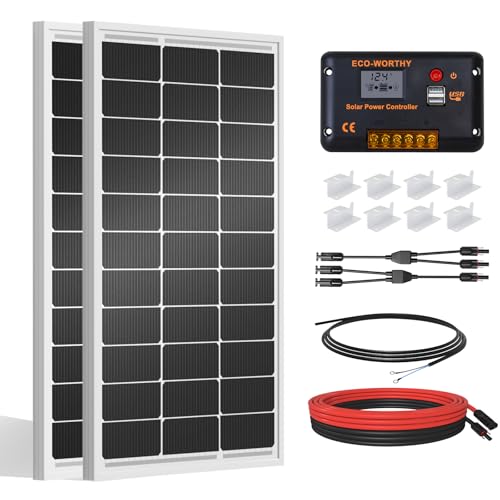
This kit targets RVs, campers, and off-grid cabins seeking a straightforward, all-in-one solution. Best for buyers who want a durable monocrystalline panel paired with a 30A PWM controller, minimizing extra components.
- Output expectation: Up to 800Wh per day under four hours of full sun (typical).
- Panel: High-efficiency monocrystalline cells; corrosion-resistant aluminum frame; IP65 junction box.
- Durability: Handles strong wind and snow loads; designed for decades of outdoor use.
Who this is best for: RV owners or mobile off-grid users who want a reliable, mid-size solar setup with a simple control system. Caution: Real-world daily output depends on sun exposure and weather; in shady conditions, expect lower figures.
Renogy Adventurer 200W Kit With LCD PWM
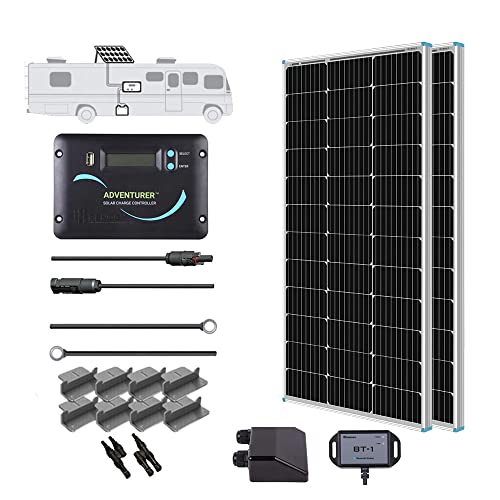
Designed for RVs, boats, and small off-grid setups, this kit emphasizes a compact footprint with a durable frame. It includes the Adventurer-Li PWM controller for clean mounting on walls and robust protection features.
- Daily output: Around 800Wh in ideal sunlight (assumes about 4 hours of sun).
- Cell efficiency: ~22%; corrosion-resistant frame handles outdoor use for years.
- Protection: Overcharge, overload, short circuit, and reverse polarity protections.
Who this is best for: Buyers who want a tidy, wall-mountable RV solar solution with a reliable, protected charge controller. Limitation: Real-world output varies with sun and load conditions; larger off-grid homes may require more capacity.
Renogy 200W Starter Kit

This starter kit combines a 200W solar panel with a PWM controller and essential cabling. It targets newcomers and portable off-grid projects where reliability and safety are priorities.
- Efficiency: 22% panel efficiency; includes EL testing for hidden defects.
- Safety: UL 61730, CSA C22.2 61730, IEC 61730/61215 certified; IP65 J-box and IP67 connectors.
- Best for: Beginners and limited-space installations requiring a budget-friendly, dependable entry kit.
Better for: Small RVs or cabins starting their solar journey. Note: Service plans are robust, but plan for proper ventilation and secure mounting.
Renogy 400W RV Kit With Adventurer Controller

This higher-w wattage kit suits larger energy needs on RVs or off-grid homes. The Adventurer 30A PWM controller supports 12V or 24V systems and offers clean mounting and protective features.
- Output: Higher daily energy potential with four 100W panels in one cluster; compatible with RV walls and mounting hardware.
- Protection: Controller guards against overcharge, voltage, discharge, and short circuits.
- Best for: RVs with moderate-to-high power consumption or those expanding a solar setup over time.
Limit: Requires space for mounting and a suitable shade-free exposure area to maximize output.
Callsun N-Type 400W Bifacial Kit

Callsun’s bifacial design captures sunlight from both sides, boosting potential daily output in suitable environments. It’s well-suited for rooftops and reflective surfaces like snow or gravel.
- Efficiency: Up to 25% with N-type 16BB cells; dual-sided output adds up to 30% more power in optimal conditions.
- Shading: TwinCell anti-shade technology helps maintain output when partially shaded.
- Best for: Installers seeking higher efficiency and back-side light harvesting, especially in bright, open locations.
Be aware: Bifacial gains depend on mounting surface and geography; not all installations will realize the full back-side benefit.
Buying Guide: Key Considerations for RV Solar Kits
- System size and power needs: Estimate daily energy use (Wh per day) and choose a kit that matches or exceeds your needs, considering average sun hours in your location.
- Panel efficiency and durability: Higher efficiency panels deliver more power in limited space but may come at a higher upfront cost. Look for corrosion-resistant frames and IP-rated components for outdoor use.
- Charge controller type: PWM controllers are simple and cost-effective; MPPT controllers are more efficient in variable sun and complex systems but more expensive. Assess compatibility with your battery type and voltage.
- Battery compatibility: Determine whether the system includes a battery or if you’ll add one. Li-Ion and lead-acid batteries have different charging needs and lifespans.
- Mounting and space: Consider roof dimensions, mounting hardware, and the ability to secure panels against wind. Some kits emphasize wall-mount convenience for RVs.
- Expandability: If you plan to add more panels later, choose a kit designed for expansion and compatible controller voltage ranges.
- Weather resilience: Look for rugged frames, gumption for snow loads, and IP-rated junction boxes to ensure long-term performance.
Frequently Asked Questions
- What is a typical daily output for RV solar kits?
Typical daily output ranges from 500Wh to 1600Wh depending on sun hours, panel wattage, and system efficiency.
- Do I need a battery with a solar kit?
Many kits require or benefit from a battery to store energy for cloudy days or nightly use. Some complete kits include a lithium battery for on-site power storage.
- What’s the difference between PWM and MPPT controllers?
PWM controllers are simpler and cheaper; MPPT controllers extract more power in variable conditions but cost more and may require more setup.
- Can I upgrade an RV solar kit later?
Yes, most kits are designed for expansion. Check voltage compatibility and mounting space before adding panels or a larger controller.
- Are bifacial panels worth it for RV use?
Bifacial panels can deliver more power when installed over reflective surfaces and with strong sun, but gains depend on mounting and geography.