Answer: A trickle charger for a generator battery is designed to maintain a full charge over long storage periods while protecting against overcharge. This makes it ideal for generators that sit idle between uses. The top picks below are best for different needs: compact, automatic maintenance; higher-output charging for faster readiness; and models with desulfation to extend battery life. The right choice depends on battery type (lead-acid, AGM, gel, or LiFePO4), expected storage time, and whether you need desulfation features or remote monitoring.
| Product | Brand | Best For |
|---|---|---|
| NOCO GENIUS1 | NOCO | Small spaces, multiple battery chemistries, automatic maintenance |
| NOCO GENIUS2 | NOCO | Higher power, faster maintenance, low-voltage recovery |
| Foval Automatic Trickle Battery Charger | FOVAL | All-around value, wide compatibility, compact |
| Unocho 6V/12V Battery Charger Maintainer | Unocho | Smart 5-stage charging, strong safety protections |
| Battery Tender Junior 12V | Battery Tender | Reliable 12V maintenance for powersports and storage |
The following sections detail each product, highlighting who it’s best for, why it’s chosen for generator battery care, and any notable limitations to consider.
NOCO GENIUS1: Compact 1A Trickle Charger

Best for compact generator setups or vehicles with limited space. The GENIUS1 functions as a battery charger, maintainer, trickle charger, and desulfator for lead-acid and LiFePO4 batteries. It supports 6V and 12V systems and adjusts charge with ambient temperature, reducing the risk of overcharging in heat and undercharging in cold. The small size makes it easy to mount near a generator’s battery compartment. Be mindful that it delivers 1A, so charging times are longer for larger batteries.
Who it’s best for: users with limited space and smaller generator batteries who want automatic maintenance without manual intervention. Why selected: its temperature compensation and multi-mode functionality provide reliable, low-maintenance charging for routine generator storage. Limitation: slower charge for larger or deeply discharged batteries.
NOCO GENIUS2: 2A Smart Charger And Maintainer

Best for moderate-size generator batteries and faster maintenance. The GENIUS2 increases output to 2A and maintains 6V/12V systems while protecting against overcharge and providing temperature-compensated charging. It handles lead-acid and LiFePO4 chemistries and adds a force mode to recharge low-voltage batteries. This makes it suitable for generators that sit idle for extended periods or require quicker readiness. Caution: higher output consumes more power and may generate more heat in small enclosures.
Who it’s best for: users who want a balance between compact size and faster recovery time for generator batteries. Why selected: higher amperage helps shorten maintenance cycles without sacrificing safety features. Limitation: not ideal for very small batteries where heat could be a concern in enclosed spaces.
Foval Automatic Trickle Battery Charger 12V 1000mA
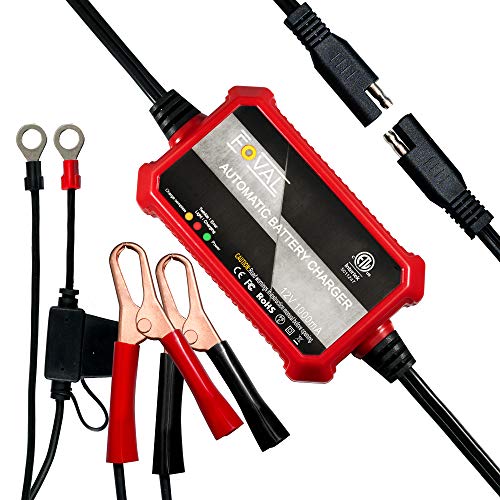
Best for broad compatibility and all-season maintenance. FOVAL offers 1A trickle charging with a complete 4-step program (Initialization, Bulk, Absorption, Float) and desulfation. It’s versatile across SLA, VRLA, gel, AGM, and wet lead-acid batteries, including those in boats, lawn equipment, and storage generators. It includes spark-free connections and an ultra-compact form factor. Limitation: no LiFePO4 support is listed, so verify battery type for LiFePO4 systems.
Who it’s best for: general-purpose users who need a reliable, budget-friendly charger that works across many 12V lead-acid batteries. Why selected: strong feature set for the price, plus desulfation to help extend battery life. Caution: double-check compatibility with LiFePO4 if used with LiFePO4 batteries.
Unocho 6V/12V Battery Charger Maintainer

Best for robust safety and long-term storage. Unocho provides a 5-stage charging cycle with automatic detection, soft start, bulk, absorption, and float maintenance. It supports multiple 6V and 12V lead-acid battery types and offers built-in protections, including reverse polarity, short circuit, over-voltage, and thermal safeguards. The 72-hour safety timer and inline fuse add extra protection during charging. Limitation: some users may prefer higher amperage for faster charging when time is critical.
Who it’s best for: owners storing generator batteries for extended periods who value thorough protection and a detailed charging cycle. Why selected: strong safety features and a comprehensive charging program. Caution: lower amperage means slower charging for larger batteries.
Battery Tender Junior 12V, 750mA

Best for Powersports and seasonal generator batteries that require steady maintenance. The Battery Tender Junior provides a full charge followed by float maintenance to preserve voltage during storage. It is compatible with all 12V lead-acid batteries, including flooded, AGM, and gel cells. The package includes extra harness options for hard-to-reach batteries and clip cables. Limitation: 750mA is modest for larger batteries or rapid recovery scenarios.
Who it’s best for: owners who want a dependable, basics-focused maintainer for 12V generator batteries in stored equipment. Why selected: proven reliability and a straightforward four-step charging program. Caution: may be slower for large or deeply discharged batteries.
Buying Guide: How To Choose The Right Trickle Charger For A Generator Battery
What battery type do you own?
Most trickle chargers support lead-acid variants (flooded, AGM, gel), with LiFePO4 compatibility offered by some models. Confirm the charger’s listed chemistries to avoid mischarging LiFePO4 batteries or incompatibilities with AGM/wet cells.
What charging speed do you need?
1A to 2A units are common for generator batteries used in storage or low-demand cycles. If you need faster readiness after a long storage, choose a higher-amperage model like 2A or more, ensuring your generator’s battery compartment can handle the heat and space.
Do you require desulfation?
Desulfation can extend battery life for older or heavily sulfated cells. If your generator battery is older or has storage-related sulfation, a desulfator feature may be beneficial.
Is space and portability important?
For generators with tight spaces, a compact charger is advantageous. If you manage multiple batteries or vehicles, a charger with higher amperage and compatible accessories supports broader use.
What safety features matter?
Look for automatic shutoff, temperature compensation, reverse polarity protection, spark-free connections, and overload/short-circuit protection. These reduce risk during maintenance or overnight charging.
Reliability and compatibility considerations
Choose a reputable brand with robust safety features and wide compatibility across common generator battery chemistries. This simplifies maintenance across seasonal storage and ensures consistent readiness when the generator is needed.
FAQ
- What is the main purpose of a trickle charger for generator batteries? It keeps a battery at full charge during storage and prevents self-discharge, reducing starts-up issues when the generator is needed.
- Can I use a 12V trickle charger on a 6V generator battery? Many models support both 6V and 12V systems; verify device specifications before use.
- What is desulfation, and do I need it? Desulfation helps remove sulfate buildup from lead-acid batteries, potentially extending life for older batteries or those under storage.
- Is a higher amperage charger better for generator batteries? Higher amperage can shorten charging time but may generate more heat in confined spaces; ensure space and battery capacity match.
- Should I leave a charger plugged in all the time? Most units switch to a float mode to prevent overcharging, but always follow the manufacturer’s guidance for your specific model and battery type.
- Do these chargers work with LiFePO4 batteries? Some models support LiFePO4; check compatibility to avoid improper charging for lithium-based chemistries.