The best concrete cutting tools deliver fast cutting, durable blades, and clean results. This guide highlights five top picks suited for pros and serious DIYers tackling concrete, brick, stone, and cement-based materials. Each option targets a specific use case, from angle grinders to oscillating tools, so you can choose the right tool for your project and budget.
Summary of chosen products:
| Product | Best For | Why It Stands Out |
|---|---|---|
| INWELL 4-1/2 Inch Segmented Diamond Blade (2-Pack) | Quick, heavy cutting on concrete, granite, brick | High diamond segments, efficient cooling, low vibration |
| DEWALT Diamond Blade for Masonry (DW4725) | Dry cutting on masonry materials | Long-life matrix and thinner kerf for faster cuts |
| PAYA TOOLS Demolition Masonry Reciprocating Saw Blade | Straight cuts in brick and aerated concrete | Carbide teeth for tough masonry, optimized weight |
| EZARC Diamond Oscillating Blade (3-Pack) | Grout removal and precision edge work | Long life, clean cuts into corners and edges |
| EXKRAEFT 5PCS Diamond Oscillating Blades | Tile, grout, and concrete detailing | Durable grit, versatile blade shapes |
INWELL 4-1/2 Inch Segmented Diamond Blade 2-Pack

The INWELL blade features a segmented design with premium diamond grit and a hardened steel body. It increases cutting speed by up to 30% and is built for low vibration and extended durability, making it suitable for concrete, granite, masonry, brick, and stone cuts. Best for contractors needing faster, smoother cuts on hard materials. Caution: Performance depends on proper cooling and correct arbor compatibility.
DEWALT Diamond Blade for Masonry (DW4725)

DEWALT’s continuous rim blade is designed for dry cutting with masonry materials. The diamond matrix provides significantly longer life than conventional abrasives, and the thinner kerf speeds up cuts while reducing dust. Best for dry-cut masonry jobs where minimal cleanup is desired. Limitation: May be less effective on ultra-hard stone compared to segmented designs.
PAYA TOOLS Demolition Masonry Reciprocating Saw Blade
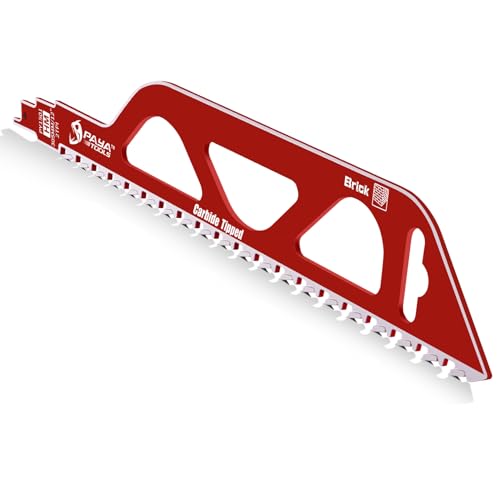
This 12-inch demolition blade uses carbide teeth for heavy-duty masonry cutting, ideal for straight cuts in brick, aerated concrete, and cement boards. Best for aggressive demolition tasks where standard bi-metal blades struggle. Caution: Not suitable for wood or plastic cutting.
EZARC Diamond Oscillating Blade (3-Pack)

EZARC’s oscillating blades feature diamond grit for longer life and a kerf around 1/16 inch, enabling precise, clean cuts in grout removal, mortar cleanup, and precise edge work. Best for detailed grout work and tight corner cuts. Limitation: May not be optimized for rapid bulk demolition compared to larger blades.
EXKRAEFT 5PCS Diamond Oscillating Blades

EXKRAEFT offers a five-piece set with varied blade shapes to tackle grout removal, tile cutting, and concrete detailing. The industrial-grade diamond grit provides durability and extended life, making it suitable for remodeling and professional tasks. Best for multi-surface jobs where different blade shapes are beneficial. Caution: Not all shapes are ideal for every material; choose the blade type that matches the task.
Buying Guide
What should you consider when choosing a concrete cutting tool?
- Material compatibility: For concrete, brick, and stone, diamond blades with segmented or continuous rims are common. For grout and thin-edge work, oscillating blades with diamond grit excel.
- Tool type: Angle grinders work well with 4-1/2 inch blades for fast cross-cuts. Reciprocating saw blades excel in demolition and straight cuts in masonry. Oscillating blades provide precise, edge-friendly cuts in tight spaces.
- Blade life and cooling: Segmented designs typically offer better cooling and debris removal, boosting durability. Look for blades with heat-dissipating features for longer life.
- Kerf width and cut speed: A thinner kerf increases speed and reduces dust but may wear faster on tough materials. Balance kerf with durability for your project needs.
- Arbor compatibility: Ensure the blade arbor size matches your tool (commonly 7/8 inch or 5/8-11, etc.).
Frequently Asked Questions
- What blade is best for cutting concrete with an angle grinder?
A segmented diamond blade designed for masonry, like the INWELL blade, is typically best for fast, flat cuts on concrete and stone when used with a compatible angle grinder. - Can I use a masonry blade for brick and aerated concrete?
Yes. Masonry blades are designed for hard materials such as brick and aerated concrete, but verify the blade’s specific material compatibility and your tool’s arbor size. - Are oscillating blades suitable for tile grout removal?
Yes. Diamond oscillating blades are specifically made for grout removal and precise edge work in tile installations. - Is a continuous rim blade better than a segmented blade for dry cuts?
Continuous rim blades are often preferred for precision and smoother cuts in dry masonry, while segmented blades excel at heat management during tougher cuts. - How do I choose the right blade for demolition work?
Choose a blade with carbide or diamond grit designed for heavy-duty masonry and an appropriate length for your saw or tool to ensure efficiency and safety.