When you need to cut thick metal, choose carbide-tipped, high-tooth blades designed for metal demolition. This guide highlights five top options that excel in thick-metal tasks, from stainless steel to hardened alloys. The right blade reduces time, minimizes heat buildup, and extends blade life. Ideal buyers include professional contractors, metal fabricators, and serious DIYers tackling steel, rebar, and automotive components. The table below compares key picks to help you decide quickly.
| Product | Blade Length | TPI | Carbide/TiAlN Tech | Best For |
|---|---|---|---|---|
| EZARC Carbide Reciprocating Saw Blades, 6-Inch 8TPI | 6 inches | 8 | Carbide Technology | Thin to medium-thick metals; high-alloy steels |
| EZARC Carbide Reciprocating Saw Blades, 9-Inch 8TPI | 9 inches | 8 | Carbide Technology | Thicker metal sections; structural steel and rebar |
| Diablo Steel Demon Carbide Teeth, 9″ | 9 inches | Varies; 8/10 type | Carbide Teeth | Extreme metal cutting; stainless steel and cast iron |
| EZARC Obsidian Carbide Reciprocating Saw Blades, 6″ 8TPI | 6 inches | 8 | TiAlN-coated carbide | Heavy-duty metal cutting; heat resistance required |
| GRENPRO 3-Pack Carbide Reciprocating Saw Blades, 6″ 8TPI | 6 inches | 8 | Carbide Teeth | Stainless steels and high-alloy metals |
EZARC 6-Inch 8TPI Thick Metal Carbide Blades
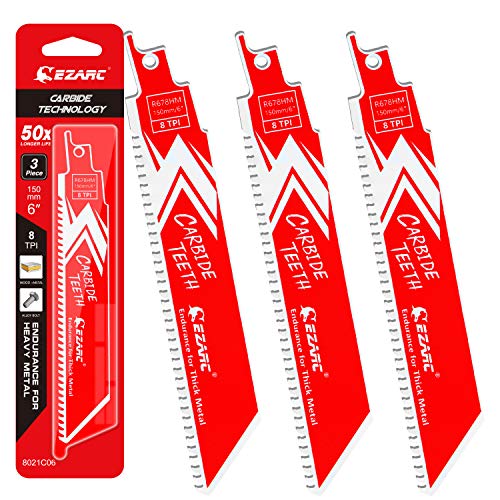
Product features highlight carbide technology delivering up to 50x longer life than bi-metal blades. The 8 TPI design is optimized for thick metal like high-alloy steels, stainless steels, rebar, and car beams. Best for professionals who demand durability in tough metal cuts.
Best for: Contractors and metal fabricators who frequently cut thick metal sections and need longer blade life. Limitations: The carbide blades can be more brittle than standard blades if mishandled in aggressive plunges.
EZARC 9-Inch 8TPI Thick Metal Carbide Blades
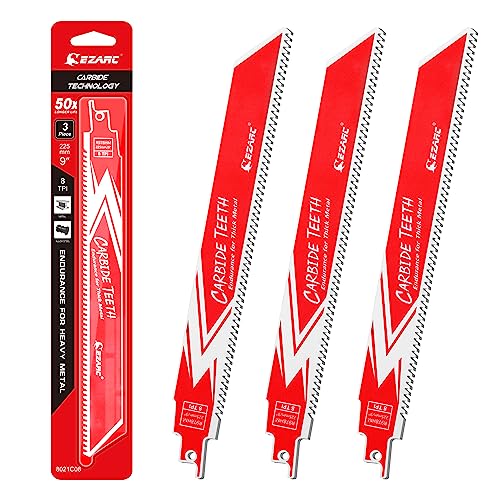
These 9-inch blades extend cutting reach for thick metal projects while retaining carbide durability. Ideal for cutting high-alloy steels, stainless steels, rebar, and heavy car components. Better for long cuts in steel framing or large metal structures than shorter blades.
Best for: Jobs requiring longer blade reach with heavy-duty metal cuts. Limitation: Slightly longer blades can be less maneuverable in tight spaces.
Diablo Steel Demon Carbide Teeth, 9″

Diablo’s carbide-tipped blades are designed for extreme metal cutting, including high-strength alloys and cast iron. The TiCo Hi-Density carbide offers up to 50x longer cutting life versus standard bi-metal blades, with a non-stick coating to reduce heat buildup and gumming.
Best for: Heavy-duty metal demolition where consistent carbide performance matters. Caution: Carbide tips require careful handling to avoid chipping at impact points.
GRENPRO 3-Pack Carbide 6″ 8 TPI Blades

GRENPRO blades feature carbide teeth designed for thick metal cuts, including stainless steel and hardened alloys. The 8 TPI design supports fast, controlled cutting and resilience in demanding work sites.
Best for: Professionals needing multiple carbide blades for metal fabrication or demolition. Limitation: As with other carbide blades, premature failure may occur if used on non-metal materials or in improper speeds.
Caliastro 6-Inch 8/18TPI Bi-Metal Blades

This Caliastro set uses a bi-metal construction with 8-18 TPI per blade, designed for faster cuts in thick metal like black pipe, rebar, and angle iron. The 0.05” thickness minimizes blade bending, and a broad set improves job-site readiness.
Best for: Jobs requiring a balance of cost and performance for metal cutting. Caution: Bi-metal blades may wear faster than carbide on very hard metals.
Buying Guide
What to consider when choosing thick-metal blades:
- Blade Material: Carbide-tipped blades last longer on hard metals but can be more brittle. Bi-metal blades offer flexibility and cost savings but wear faster on hard alloys.
- Tooth Configuration: 8 TPI is common for metal, providing a balance of speed and control in thick sections. Higher or lower TPI changes cut rate and finish quality.
- Blade Length: Longer blades reach deeper into thicker stock but may be less maneuverable in tight spaces. Shorter blades are easier to steer for precise cuts.
- Coatings and Carbide Tech: TiAlN or similar coatings reduce heat buildup and sticking. Carbide tips improve lifespan in demanding metal-cutting tasks.
- Intended Metal Types: Stainless steel, high-alloy steels, rebar, and cast iron each respond differently to blade materials. Match blade spec to material hardness.
Frequently Asked Questions
- What blade is best for cutting stainless steel? – Carbide-tipped blades with TiAlN or similar coatings provide stable cuts and longer life in stainless steel.
- Can I use bi-metal blades for thick metal? – Yes for some metals, but they wear faster on hardened alloys and may require more frequent blade changes.
- Why do some blades list TPI as 8 or 18? – TPI (teeth per inch) affects cutting speed and finish. 8 TPI works well for metal, while 14–18 TPI can yield smoother cuts in thinner sections.
- Is carbide blade life worth the extra cost? – For frequent metal cutting, carbide blades typically save time and reduce blade changes, offsetting higher upfront cost.
- What safety practices help when cutting thick metal? – Wear eye protection and gloves, secure the workpiece, and use lubrication or coolant to reduce heat buildup.
- Are coatings essential for thick-metal cuts? – Coatings reduce heat buildup and gum buildup, helping maintain cutting efficiency in challenging metals.