Stirling engine generator kits offer engaging ways to explore thermodynamics, energy conversion, and basic electronics. The following selections highlight colorful LED demonstrations, robust construction, and accessible operation for beginners and enthusiasts alike. Each product is designed to light up LEDs or small devices as heat drives mechanical work, making them excellent classroom tools or desk-top curiosities.
Summary Table of Selected Products
| Product | Brand |
|---|---|
| Sunnytech Hot Air Stirling Engine Motor Electricity Generator Educational Colorful LED SC (SC011) | Sunnytech |
| Hot Air Stirling Engine Motor Model, Stirling Engine Kit, Single-Cylinder Metal Stirling Engine External Combustion Engine | Pktiugf |
| PUOSUO Hot Air Stirling Motor Power Generator Alpha Engine Model with LED Lights Kit | PUOSUO |
| Qing Shuang Stirling Engine Steam Engine Educational Toy With Colorful LED | NP |
| Sunnytech Low Temperature Stirling Engine Motor Steam Heat Education Model Toy Kit | Sunnytech |
Sunnytech SC011 Colorful LED Stirling Engine Kit

The Sunnytech SC011 combines a compact stirling engine with a multicolor LED array, creating a visually striking demonstration of heat-to-electricity conversion. The device is designed for hands-on assembly and operation, with a brushed aluminum base and CNC-finished frame that provide a sturdy, refined look. A round-ended cylinder and glass heating element emphasize the thermal process while the LED lights respond to the engine’s activity.
Operation is straightforward: fill a suitable alcohol fuel, light the burner, and give the flywheel a gentle nudge. The motor then runs, driving current through the wiring to illuminate the LED display. The kit emphasizes easy setup, durability, and educational value, making it a solid option for classrooms or science-minded desks.
Hot Air Stirling Engine Kit With Gold Finish

This model features a distinctive gold finish and a robust build that includes a mirror stainless steel base, nickel-plated bracket, and a brass cylinder. Its design highlights a lever mechanism and crank rocker for a mechanically appealing profile while a color LED is driven by the generated electricity. The kit aims for long-lasting operation and “wow” factor with a compact footprint, suitable for desktop display and science demonstrations.
Key aspects include high-quality materials, precise components, and an emphasis on safe, repeatable operation. Users heat the engine with alcohol, observe the generation of electricity, and watch the LED illuminate as the engine runs. It serves well as an introductory project to explore energy conversion and mechanical design.
PUOSUO Alpha LED Stirling Engine Kit

The PUOSUO kit emphasizes a zinc alloy main body with electroplating for metallic luster, a 12.5mm power cylinder, and a 15mm stroke piston. The engine is designed to drive a bright LED on the generator, demonstrating the energy flow from heat to mechanical motion to electricity. The kit’s components include glass cylinder sleeves and a precision bearing assembly to support smooth operation, with a focus on stability and visual appeal.
Educational value centers on observing how heating produces motion and current, which can power a separate LED setup. It is suited for enthusiasts who want a compact, visually engaging model that combines aesthetics with functional demonstration of Stirling principles.
Qing Shuang Stirling Engine With Colorful LED

This model uses a steel base and aluminum alloy bracket to provide a stable, European-inspired aesthetic. The color LED on the motor lights in response to the engine’s heat-driven activity, highlighting the conversion process from energy to light. The CNC-finished frame, aluminum alloy flywheel, and laser-cut stainless steel connecting rod contribute to precision and durability, with a thickened glass cylinder designed for long-term heating without structural stress.
Operation is similar to other Stirling kits: heat the alcohol burner, allow the assembly to run, and observe the LED-powered illumination. The design emphasizes a refined look alongside educational function, making it suitable for both display and hands-on learning experiences.
Sunnytech Low Temperature Stirling Engine
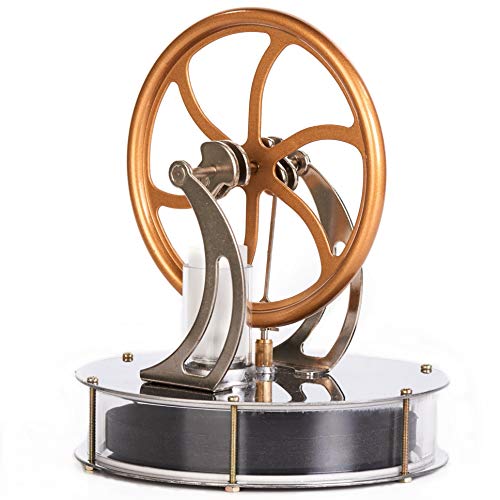
This kit offers a low-temperature variant designed for accessible demonstrations, with a mirror-finish stainless steel base, glass cylinder liner, and a zinc alloy flywheel. The model emphasizes easy operation—pour hot liquid or use a small heat source—and the ability to run for extended periods when continuously powered. It is marketed as both a display model and a tool for teaching energy transfer, with the coffee-and-heat concept often cited as a practical example of Stirling principles.
Durability and simplicity are highlighted, with an oil-free design and surfaces treated to resist corrosion. It suits classrooms or home laboratories where a reliable, long-running display is desired without complex maintenance or setup.
DiyXenginey Hot Air Stirling Generator Kit

The DiyXenginey kit presents a classic γ-type Stirling engine paired with a small generator and LED output. It emphasizes a detailed assembly process with diagrams and instructions to guide builders through the construction and operation. The design showcases a traditional crank rocker linkage and a compact layout that emphasizes the mechanical elegance of compression and expansion during operation.
The package focuses on educational value, enabling users to observe how heat drives motion and electricity. It is appropriate for hobbyists and students who enjoy hands-on projects that culminate in a working LED-powered display, offering rich visuals and clear demonstrations of thermodynamic principles.
Buying Guide: Key Considerations for Stirling Engine Kit Purchases
- Heat source and safety: Most kits use a small alcohol burner. Consider the availability and handling guidance, flame control, and required safety precautions for homes or classrooms.
- Build quality and materials: Look for stainless steel bases, aluminum frames, glass cylinders, and precision bearings. Higher-quality components tend to produce smoother operation and longer life, especially under repeated use.
- LED and electrical output: A visible LED or small generator output demonstrates energy conversion clearly. Check whether the LED is integrated with the engine or requires a separate wiring setup.
- Educational value: Some kits emphasize the science concept with diagrams, instructions, and explanations, while others are more focused on aesthetics. Choose based on the learning goals and age group.
- Assembly complexity: Beginner-friendly kits include clear instructions and fewer parts. More advanced sets may require precision assembly and fine-tuning of moving components.
- Durability and maintenance: Consider oil-free designs or materials that resist wear. Easy access to components for cleaning and maintenance is a plus for long-term use.
- Display and aesthetics: If your goal is a desktop display, select kits with attractive finishes and stable bases to minimize tipping during operation.
- Age suitability and safety warnings: Check recommended ages and any small parts warnings for younger users or classrooms.
Additional Considerations and Perspectives
Stirling engine kits vary in emphasis—from purely educational demonstrations to aesthetically pleasing display pieces that also teach energy conversion. For classroom use, kits with well-documented safety guidelines, assembly steps, and robust build quality tend to be more reliable for recurring lessons. Enthusiasts may prefer models with high-precision components, visually appealing finishes, and the best balance between mechanical realism and LED illumination. When comparing options, consider your primary goal: hands-on learning, visual demonstrations, or a compact desk-top experiment that can be reset for multiple sessions.
Conclusion-Free Notes
All listed kits offer a tactile way to explore heat-to-work conversion and light generation. By evaluating build quality, safety, educational content, and display value, buyers can select a Stirling engine generator kit that best fits their learning environment, project needs, and display preferences.