The following guide combines product options that relate to standby home generator capabilities and practical calculator helpers for managing power needs. It covers a range of generators and desk calculators to help users compare power output, efficiency, and reliability. Use the buying guide to weigh installation considerations, fuel type, noise levels, and how a calculator can aid in estimating load and run times.
| Product | Brand | Type | Key Feature |
|---|---|---|---|
| 2300 Watt Portable Inverter Generator | Genkins | Portable Inverter | Ultra Quiet, RV Ready, CARB EPA Complied |
| Champion Power Equipment 9000-Watt Electric Start | Champion | Open Frame Inverter Generator | Quiet Technology, CO Shield |
| Honeywell 14kW Home Standby Generator | Honeywell Store | Residential Standby | PrecisionPower, Quiet-Test Self-Test |
| Desktop Calculator with Extra Large Display | yxzzhx Store | Desk Calculator | Solar & Battery Power, Big Display |
| CATIGA 12 Digit Desk Calculator | CATIGA Store | Desktop Calculator | Dual Power, Large LCD |
Genkins 2300 Watt Portable Inverter Generator

Genkins’ 2300 Watt Portable Inverter is designed for quiet operation and RV readiness, with CARB and EPA compliance. This option emphasizes portability and cleaner power for sensitive electronics, making it a practical standby backup for small loads or essential circuits during outages.
Champion Power Equipment 9000-Watt Electric Start

Champion’s 9000-Watt model provides strong backup power with electric start and advanced quiet technology. It’s suitable for larger homes needing reliable power during outages, and its CO shield helps reduce exposure to exhaust indoors. This unit is designed for moderate to heavy loads while maintaining a reasonable noise footprint for its class.
Honeywell 14kW Standby System

Honeywell’s 14kW home standby generator emphasizes power quality with PrecisionPower technology and a purpose-built engine designed for reliability and longer maintenance intervals. The Quiet-Test Self-Test Mode runs at a lower RPM, improving comfort by reducing audible levels while testing and consuming less fuel than typical units. It’s suited for whole-home backup in American households with higher energy demands.
Desktop Calculator With Extra Large Display
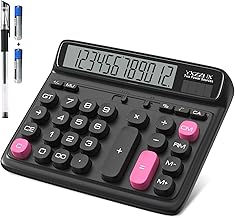
This desk calculator features a five-inch LCD display and two-way power options, solar and battery. It’s optimized for desk use with an angled display and ergonomic tilt to reduce neck strain. The solar/battery flexibility makes it a reliable partner for quick load calculations and budgeting during outages or off-grid planning sessions.
CATIGA 12 Digit Desk Calculator

CATIGA’s 12-digit calculator offers a large LCD display and big, responsive buttons for accurate and fast input. It uses dual power (solar and battery) to ensure readiness for budgeting, load calculations, and planning during outages or remote work setups. The durable design supports everyday use in home offices or classrooms when evaluating energy needs.
Buying Guide
Power requirements and backup goals:
- Determine essential circuits vs. whole-home coverage. For standby needs, match generator capacity to critical loads (refrigeration, heating, sump pump, lighting).
- Consider fuel type, fuel availability, and run-time expectations for outages typical in your region.
Generator features to evaluate:
- Power quality: Look for low total harmonic distortion (THD) when sensitive electronics are in use.
- Noise levels: Quiet technology or self-test modes help minimize disturbance in living spaces.
- Maintenance and engine design: Purpose-built engines with reliable lubrication reduce downtime and service costs.
Standby vs portable:
- Standby generators are wired into your home’s electrical system and switch automatically during outages, adding convenience but higher upfront costs.
- Portable inverters offer flexibility and lower upfront cost but require manual setup and fuel management during outages.
Calculators and load planning:
- Desktop calculators aid in budgeted load calculations, energy planning, and time-of-use estimates for outages or solar power integrations.
- Choose models with dual power (solar/battery) for reliability during power outages when access to electrical outlets may be limited.
Installation considerations:
- Permitting and local codes: Standby systems often require professional installation and compliance with building codes.
- Ventilation and exhaust: Ensure proper exhaust routing and clearance from structures to prevent carbon monoxide risks.
Cost and return on investment:
- Evaluate total cost of ownership, including installation, maintenance, and fuel costs, against the value of uninterrupted power and appliance protection.
- Energy efficiency and power management features can reduce operating costs over time.