If you’re seeking a home standby generator, these models provide automatic power for outages, helping maintain refrigeration, climate control, lighting, and connectivity. The top picks below are best suited for different home sizes and budgets—choose this guide to match your needs with steady, long-term backup power.
Summary table of selected products:
| Product | Best for | Key Benefit |
|---|---|---|
| Generac 26kW Home Standby Generator | Mvollks and large homes | High capacity with built-in cellular monitoring |
| Generac Guardian 22kW with 200 Amp Transfer Switch | Whole-house backup for bigger homes | Strong protection with large transfer switch |
| Generac Guardian 14kW with 100 Amp Transfer Switch | Mid-size homes or upgrades | Good balance of power and manageability |
| Generac Guardian 10kW with 16 Circuit Transfer Switch | Smaller homes or budget-conscious buyers | Compact, still supports essential loads |
| Honeywell 14kW Home Standby Generator | Quiet operation with clean power | Strong power quality for sensitive electronics |
Generac 26kW Home Standby Generator

Features include whole-house protection with automatic outage detection and backup power, along with electronic fuel and ignition control for cost efficiency and lower emissions. Built-in cellular connectivity enables remote monitoring and control via Mobile Link (subscription may apply).
Best for: Homeowners needing maximum capacity and seamless mobile monitoring. This model is chosen for large homes or high electrical demand scenarios where automatic, uninterrupted power is critical. Caution: Mobile Link premium subscription may be required for remote monitoring features.
Generac Guardian 22kW With 200 Amp Transfer Switch
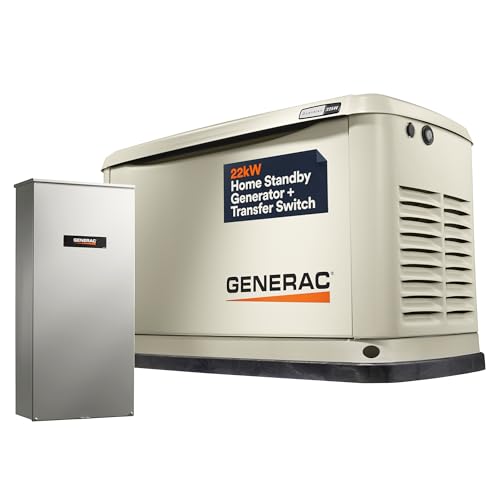
Remote monitoring via Generac Mobile Link Wi‑Fi keeps you connected to status and maintenance alerts. The 200 Amp NEMA 3R transfer switch supports outdoor installation, offering robust whole-house protection. A 5-year limited warranty underpins long-term reliability.
Best for: Larger homes needing substantial circuit coverage and remote oversight. Choose this if you want comprehensive protection and a durable outdoor-ready enclosure. Caution: Transfer-switch installation should comply with local electrical codes.
Generac Guardian 14kW With 100 Amp Transfer Switch

Offers whole-house protection with a 100 Amp transfer switch and an outdoor-aluminum enclosure. It includes remote monitoring via Wi‑Fi and a strong five-year warranty for long-term confidence. This model balances power with manageability for mid-sized homes.
Best for: Mid-size homes seeking reliable whole-house backup without excessive size. Limitation: Fewer circuit slots than larger units, which may require load management planning.
Generac 10kW With 16 Circuit Transfer Switch
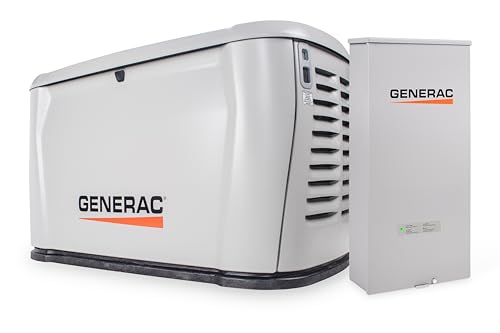
Combines essential load protection with generous transfer capability across 16 circuits. The built-in cellular connectivity enables remote checks on performance and alerts. It is best for smaller homes or where critical systems must stay powered during outages.
Best for: Budget-conscious buyers or smaller homes needing dependable backup power. Caution: May require selective load management to ensure key circuits stay powered during extended outages.
Honeywell 14kW Home Standby Generator

PrecisionPower technology delivers clean power with less than 5 percent total harmonic distortion, making it suitable for sensitive electronics. The G-Force engine is designed for reliability and lower maintenance. Quiet-Test mode reduces noise during testing.
Best for: Homeowners prioritizing power quality and quiet operation for electronics-heavy households. Caution: Some users may prefer higher wattage models for larger homes.
Generac Guardian 14kW With 100 Amp Transfer Switch (Alternative Listing)
This listing echoes the 14kW with 100 Amp Transfer Switch, emphasizing whole-house protection and remote monitoring. It’s a practical option for mid-sized homes requiring dependable backup with a straightforward installation path.
Best for: Homeowners seeking a trusted, mid-range standby solution with remote visibility. Caution: Verify transfer switch compatibility with existing electrical panels during planning.
Buying Guide: How to Choose the Right Home Standby Generator
- Size and load needs: Assess your essential loads (refrigeration, heating/cooling, lighting, water heater) and total anticipated wattage to pick a generator that can support them during outages.
- Transfer switch capacity: Ensure the transfer switch matches the generator’s output and the home’s circuits. Larger homes benefit from 200 Amp switches; smaller homes may do well with 100 Amp or 16-circuit options.
- Fuel type and availability: Natural gas or propane supply impact operation costs and flexibility. Confirm your fuel source is reliably available in your area.
- Remote monitoring: Built-in cellular or Wi‑Fi connectivity helps with maintenance alerts and status checks. Consider whether you want a subscription for premium features.
- Install environment: Outdoor-ready enclosures with corrosion resistance protect against weather. Check local code requirements and professional installation needs.
- Maintenance and warranty: Look for warranties that cover critical components and transfer switches. Regular service helps ensure reliability during outages.
Frequently Asked Questions
- What size standby generator do I need for a typical home? A typical home uses 5–20 kilowatts for essential loads; larger homes may require 22–26 kilowatts or more depending on climate control and appliances.
- Do standby generators run on natural gas or propane? Many models support natural gas or propane; your choice depends on fuel availability and cost in your area.
- Is remote monitoring worth it? Remote monitoring provides real-time status and maintenance alerts, which can reduce service interruptions and planning time during outages.
- What is a transfer switch, and why is it important? A transfer switch safely redirects power from the grid to the generator and prevents backfeeding, protecting the generator and utility workers.
- Can I install a generator myself? Standby generators typically require professional installation to meet electrical codes and safety standards.
- How long do standby generators typically run after an outage? Run times depend on fuel type and load; most units run as long as fuel is available and loads are sustained.