Discover the best split-phase solar inverters for converting 48V DC from panels or batteries into 120V/240V AC power. This guide focuses on five high‑output, dual‑MPPT models designed for homes, cabins, RVs, and small shops. Each option targets different user needs—from heavy culinary or workshop loads to reserve backup power. Read on to compare output, parallel capabilities, and battery compatibility to choose the right inverter for your off‑grid or grid‑tied system. A quick buying table follows to summarize the top picks.
| Product | Best For | Key Benefit |
|---|---|---|
| Aninerel 12000W | Large households, workshops | Parallel up to 6 units for up to 72 kW |
| SUNGOLDPOWER SPH10048P | Utility-aware installs | Built-in 2 MPPTs, WiFi monitoring |
| VEVOR 6400W | Lower-cost off-grid setups | Low-frequency, reliable pure sine wave |
| EcoSolLi 12000W | Two‑controller flexibility | 2 MPPTs, up to 6 parallel |
| Anjfylque 6500W | Batteryless operation scenarios | PV-first operation with grid/battery options |
Aninerel 12000W Solar Hybrid Inverter

The Aninerel 12000W Inverter is a 48V DC to 120V/240V AC split-phase system with pure sine output and built-in dual MPPT controllers. It supports up to 6,000W + 6,000W PV input at up to 500VDC, enabling strong energy harvesting—even on partly cloudy days. Best for large homes, workshops, or RVs that require robust power with scalable parallel operation. It can operate with various battery chemistries including Li-ion and LiFePO4. A caution: parallel configuration for very large loads requires careful electrical planning and proper bus sizing.
- Best for: Large loads, parallel expansion (up to 72 kW with 6 units).
- Why selected: High continuous output, flexible PV input, strong charging current.
- Limitation: Data indicates need for appropriate battery management in multi-unit setups.
SUNGOLDPOWER SPH10048P 10000W Inverter

The SPH10048P blends a 10 kW inverter with 2 MPPTs and a max 200A charging capability. It offers split-phase output (120V/240V) or a single-phase option, plus WiFi monitoring via a mobile app. This unit suits homes or cabins seeking dependable utility-like electricity with flexible charging modes, including Solar Priority and Hybrid modes. A cautious note: while parallel up to six units is supported, network coordination and cabling must be planned to avoid overloading feeders.
- Best for: Utility-oriented solar setups needing remote monitoring.
- Why selected: Integrated WiFi, multiple charging modes, and strong protection features.
- Limitation: Requires careful parallel configuration for very large systems.
VEVOR 6400W 48V Hybrid Inverter
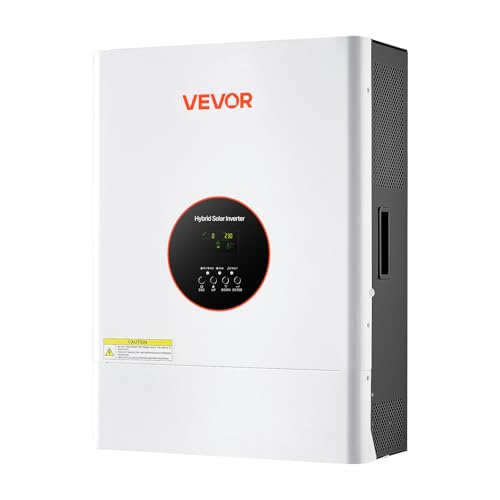
VEVOR’s 6400W low-frequency inverter combines an inverter and built‑in MPPT controller in one unit, delivering a pure sine wave and 110–120V/220–240V split-phase output. It emphasizes reliability for heavy loads and computers or TVs. Its lower frequency design often benefits induction loads but may be less compact than high-frequency models. A caution: ensure PV open-circuit voltages stay within the listed 500V to protect the MPPT circuitry.
- Best for: Heavy-load applications needing a robust, low-frequency design.
- Why selected: Pure sine wave, broad voltage support, and strong protection set.
- Limitation: Larger physical footprint than some high-frequency rivals.
EcoSolLi 12000W Hybrid Inverter

EcoSolLi’s 12000W inverter offers two independent MPPT controllers with real-time efficiency up to 99%. It supports parallel operation up to six units for a combined output of 72 kW, with a max PV open-circuit voltage of 500VDC. It features WiFi/GPRS remote monitoring and multiple charging modes, including Solar Priority. It is designed for high-demand homes or RV setups and is compatible with lead-acid and Li-based batteries. A caution: the remote monitoring requires a network connection and may add a layer of complexity for beginners.
- Best for: High-parallel, high-output solar systems.
- Why selected: Two MPPTs, remote monitoring, flexible charging modes.
- Limitation: Setup can be more complex due to dual MPPTs and monitoring features.
SUNGOLDPOWER 10000W SPH10048P (Alternate SKU)
This listing mirrors a 10 kW SPH model with built-in 2 MPPT controllers and up to 200A battery charging. It supports parallel operation and offers multiple charging modes to tailor output to home or workshop loads. A caution: verify local electrical codes when installing parallel units and ensure proper grounding practices.
- Best for: Buyers seeking a trusted SUNGOLDPOWER solution with parallel capability.
- Why selected: Similar specs to other SPH models with established compatibility.
- Limitation: Availability can vary by region and SKU.
Anjfylque 6500W Hybrid Inverter

The 6500W model from Anjfylque is designed for both grid-support and battery-backed operation. It features a dual MPPT solar charger with an LCD, supports batteryless operation (PV-driven loads) and offers several AC output priority modes such as Utility Priority and Solar Priority. It is suitable for users who want to maximize solar use while retaining grid or battery fallback. A caution: solar-first operation may require a higher PV array size to sustain loads during low battery or low light.
- Best for: Users exploring PV-first operation and batteryless capability.
- Why selected: Flexible output modes and battery activation option.
- Limitation: Batteryless operation depends on PV array availability and input voltage.
Buying Guide
What to consider when choosing a split-phase solar inverter:
- Output and parallel capacity: For larger homes or workshops, select units that can be paralleled (6 units common) to reach combined outputs like 72 kW. Assess your peak load and surge needs.
- MPPT count and PV voltage: Two MPPTs handle diverse array configurations and higher open-circuit voltages (up to 500VDC). Ensure compatibility with your panel setup and battery chemistry.
- Battery compatibility: Check whether the inverter supports Lead Acid, Li-ion, and LiFePO4 batteries, and whether it can operate without a battery when PV generation is sufficient.
- Protection and monitoring: Look for over-voltage/current protections, anti-backfeed safeguards, and WiFi or mobile app monitoring for real-time status.
- Application fit: Choose based on whether you need pure off-grid, grid-tied, or hybrid utility-first operation. Consider whether you prefer universal 120V/240V split-phase output or single-phase options.
- Installation space and noise: Low-frequency inverters can be larger but may suit certain mounting constraints; confirm space, ventilation, and electrical clearances.
FAQ
- What is split-phase output and why choose it?
Split-phase output provides two 120V legs that create 240V when used together, useful for powering heavy appliances and certain equipment with higher voltage needs.
- Can these inverters operate without batteries?
Many models allow batteryless operation when PV generation is sufficient to meet load, but performance depends on light conditions and load size.
- How many inverters can I parallel safely?
Most listed models support up to six units in parallel, but check DIN rail, bus bars, and wiring ratings to avoid overload.
- What maintenance is required for high-output solar inverters?
Regular inspection of connections, cooling around the unit, and firmware monitoring ensures reliability; follow manufacturer guidelines for servicing.
- Which is best for a home backup system?
For home backups with scalable power, consider models with built-in MPPTs, robust protection, and easy remote monitoring to manage solar-to-load operation.