When outages strike or you’re off the grid, a solar powered emergency generator can deliver quiet, clean, and dependable power. This article highlights five compact, portable options designed for home backup, camping, and outdoor adventures. Each model combines solar input with a built-in battery and multiple outputs to keep essential devices running. Read on to compare capabilities, outputs, and charging flexibility to choose the right solar generator for your needs.
| Product | Brand | Key Strength | Output Range |
|---|---|---|---|
| Apowking Solar Powered Generator 200W + 40W Panels | Apowking | 7-output versatility; lightweight | 110V AC, USB, DC |
| SinKeu Solar Generator 300W + 40W Panels | SinKeu | Lithium battery with multiple ports | 2x110V AC, USB, DC |
| Bailibatt Portable Power Station 600W | bailibatt | High surge capacity; 293Wh | AC, USB-C, USB-A, DC, Car |
| ZeroKor Portable Power Station with 40W Panel | ZeroKor | Multiple charging methods; compact | AC, USB, DC |
| Apowking Portable Solar Generator 300W + 40W Panels | Apowking | Higher capacity; 220Wh battery | AC, USB, DC |
Apowking 200W Solar Generator With Panels

The Apowking model combines a compact portable power station with a 40W solar panel kit. It features a 146Wh/39600mAh battery, a light weight of about 3.3 pounds, and seven outputs including two 110V AC outlets (200W peak), USB ports, and a DC 12V output. The included solar panel uses monocrystalline cells with a reported 20.5% efficiency, designed to charge devices such as laptops, phones, cameras, and small appliances during camping, emergencies, or travel.
Apowking 200W Solar Generator With Panels (Second Variant)

This variant mirrors the 200W configuration with a 146Wh pack and 7 outputs. The same 40W solar panel is included, offering portability for outdoor use, camping trips, and small home backup scenarios. Users can draw power from AC outlets or USB ports while the system recharges through the solar panel when sunlight is available.
Bailibatt 600W Portable Power Station

The Bailibatt power station delivers 600W continuous pure sine wave AC output with a 1200W surge capacity, sufficient for many home essentials and outdoor devices. It includes 293Wh of lithium battery capacity and seven outputs, such as a 600W AC outlet, PD USB-C, USB-A, car port, and DC options. The unit is designed for home backup, camping, and travel, with a focus on reliable performance and relatively lightweight portability for its power class.
Apowking 300W Portable Solar Generator + 40W Panel

The 300W Apowking model expands capacity to a 220Wh battery packaged in a compact form. It includes a 40W solar panel and seven output options, including dual AC outlets (up to 300W peak), multiple USB ports, and a DC output. With improved energy delivery and a robust chassis, it suits longer camping trips, home backup, or power outages where a higher draw is needed without gasoline.
ZeroKor 100W Solar Generator With Panel
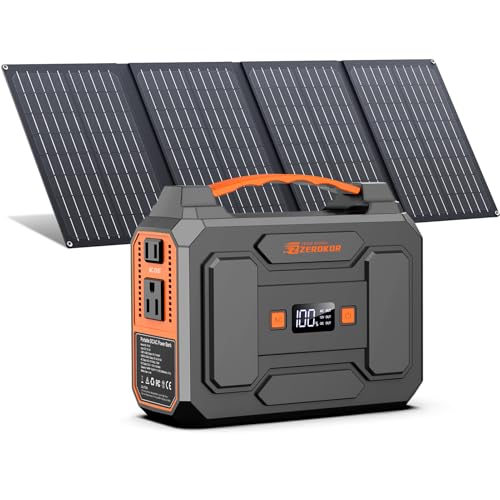
The ZeroKor kit centers on a 100W portable lithium-ion battery base paired with a 40W foldable solar panel. It offers two 110V AC outlets, DC, USB, and USB-C ports, plus a built-in flashlight and SOS mode for emergencies. While designed for off-grid camping and travel, its moderate capacity and multiple charging options make it a practical emergency power source for smaller devices and essential electronics during outages.
Apowking 300W Solar Generator With Panels (Second Apowking)
The 300W Apowking option combines a 220Wh battery pack with a 40W solar panel kit, enabling seven outputs including dual AC outlets and USB-C. The power station emphasizes multi-device charging capability, making it suitable for home backup, camping, and outdoor adventures where access to the grid is limited.
Buying Guide: Key Purchase Considerations
Power needs: Start by estimating the total wattage of devices you plan to run. Look for a generator with a continuous watt rating that exceeds your typical use, plus a surge rating high enough for brief power spikes.
Battery capacity and weight: Higher Wh (watt-hours) means longer runtime but heavier units. Balance capacity with portability based on your primary use (home backup vs. backpacking).
Output options: Ensure the device supplies the essential outlets you require (2x AC, USB-C PD, USB-A, DC car port). Evaluate whether Bluetrack features like pure sine wave AC output are important for sensitive electronics.
Solar panel compatibility: Check panel efficiency (percentage) and compatibility with other solar panels you own. Consider whether the kit includes panels or if you will purchase separately.
Charge methods: A good system should recharge via solar input, wall outlet, and car 12V when available. MPPT charging and fast charging USB-C capabilities can significantly reduce downtime.
Portability and build: For outdoor use, prioritize lighter weights and rugged exteriors with ergonomic handles. Consider the number of ports and whether fans are needed for cooling during prolonged use.
Safety and durability: Look for BMS protection, overcharge/overdischarge protection, short-circuit safeguards, and a robust enclosure. A compact, carry-friendly design helps in emergency scenarios.
Warranty and support: A solid warranty offers peace of mind for adverse weather or heavy daily use. Check the manufacturer’s service terms and replacement policies.
With the right solar powered emergency generator, you gain dependable off-grid power that supports essential devices during outages or remote adventures. The models above emphasize portability, multiple outputs, and solar charging compatibility to meet a range of backup power needs.