When you need reliable power off the grid, solar powered generators offer quiet, emission-free energy for camping, emergencies, and remote work sites. This guide highlights five top models that pair portable power stations with solar panels, delivering multiple outputs, safety features, and practical runtimes. Learn what each unit offers, how they compare on capabilities, and key buying considerations to help you choose the best solar generator for your needs.
| Product | Battery / Capacity | Solar Panel Included | Primary Use |
|---|---|---|---|
| EF ECOFLOW Delta 2 Max | Up to 6kWh expandable | Optional solar panel system | Home backup, heavy-duty devices |
| SinKeu Solar Powered Generator 300W | 260Wh / 70,400mAh | 40W solar panel included | Camping, outdoor power backup |
| Apowking Portable Solar Generator 300W | 220Wh / 60,000mAh | 40W solar panel included | Home use, camping, emergency power |
| ZeroKor Portable Power Station | 100W capacity (approx. 146Wh class) | 40W foldable solar panel included | Outdoor adventures, off-grid living |
| Greenmagic Portable Power Station 330W | 220Wh | 60W panel option available | Camping, travel, quick outages |
SinKeu 300W Solar Generator With Panels

The SinKeu Solar Powered Generator delivers a compact 260Wh lithium battery with 300W peak output. The included 40W solar panel supports daylight charging, expanding outdoor reliability. Output options include two AC outlets (110V/60Hz), multiple USB ports (including USB-C with PD), and DC ports for vehicles or appliances. Its integrated battery capacity supports overnight camping, emergency power, and modest home backup scenarios. The system aims for straightforward setup: charge via solar during the day and switch to AC or DC outputs as needed.
Apowking 300W Portable Solar Generator With Panels

The Apowking 300W model pairs a portable 220Wh battery with a 40W solar panel. It emphasizes compatibility and portability, offering seven outputs including 2x110V AC outlets, multiple USB ports, and a DC vehicle port. This setup suits home backup during outages and outdoor use while maintaining a compact form factor. The kit is designed to power common devices such as laptops, phones, cameras, and small appliances, with quiet operation and a focus on reliable daylight recharging through the included solar panel.
ZeroKor 100W Solar Generator With 40W Panel
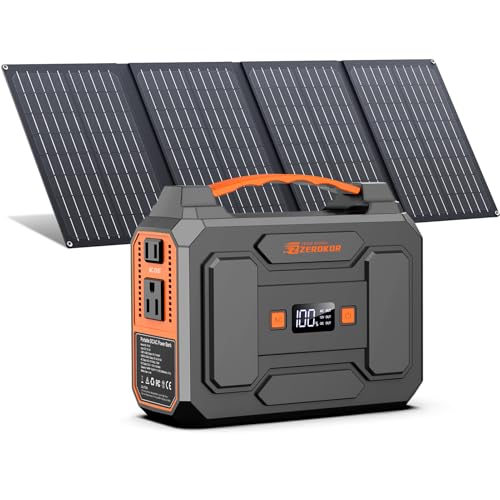
ZeroKor presents a compact 100W-class solar generator kit with a foldable 40W solar panel. It features two 110V AC outlets, USB ports, a USB-C, and a 12V car port for flexible charging. This configuration supports essential devices during camping trips or minor power outages. The system is notable for its portability, light weight, and a design that emphasizes off-grid convenience while offering multiple charging methods, including solar and wall outlets.
Apowking 200W Portable Solar Generator Kit

This Apowking model provides 146Wh of capacity with a 40W panel, combining portable power for minimal outages or outdoor use. The unit offers seven outputs, including AC outlets, USB ports, and a DC 12V port. It emphasizes lightness (a few pounds) and compact footprint, making it suitable for hikers, travelers, and quick camping setups. It is best used for smaller gadgets, charging phones and tablets, and powering lights during outdoor adventures.
EF ECOFLOW Delta 2 Max – Premium Solar Backup

The EF ECOFLOW DELTA 2 Max represents a higher-capacity option with rapid charging. It supports up to 1000W solar input when paired with solar panels and AC charging for fast top-ups, delivering a significant performance boost for home backup scenarios and larger devices. The system uses a durable LFP battery with thousands of cycles and offers expandable capacity up to 6kWh with add-on modules. This option suits users who require robust, scalable power in off-grid or blackout conditions and are willing to invest in a premium solution.
Greenmagic 330W Portable Power Station

The Greenmagic 330W unit emphasizes a higher wattage for a portable class, combined with a 220Wh class battery. It includes seven outputs including dual 120V AC outlets, USB ports, and a PD-enabled USB-C port. The model is designed for reliability during camping, RV trips, and emergency outages, with a focus on fast USB-C charging and safe operation via a strong BMS. It’s positioned as a versatile, mid-range option that balances power output and portability.
Buying Guide: Key Considerations And Comparisons
- Power needs and peak loads: Match the generator’s wattage and peak capability to the devices you intend to run. For laptops, small appliances, and lights, a 200–300W system with 600–1000W peak is often sufficient. For home backup or CPAP machines, consider higher capacity and stronger inverter performance.
- Battery chemistry and longevity: Look for Lithium Iron Phosphate (LFP) or high-quality Li-ion cells with durable BMS protection. Longer cycle life reduces long-term replacement costs and improves reliability.
- Solar panel integration: Panels included with the kit simplify setup, but assess panel efficiency (percentage), and the total combined charging capacity. Higher wattage panels shorten recharging time on sunny days.
- Output options: A mix of AC outlets, USB-C PD, USB-A, and 12V DC ports covers most devices. Ensure your essential devices are supported, especially if you rely on the generator for critical equipment.
- Portability and weight: For outdoor use, weight and size influence usability. Ultra-light options (coupled with compact panels) are ideal for hikers, while heavier units suit car-camping scenarios.
- Expansion capability: Some models offer expandable capacity with additional battery modules. If you anticipate growing power needs, this can be a practical long-term investment.
- Safety and user experience: Features such as overcharge, short-circuit protection, and passive cooling matter for reliability. Quiet operation is beneficial for camping and living spaces alike.
- Warranty and support: Check the manufacturer’s warranty length and service access, especially for premium models and extended use in harsh environments.
In sum, the right solar powered generator balances capacity, outputs, portability, and price to fit your typical usage. For light outdoor power, compact units with 100–150Wh can be sufficient, while weekend camping or emergency home backup may require 200–400Wh with multiple outlets. For larger setups or frequent power outages, high-capacity systems with expandable storage and fast solar charging provide the most resilience.