Answering the question, these selections pair reliable solar panels with inverters to supply steady AC power from solar energy. They suit off-grid lifestyles, RV trips, tiny homes, cabins, and emergency backup needs. This guide highlights five options that balance ease of setup, scalability, and practical use cases for different buyers.
The following table summarizes the chosen products to help you compare at a glance:
| Product | Best For | Key Benefit | Limitations |
|---|---|---|---|
| ECO-WORTHY 200W Complete Solar Starter Kit | RVs and beginners | All-in-one kit with panels, battery, controller, and inverter | May be less modular for larger needs |
| Aninerel 12000W Solar Hybrid Inverter | High-power off-grid/homes | High continuous and peak power with dual MPPT | Complex setup for beginners |
| LANDERPOW 3000W Pure Sine Wave Inverter | RV and remote power | Multiple outlets and USB/PD; strong surge capacity | Mid-range price; fewer built-in solar components |
| Renogy 100W Starter Kit | Compact off-grid projects | Efficient panel and solid controller with safety features | Smaller solar array for limited demand |
| BELTTT 2000W Pure Sine Wave Inverter | Budget-conscious setups | Reliable pure sine wave with LCD display | Lower continuous power than larger units |
ECO-WORTHY 200W Complete Solar Starter Kit
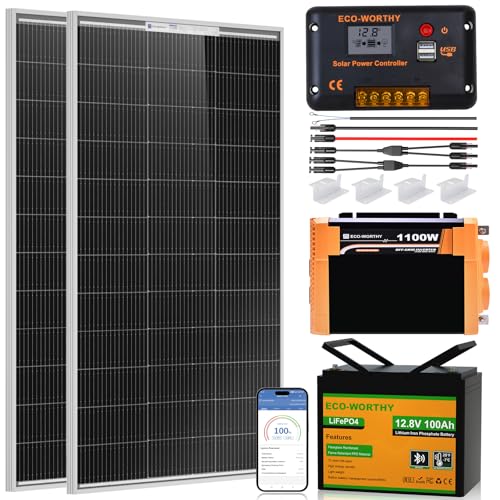
Best for RV adventures and beginners who want an all-in-one package. This kit includes two 100W panels, a 12.8V 100Ah lithium battery, an 1100W inverter, and a 30A PWM controller, plus necessary cables. The design emphasizes a four-step install and novice-friendly setup. The system is capable of generating around 800Wh daily and storing about 1.28kWh, making it suitable for weekend trips or light off-grid living.
Who it’s best for: buyers seeking a turnkey off-grid solution with minimal additional components. Why selected: it consolidates essential pieces into one purchase, simplifying initial deployment. Caution: reliability for long-term expansion is limited if you outgrow the 200W capacity.
4000W 12V to 110V/220V Inverter Power Generation Kit

Best for sheds, small homes, and emergency power. This kit centers on the inverter with a 30A controller and a small solar panel for temporary use. It’s designed for DIY enthusiasts who want to power a range of devices during outages or in off-grid cabins. The integrated protection features help stabilize power delivery for basic electronics.
Who it’s best for: DIYers needing a complete, compact backup setup. Why selected: it provides a straightforward, scalable path to emergency power with a compatible inverter and controller. Caution: solar input is modest; plan for higher solar input if longer outages or higher loads are expected.
Aninerel 12000W Solar Hybrid Inverter

Best for high-demand off-grid systems, RVs, and workshops. This unit offers 12,000W continuous output with 24,000W peak and dual MPPT controllers for optimized charging. It supports a wide range of batteries and PV inputs up to 500VDC, making it highly scalable for large solar arrays. It is especially suitable where heavy loads or parallel expansion are anticipated.
Who it’s best for: buyers needing robust, scalable power and advanced charging efficiency. Why selected: the dual MPPT and high output support substantial off-grid setups. Caution: configuration complexity and higher upfront cost may be challenging for casual users.
Renogy 100W Starter Kit

Best for compact off-grid projects and beginners who want a trusted brand with solid safety features. The kit includes a 100W monocrystalline panel, a PWM charger controller, and installation hardware. Efficiency is strong for the size, and UL/IEC-safety credentials provide peace of mind for small off-grid deployments.
Who it’s best for: buyers starting small or upgrading from basic portable setups. Why selected: Renogy’s kit combines reliable components with a strong service backbone. Caution: limited output may necessitate additional panels for higher daily energy needs.
BELTTT 2000W Pure Sine Wave Inverter

Best for budget-conscious setups needing a solid pure sine wave inverter. The unit delivers 2000W continuous power with a 4000W surge, plus a clear LCD display for monitoring. It’s suitable for powering home theater systems, basic appliances, and office devices during outages. The built-in protection helps extend device life.
Who it’s best for: buyers prioritizing affordability without sacrificing pure sine wave quality. Why selected: strong value for the output range. Caution: lower continuous power compared to higher-end inverters; plan loads accordingly.
Buying Guide
- How much continuous power do you need? Estimate your daily energy use and pick an inverter and solar array that comfortably cover peak loads. Higher wattage inverters handle heavy-start devices but cost more and require larger solar input.
- Do you need pure sine wave? For sensitive electronics, radios, or motors, choose pure sine wave inverters (like the ones listed). They produce a cleaner power waveform and reduce risk of damage.
- What about charging and panels? Look for a system with MPPT controllers for efficient charging in variable light. For larger off-grid setups, parallel capability (adding more inverters) can scale power reliably.
- Ease of installation vs. expandability? All-in-one kits are fastest to deploy; modular setups offer growth. Balance your comfort level with future needs.
- Battery compatibility? Check battery chemistry (lithium, lead-acid, LiFePO4) and voltage. Some inverters pair better with high-voltage or high-capacity packs for efficiency and longevity.
FAQ
- What is the difference between a pure sine wave and modified sine wave inverter? Pure sine wave inverters output a smooth, grid-like waveform suitable for sensitive devices; modified sine wave inverters are less expensive but can cause hum or performance issues for some equipment.
- Can I mix brands of solar panels and inverters? Yes, but ensure voltage and current ratings are compatible, and use appropriate controllers and safety devices to avoid overloading any component.
- Is an all-in-one kit better for beginners? All-in-one kits simplify setup and reduce component mismatch risk, making them ideal for beginners or quick deployments.
- How do MPPT controllers improve efficiency? MPPT controllers optimize the voltage from panels to maximize current under varying sunlight, boosting energy harvest especially in cooler or cloudier conditions.
- What safety features should I look for? Look for over/under voltage protection, short-circuit protection, thermal monitoring, and proper certifications (UL/IEC) for reliability and safety.