Answering the demand for bulk solar panels, this guide highlights five strong options for buyers who need reliable off-grid, RV, boat, farm, or shed power. Each product is evaluated for 12V/24V or higher system compatibility, shade tolerance, and installation practicality. This is ideal for DIY installers, small business setups, and property owners planning a larger solar install. The top picks emphasize efficiency, durability, and ease of integration with existing or expanding systems.
Summary table of selected products
| Product | Best For | Key Benefit | Limitation |
|---|---|---|---|
| ECO-WORTHY 400W Panels | Off-grid homes, RVs, boats | High efficiency with N-Type cells, good low-light performance | 4 panels per package; verify compatibility with your inverter |
| Renogy ShadowFlux 120W | Compact spaces, shading-prone sites | Anti-shading tech reduces hot spots | 120W per panel; may require more panels for bulk builds |
| BONAI 9W Mini Panels | Portable, small devices, quick deployments | USB-C power, durable mounting kit | Low power output; not suited for bulk energy, more for charging |
| ZOUPW 100W Portable Panel | RV camping, emergency power | True 5-in-1 connectors, IP67 coating | 100W per panel; bulk may need more units |
| JJN Bifacial 425W Panel | Large rooftops, off-grid farms | Bifacial design, up to 25% more output | Higher upfront equipment needs; weather-rated |
ECO-WORTHY 400W Solar Panels N-Type 4pcs

The ECO-WORTHY 400W kit uses N-Type cells to push efficiency to about 25%, boosting output under four hours of sunlight. This multi-panel package is suitable for 12V or 24V charging setups and can be extended to expand your off-grid system. Best for buyers planning a modular, scalable installation on a shed, RV, farm, or boat where space allows multiple panels in a single run. The 35-inch cable length helps with mid-range installations, and pre-installed bypass diodes in the junction box support better performance in shaded conditions.
Who this is best for: Builders needing a straightforward, scalable off-grid solution or a DIY enthusiast expanding a 12V/24V system.
Why selected: High efficiency and easy expansion make it a strong bulk investment for growing energy needs.
Limitations: The kit uses four panels; ensure your mounting area and inverter can handle four 100W modules and that wiring length suits your layout.
Renogy ShadowFlux 120W N-Type Panels
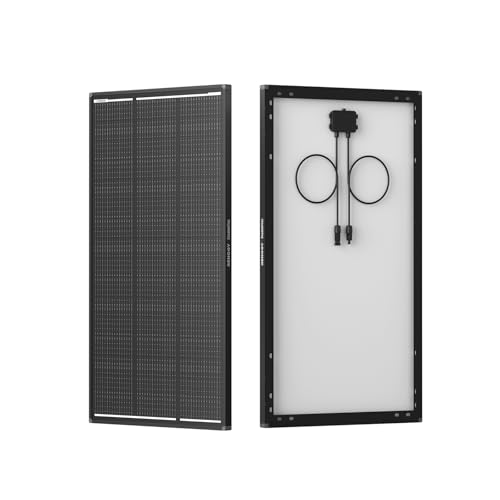
The Renogy ShadowFlux 120W panel focuses on anti-shading performance with ShadowFlux technology and 16BB N-Type cells. This design minimizes hot spots and micro-cracking, increasing reliability in partially shaded spaces or complex roof lines. It’s compact and lighter than many comparable panels, making it a practical choice when space is at a premium, such as smaller RVs, boats, or tight rooftop areas.
Who this is best for: Buyers who expect some shading (trees, buildings) and want reliable, consistent output in a smaller footprint.
Why selected: Anti-shading features reduce drop-offs, which is valuable in bulk installations where shading variance may occur across multiple panels.
Limitations: 120W per panel means more units may be needed for large-scale bulk setups; plan for space and mounting support accordingly.
BONAI 2 Pack 9W Solar Panels

This value pack delivers 18W total from two compact panels with IP65 protection and USB-C output. The included 10-foot USB-C cable and adapters support flexible outdoor charging for cameras, phones, or other 5V devices. Best for quick, portable setups where space is limited and you want a simple charging solution rather than bulk energy production.
Who this is best for: Individuals needing portable, weather-resistant charging for small devices or as a supplemental power source in outdoor deployments.
Why selected: Excellent for adding portable solar charging quickly, with a robust mounting and wiring kit that supports rapid setup.
Limitations: Not designed to deliver bulk energy or high-power loads; consider this for supplementary charging rather than full-system power.
ZOUPW 100W Portable Panel

The ZOUPW 100W panel offers true 5-in-1 universal connectivity, handling a wide range of power stations with multiple connector options. It features 23.5% efficiency mono cells and IP67 waterproof ETFE coating. This makes it a strong candidate for RVing, camping, or emergency power for off-grid setups where flexibility and weather resistance are needed.
Who this is best for: Users who own multiple brands of portable power stations and need plug-and-play compatibility.
Why selected: The broad connector compatibility reduces the need for adapters when expanding or moving between devices.
Limitations: 100W per panel; for bulk off-grid installations, multiple panels are required to reach higher energy goals.
JJN Bifacial 425W Panel

The JJN bifacial 425W panel employs N-Type 16BB cells and a transparent backsheet to capture energy from both sides, delivering up to 25% more output under suitable conditions. It’s built with a robust aluminum frame plus IP65/IP68 protection for durable outdoor use. This panel is best for rooftops or larger installations where high wattage per panel is desired and space is available.
Who this is best for: Large-scale deployments on roofs or ground mounts where higher wattage per panel reduces rack space needs.
Why selected: Bifacial design increases potential energy yield, beneficial in expansive bulk projects with favorable sun exposure.
Limitations: Higher electrical and mounting considerations may be required; ensure roof or structure can support heavier modules and wiring requirements.
Buying Guide
What to consider when buying solar panels in bulk
- System voltage and compatibility: Confirm your inverter, charge controller, and battery bank support 12V, 24V, or higher configurations and that the panel wattage aligns with your bulk energy goals.
- Cell technology and efficiency: N-Type and bifacial cells offer higher efficiency and better shading performance, but may come at a higher upfront cost. Efficiency matters most when space is limited or shading is likely.
- Durability and weather resistance: Look for IP ratings, frame construction, and coating (ETFE vs PET) to ensure weather resilience in outdoor installations.
- Shade tolerance: Anti-shading tech and layout planning reduce performance losses in mixed sunlight, particularly important for roof lines or dense canopy areas.
- Portability vs. bulk power: Portable panels suit temporary or off-grid needs, while fixed residential or commercial installs prioritize higher wattage per panel and easier mounting.
- Wiring and connectors: Bulk builds benefit from standardized connectors and long cable runs; ensure availability of compatible cables, adapters, and bypass diodes where needed.
- Expansion strategy: When buying in bulk, choose panels that allow straightforward expansion to match growing energy requirements over time.
- Maintenance and lifespan: Consider whether panels have durable frames, reliable junction boxes, and backsheet technology to minimize maintenance needs.
Frequently Asked Questions
- What is the benefit of N-Type solar cells in bulk panels? Answer: N-Type cells offer higher efficiency and better performance in high temps and shading, helping maximize energy output in bulk deployments.
- Can I mix different panel brands in one system? Answer: Yes, but ensure matching voltages and similar electrical characteristics to avoid imbalance in the array.
- Is bifacial panel technology worth it for large setups? Answer: It can be, particularly in installations with strong vertical surfaces or high albedo, but consider mounting and exposure conditions.
- How many panels do I need for bulk energy goals? Answer: That depends on total desired wattage, site sun exposure, and system voltage; compute daily needs and plan for expansion.
- What maintenance is required for outdoor panels? Answer: Keep surfaces clean, inspect for damaged wiring, and check mounting hardware during severe weather seasons.
- Should I prioritize efficiency over wattage when expanding a system? Answer: Balance both; higher wattage reduces rack space, while efficiency helps maximize output in limited areas.