The best solar panels for a small cabin provide reliable, off-grid power with easy installation and rugged durability. This guide highlights five compact panels that suit cabins, sheds, and other small off-grid spaces. Each option targets different needs—from simple battery maintenance to full daily power for lighting and small appliances. The top picks are best for weekend cabins, remote cabins, or seasonal retreats where grid access is limited.
Buyer’s quick guide table:
| Product | Best For | Why It Stands Out |
|---|---|---|
| Hoysicy Solar Panel Kit 20W | Low-cost starter kit | Includes PWM controller and extension cables; simple 12V system |
| SOLPERK Solar Panel Kit 20W | Weatherproof endurance | High waterproofing, 8A controller, strong durability |
| Renogy 100W Flexible Panel | Curved or uneven surfaces | High flexibility, light, easy to mount on irregular surfaces |
| Renogy 200W N-Type Panel | Compact high power | Efficient, smaller footprint for vans or small cabins |
| FlexSolar 100W Portable | Portable power on the go | PD/CQ outputs, foldable for easy transport |
Hoysicy Solar Panel Kit 20W 12V Monocrystalline

Best for beginners and small cabins with 12V systems. This kit includes a PWM charge controller, a 20W monocrystalline panel, and an extension cable with battery clips. The controller helps protect battery voltage and avoids overcharge, improving charging efficiency without extra self-power draw. The frame uses heavy-duty anodized aluminum and tempered glass for weather resistance. Suitable for AGM, Flooded, GEL, and other 12V battery chemistries used in RVs, boats, or off-grid cabins.
Who it’s for: a cost-conscious buyer seeking a simple, ready-to-use 12V setup for basic cabin power and battery maintenance. Best for seasonal or small-load use rather than continuous high-power needs. Limitation: 20W output may be insufficient for higher daily power draw or multiple devices.
SOLPERK Solar Panel Kit 20W 12V With Smart MPPT Controller
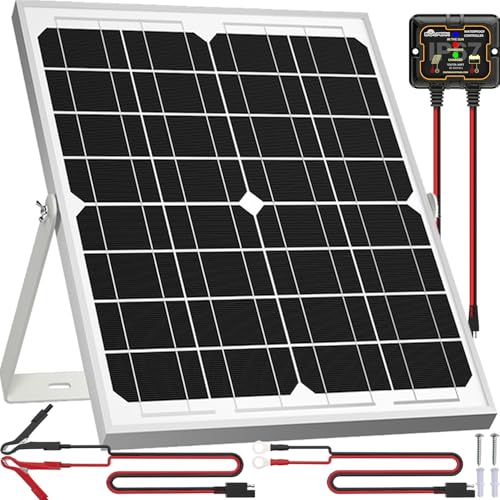
Best for cabins needing robust weather resistance and smarter charging. This kit uses a smart MPPT-style control approach and a 20W panel to charge 12V batteries for lights and small devices. It features a low-iron tempered glass surface and a corrosion-resistant frame, designed to endure harsh weather. The controller’s three-stage charging helps prevent overcharging and voltage spikes, with status indicators to simplify monitoring.
Who it’s for: cabin owners who want a compact, weatherproof system with smarter charging. Choose this if you prioritize longevity and a clearly managed charging profile. Caution: 8A controller may still limit high-sun conditions if multiple loads are connected concurrently.
Renogy 100W Flexible Solar Panel
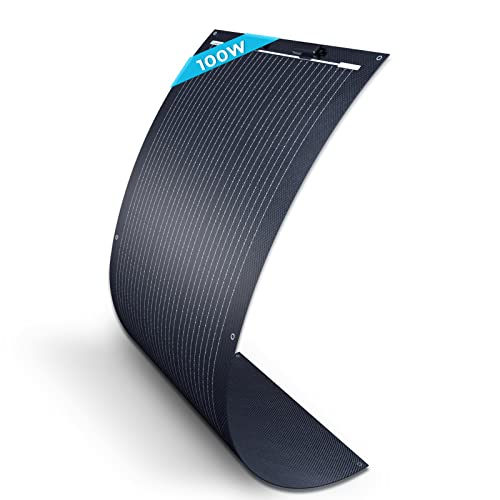
Best for curved or irregular cabin surfaces where a rigid panel won’t fit. This flexible 100W panel uses 16BB PERC technology for efficiency and can be mounted on non-traditional surfaces, including curved cabin roofs. It is lightweight and provides a portable option for cabins that require discreet installation. The panel is designed for marine, RV, and cabin use with a focus on space efficiency.
Who it’s for: cabin owners with limited mounting options or those seeking a light, flexible solution. Better for: irregular roof shapes or temporary setups. Limitation: Flexible panels can be less durable over very long terms if not properly supported or sealed at edges.
Renogy 200W N-Type Solar Panel

Best for compact, higher-power needs in a small cabin or van. This 200W N-Type panel delivers strong efficiency (about 25%) with a compact footprint, making it suitable for tight spaces and mobile cabins. It supports 12V and 24V systems and is compatible with diverse battery chemistries like Lithium and AGM, offering flexible integration for more demanding off-grid setups.
Who it’s for: buyers needing more daily power from a limited roof area, such as small off-grid cabins or van builds. Choose this if space is a constraint but higher energy output is desired. Caution: 24V compatibility may require compatible charge controllers and wiring for some systems.
FlexSolar 100W Portable Solar Panel

Best for portable cabins or temporary off-grid power needs. This 100W foldable panel includes PD, USB-C, and USB-A outputs plus DC connections, making it versatile for charging small devices or powering a compact power station. It’s light and transport-friendly, with a waterproof IP67 rating for outdoor use. Great for seasonal cabins or when you require mobility between sites.
Who it’s for: buyers needing transportable power, emergency power backups, or off-grid trips. One limitation: portable designs often require a compatible power station or battery assembly to maximize use in cabins.
Topunive 100W Flexible Solar Panel

Best for uneven or irregular cabin surfaces where mounting conventional panels is challenging. This 9BB monocrystalline panel offers up to 23% efficiency and a lightweight design. It is highly bendable, enabling installation on curved surfaces like RVs and cabins with imperfect roofs. It’s designed for versatile off-grid use and easier adaptation to non-flat exteriors.
Who it’s for: buyers needing a flexible, high-utility solution for awkward roof geometry. Avoid this if the cabin roof must endure long-term wear and you prefer a rigid, proven mounting system without edge protection concerns.
Renogy 200W Portable Solar Panel (IP65)

Best for reliable, rugged off-grid power with portability. This 200W foldable panel is IP65-rated and designed for camping, RVs, and cabins needing backup energy in challenging environments. The high-efficiency cells and portable form factor support versatile use with power stations and 12V systems.
Who it’s for: buyers seeking a durable, portable option with strong weather resilience. Limitation: heavier than ultra-light portable options; best paired with a compatible power station for cabin use.
Buying Guide: Key Considerations For Small Cabins
- Power needs: Assess daily energy usage in watt-hours to determine panel wattage and battery capacity. Small cabins typically require 20–200W of solar for lighting and basic appliances.
- Mounting surfaces: Consider flat versus curved roofs and whether flexible panels are needed for irregular surfaces.
- Controller type: PWM controllers are simple and affordable, while MPPT controllers can improve charging efficiency, especially in fluctuating sunlight.
- Durability and weather resistance: Look for tempered glass, aluminum frames, and IP ratings for outdoor exposure.
- Portability vs. permanence: Decide between foldable/portable panels for travel or fixed panels for a permanent cabin installation.
- Battery compatibility: Ensure panel and controller compatibility with your battery type (AGM, Gel, flooded, LiFePO4, etc.).
Frequently Asked Questions
- What size solar panel is best for a small cabin? A panel in the 20–200W range is common for basic cabin use; the exact size depends on daily energy needs and available roof space.
- Do I need an MPPT controller for a small cabin? MPPT controllers improve charging efficiency, especially in fluctuating sun, but PWM controllers are adequate for simple, low-wattage setups.
- Can flexible solar panels work on a cabin roof? Yes, especially on curved or irregular surfaces where rigid panels don’t fit well, but ensure proper sealing and mounting.
- Is a portable solar panel suitable for cabins? Portable panels are great for temporary setups or remote locations; they require a compatible storage battery or power station.
- How do I protect my cabin battery from overcharging? Use a controller with proper voltage regulation and, if possible, battery management features to prevent overcharging and deep discharge.
- What is the advantage of a higher-efficiency panel? Higher efficiency means more power from limited roof space, improving daily energy yield in shaded or partial-sun conditions.