Answering the demand for reliable, compact solar power, this guide highlights five portable options that are well-suited for charging small devices, gadgets, and light home-use appliances. These picks are ideal for campers, emergency kits, travel, and off-grid setups where quiet, renewable power matters. Each product section notes who it’s best for, why it stands out, and a practical caveat to consider before you buy.
Summary of selected products
| Product | Best For | Key Benefit | Limitations |
|---|---|---|---|
| Apowking Solar Powered Generator 200W | Small home use, camping | Includes 40W solar panels for immediate solar charging | Output total limited to 200W peak |
| SOARAISE Solar Charger Power Bank | Extended outdoor trips, multi-device charging | Four built-in solar panels and multiple ports | May be heavy when fully charged |
| EnginStar Portable Solar Generator 300W | Emergency power, RVs | High capacity with multiple outputs | Solar panel not included in some bundles |
| powkey Solar Powered Generator | Backpacking and brief outdoor use | Compact with seven outlets for diverse devices | Quality of solar panel varies by kit |
| Renogy 200W Portable Solar Panel Blanket | Limited-space camping, vehicles | High-efficiency, foldable, compact storage | Requires compatible power station for full use |
Apowking Solar Powered Generator With Panels Included

The Apowking unit is a compact portable power station rated at 146Wh with a 200W peak and 100W continuous output. It includes a 40W solar panel and a 110V AC outlet, making it practical for charging laptops, phones, cameras, or small household devices during camping or emergencies. Best for travelers seeking a plug-and-play solar setup that includes panels, reducing the number of separate components to manage. The device supports multiple outputs, including USB-A and USB-C options, which helps in charging diverse devices simultaneously.
Who it’s best for: casual campers, light-home users, and emergency-prep buyers who want an all-in-one solar package without extra accessory purchases.
Why selected: The integrated solar panel reduces setup friction and helps users capitalize on sunny conditions immediately after unboxing. It’s particularly suitable for portable use and short trips where weight and size matter.
Caution: Performance can vary with light quality; under overcast conditions, charging may slow and total runtime could be limited by the 146Wh capacity.
SOARAISE Solar Charger Power Bank

This charger combines four solar panels with a large 48000mAh battery and multiple charging cables, including USB-A and USB-C. Its design supports simultaneous charging of several devices, making it well-suited for longer outdoor adventures or base-camp use where device uptime is critical. The built-in solar panels enable direct solar charging even when there is no access to electricity, providing green energy on the go.
Who it’s best for: hikers, campers, and travelers who need a high-capacity bank with flexible charging options and onboard solar recharging.
Why selected: The multi-panel solar array accelerates charging, and the 48000mAh rating promises extended device uptime between charges.
Caution: The unit’s weight can be a consideration for ultra-light backpackers, and performance depends on sun exposure and temperature conditions.
EnginStar Portable Solar Generator With 300W Output

EnginStar offers a 300W portable power station with a 296Wh capacity and two 110V pure sine wave outlets, plus multiple DC and USB ports. It ships with a foldable solar panel (panel included in the bundle) and is designed for home, RV, and outdoor use. The unit’s compact dimensions and light weight make it convenient for vehicle-based trips and emergencies where stable AC power is necessary for smaller appliances and devices.
Who it’s best for: families and individuals needing reliable, multi-device charging in an off-grid or emergency scenario.
Why selected: The dual 110V outlets, broad port selection, and bundled solar panel make it a robust option for power-hungry small appliances and essential electronics.
Caution: The solar panel may not always match every solar generator’s input requirements; verify compatibility with any accessory power stations you own.
powkey Solar Powered Generator With Panels Included

Powkey’s 200W solar generator combines a 146Wh power bank with a 40W solar panel and seven charging outlets, including two AC outlets and several USB ports. The design emphasizes flexible recharging options and a clear status indicator for AC output. This setup is well-suited for users who want to power multiple devices at once—such as phones, tablets, cameras, and light home devices—during outdoor trips or emergencies.
Who it’s best for: outdoor enthusiasts who need a compact power hub capable of running several small devices simultaneously.
Why selected: The seven-outlet configuration supports concurrent charging for multiple devices, which is a practical advantage for on-site power management.
Caution: The total continuous output is capped, so avoid running high-demand appliances at the same time to prevent tripping or overload.
Renogy 200W Portable Solar Panel Blanket
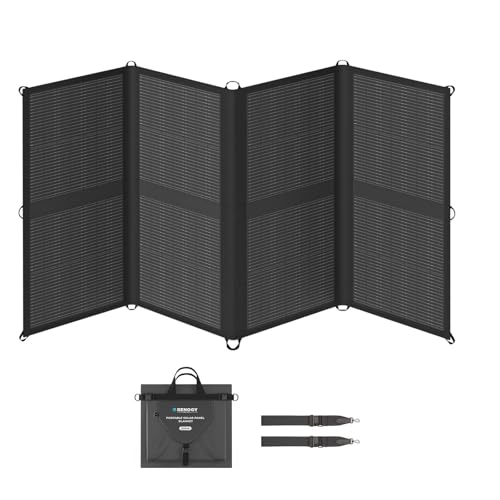
The Renogy 200W solar panel blanket is a lightweight, eight-fold, space-saving option designed for portability. It achieves high efficiency at about 25% thanks to N-Type cells, enabling more power collection in limited spaces. It’s ideal for vehicle-based camping, RVs, or small off-grid setups where storage space is at a premium. The panel supports USB-C PD and USB-A outputs, aiding direct charging of compatible devices, and it is designed to work with various portable power stations via MC4 connectors.
Who it’s best for: users with restricted pack space who still want high-efficiency solar harvesting for charging a power station or directly powering devices.
Why selected: Its foldable, compact design and high efficiency maximize energy capture in tight environments, offering practical flexibility for diverse off-grid needs.
Caution: To access full benefits, pair with a compatible power station; otherwise, the panel alone cannot store energy without an attached battery or power station.
Buying Guide: Key Considerations For Small Appliance Solar Kits
- Power needs: Calculate total wattage of devices you expect to run simultaneously. Choose a pack with a higher wattage rating and sufficient battery capacity to cover peak loads.
- Portability vs. capacity: Lighter kits with smaller batteries suit travellers, while larger packs serve emergencies or extended trips. Balance weight, size, and run-time.
- Solar panel type and efficiency: Monocrystalline and polycrystalline panels offer different efficiencies. Higher efficiency panels harvest more energy in limited sun and small spaces.
- Outlets and compatibility: Check available outputs (AC outlets, USB-C/USB-A, DC) and ensure compatibility with your devices and any existing power stations.
- Battery chemistry and lifespan: Look for lithium-based packs with longer lifecycles. Consider how many recharge cycles you might need in a season or year.
- Weather resilience: If using outdoors, assess IP ratings, ruggedization, and operating temperature ranges suitable for your environment.
- System integration: Consider whether you need a complete all-in-one kit or a modular setup that can be expanded with additional panels or batteries over time.
Frequently Asked Questions
- What’s the best solar panel setup for small appliances? A compact power station with a high-efficiency panel and sufficient battery capacity is typically the best balance of portability, reliability, and runtime for small devices.
- Do these kits work in cloudy conditions? Solar generation decreases in low light, but many units are designed to perform in partial sun. Battery capacity will still determine uptime during cloudy days.
- Can I charge devices directly from a solar panel? Some panels offer direct USB-C or USB-A charging; however, most setups work best when paired with a battery/power station for stored energy and safer charging.
- How do I choose the right wattage? Start with the sum of the peak loads you expect. A reserve margin (10–30%) helps power multiple devices without overloading the system.
- Are these kits weatherproof? Look for IP ratings or manufacturer notes about outdoor use. Panels are often rugged but connectors and enclosures vary by model.
- Is a kit with included panels better than buying separately? Bundles reduce setup complexity and ensure compatibility, which is convenient for beginners and travelers.