Answering the need for dependable, small-scale solar power in sheds, summerhouses, and outbuildings, these top picks offer compact, efficient options for off-grid charging and lighting. Ideal buyers include DIY enthusiasts, remote office creators, and hobbyists who want quiet, maintenance-free energy for lights, small appliances, and chargers. The list focuses on panels and kits that fit typical shed roofs or ground setups and pair well with 12V or 24V systems.
| Product | Best For | Key Benefit | Approx. Output |
|---|---|---|---|
| ECO-WORTHY 400W Solar Panels (2x100W modules) | Small off-grid sheds | High efficiency N-Type, solid low-light performance | ~400W total (nominal) |
| DOKIO 800W (2×400W) Mono Panels | Backyard sheds and cabins | Fewer connections, 24V compatibility | ~800W total |
| ECO-WORTHY 200W Kit with PWM Controller | RVs, small sheds, cabins | All-in-one kit with charge controller | ~200W |
| ECO-WORTHY 1.6KWh Complete Kit | Heavy-use sheds, cabins, off-grid outbuildings | Full system with MPPT, battery, inverter | Up to ~1.6kWh/day (ideal) |
| Callsun N-Type 400W (2×200W) Bifacial | Compact, high-efficiency sheds | Bifacial gains and anti-shade tech | ~400W nominal |
ECO-WORTHY 400W N-Type Panels, 2x100W

Best for small to medium shed setups that need reliable 12V/24V charging. The N-Type cells offer improved efficiency, aiming at 25% under optimal sun. The waterproof IP68 junction box and 35-inch cables support durable, low-maintenance installations. Suitable for 12V/24V battery charging in off-grid or hybrid configurations. Caution: performance drops in heavy shade or non-ideal sunlight hours, so placement matters most.
DOKIO 800W Mono Panels, 2×400W

Better for sheds that require higher output with fewer connections. These panels are outdoor-ready with tempered glass and an aluminum frame, designed for year-round use. They work with 24V battery banks and various PWM/MPPT controllers, with MC4 connectivity that keeps installation neat. Choose this if you want a simple, scalable setup; avoid if you need an ultra-lightweight option for temporary setups.
ECO-WORTHY 200W Kit with PWM Controller
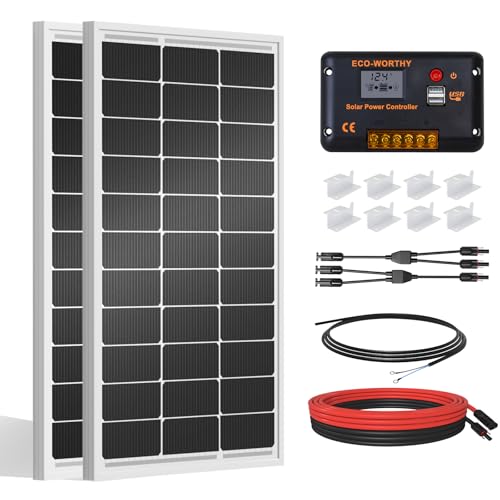
Best for RVs, cabins, and small sheds that want an all-in-one solution. This kit includes a 200W panel with a 30A PWM controller, offering straightforward setup and reliable daily output. The panels use a higher-efficiency monocrystalline design and a durable aluminum frame. Limitation: PWM controllers can be less efficient than MPPT under wide solar fluctuations; consider upgrading to an MPPT kit if your budget allows.
ECO-WORTHY 1.6KWh Complete Solar Kit

Best for users needing a full off-grid system for a shed or small cabin. This 400W panel kit pairs with a 40A MPPT controller, a 12V 100Ah lithium battery, an inverter, and a Bluetooth module for monitoring. The setup targets daily outputs around 1.6kWh under good sun, enabling operation of common appliances. Limitation: larger upfront footprint and higher initial cost; ensure roof or ground space accommodates the array and weight.
Callsun N-Type 400W Bifacial, 2×200W

Best for compact spaces that still want high efficiency. The N-Type 16BB cells offer up to 25% efficiency, with bifacial design capturing rear-side light to boost output by up to 30%. Anti-shade technology helps maintain energy production in partially shaded sheds. Consider this option if roof space is constrained; beware that bifacial performance depends on rear illumination and mounting conditions.
860W Bifacial Panels, 2×430W

Best for bigger shed setups where efficiency matters. This high-output 860W bifacial panel pair features UL61730 certification and a 30-year lifespan, with robust weather and wind loads. The design saves space and installation time, making it suitable for limited areas like small workshops or studio sheds. Limitation: higher weight and installation precision required for optimal rear-side light capture.
400W Panels 2×200W, A+ N-Type

Best for frequent sun and mid-sized shed applications. These 200W modules use A+ N-Type cells with 18 BB busbars and 25% efficiency, plus reverse current blocking for nighttime safety. IP68-rated junction box enhances durability in damp shed environments. Choose this if you need a balance of efficiency, reliability, and moderate space requirements.
Buying Guide
- System size and shed space: Map roof or ground area to determine how many panels fit without overloading the structure. Higher-w wattage per panel saves space but may require stronger mounts.
- Cell technology: N-Type cells offer better efficiency and lower light loss, which is valuable for sheds with variable sun. Bifacial designs can add extra output when rear-side light is available.
- Controller type: MPPT controllers maximize energy harvest, especially in cooler mornings or cloudy days. PWM controllers are simpler and cheaper but may be less efficient in variable conditions.
- Voltage and battery compatibility: Ensure the system voltage matches your shed’s batteries (12V vs 24V) and that the inverter or charger meets your power needs for lights and small appliances.
- Durability and weatherproofing: Look for IP-rated junction boxes, corrosion-resistant frames, and panels tested to withstand wind and snow loads if you’re in harsher climates.
- Install considerations: Proper tilt and orientation improve daily output. Shade avoidance and panel spacing reduce micro-shadow impacts, especially for modular kits.
- Future expansion: If you plan to add more devices later, choose modular kits or panels that scale easily with compatible controllers and batteries.
FAQ
- What is the best panel type for sheds?
Answer: N-Type monocrystalline panels offer higher efficiency and better performance in low light, which is advantageous for shed installations. - Do I need an MPPT controller for a shed setup?
Answer: MPPT controllers maximize energy harvest, especially in fluctuating conditions; they are recommended for higher efficiency in off-grid systems. - Can I power LED lights and a small fridge with these kits?
Answer: Yes, most kits designed for sheds can run LED lighting and small 12V-24V appliances; larger appliances may require a bigger system. - Is bifacial technology worth it for sheds?
Answer: Bifacial panels can add extra output if the rear side receives light; benefits depend on mounting and environment. - How do I protect panels from weather?
Answer: Choose panels with IP-rated junction boxes and durable frames; proper mounting and seals help prevent water ingress. - What maintenance is required?
Answer: Regular cleaning of dust and debris, occasional inspections of connections, and monitoring performance via a controller or Bluetooth module.