Answering the need for rugged, portable solar solutions, these options suit military personnel, preppers, RV travelers, and outdoor professionals seeking durable power on the go. The top picks emphasize high efficiency, rugged construction, and versatile charging for power stations and large batteries. This guide helps you compare portability, weather resistance, and compatibility to choose the right panel for field use, emergencies, or off-grid operations.
| Product | Best For | Key Benefit |
|---|---|---|
| FlexSolar 100W Portable Solar Panel | Field-ready power for small stations | High efficiency and 4-in-1 cable for broad compatibility |
| Renogy 200W Portable Solar Panel | Compact power on the move | 25% efficiency with lightweight folding design |
| SOLPERK 20W Panel Kit | Trickle charging and battery maintenance | Smart MPPT controller and robust weather resistance |
| Renogy 400W Portable Solar Panel Blanket | High-output off-grid setups | 16-fold design with broad mounting options |
| Renogy 100W Solar Panel | Lightweight rooftop or vehicle mounting | 25% efficiency and durable 16BB cells |
FlexSolar 100W Portable Solar Panel

Best for: compact field use where a lightweight, compact 100W panel is needed. This model folds small, weighs 4.1 lbs, and unfolds quickly for rapid setup, making it ideal for hikers, campers, or emergency kits that require quick deployment and easy storage.
Why selected: It combines portability with multi-port output options (QC3.0 USB-A, PD USB-C, and DC output) and a 24% efficiency rating, enabling charging of small power stations and devices even in partial shade. The 4-in-1 smart cable supports a broad range of popular brands.
Caution: The product’s best performance occurs in direct sun; heavy cloud cover reduces output. Ensure a compatible power station or battery accepts XT60/Anderson/DC5521/DC8MM connections.
Renogy 200W Portable Solar Panel

Best for: off-grid setups where more power is required without adding a large footprint. The 16BB N-Type cell technology provides high efficiency and more output in limited space, suitable for charging multiple devices or powering a compact power station during camping or emergencies.
Why selected: It delivers up to 25% efficiency and includes a lightweight foldable design with magnetic closures for easier setup and storage. It can charge via MC4 output to power stations and supports USB-C PD and USB-A ports for direct device charging.
Limitation: The panel still requires adequate space for full sunlight and may be heavier than ultra-portable 25–100W options for backpack-only use.
SOLPERK Solar Panel Kit 20W
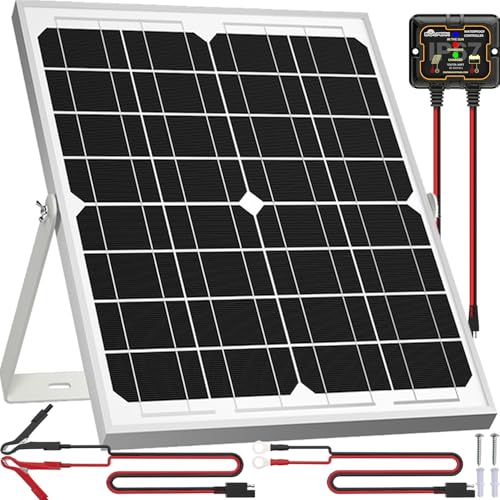
Best for: lightweight, durable trickle charging and battery maintenance on boats, RVs, or motorcycles. The kit includes an MPPT controller and mounting hardware, designed to optimize charging for 12V batteries across varied weather conditions.
Why selected: This panel balances efficiency (21–30% range claims) with a robust build that withstands harsh environments. The controller helps prevent overcharging and reduces energy loss, making it reliable for long-term storage and periodic top-ups.
Caution: It is a lower-output panel, so it won’t rapidly recharge large power stations; plan for slow, steady charging instead.
Renogy 400W Portable Solar Panel Blanket
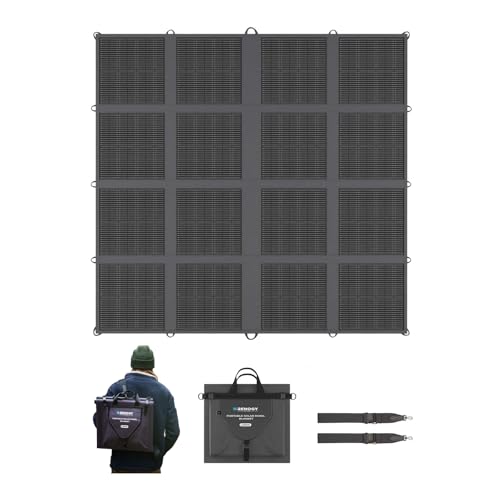
Best for: high-output field camps, off-grid shelters, or vehicle-mounted setups where space is available and larger power demand is present. The 16-fold blanket design enables flexible deployment and can cover a wide sunlit area.
Why selected: It leverages industry-leading 25% efficiency with 16BB cells, delivering substantial output for charging power stations quickly. The design supports multiple installation methods to fit different vehicles and camping arrangements.
Limitation: The blanket is bulkier than smaller panels; setup and transport may require more planning in tight spaces or during rapid deployments.
Renogy 100W Solar Panel

Best for: compact rooftop installations or small vehicle-mounted charging where moderate power is sufficient. The 25% efficiency and 16BB cells help maximize energy harvest in hot climates or partial shade scenarios.
Why selected: The panel emphasizes longevity and efficiency, offering reliable power generation for travelers or field teams with limited space. It suits RVs, boats, or trailers needing dependable daytime charging.
Limitation: At 100W, it provides less output than larger panels, so plan for longer charging times if you rely on it as your primary power source.
Buying Guide
How to choose the right solar panel kit for military or field use:
- Power needs and portability: Assess daily power consumption and choose a panel that fits your backpack or vehicle footprint. Higher-watt panels provide faster charging but are heavier and bulkier.
- Cell technology and efficiency: Look for 16BB or newer cell designs and efficiency around 25% for higher output in limited sun. N-Type cells typically offer better performance at higher temperatures.
- Durability and weather resistance: Prioritize panels with rugged frames, tempered glass, and waterproof or waterproof-rated construction. For harsh environments, ensure a tight seal against dust and moisture.
- System compatibility: Check output types (MC4, XT60, DC jacks) and output ports (USB-C PD, USB-A) to match power stations, batteries, and devices. A 4-in-1 cable or MC4 adapters can simplify setup with mixed gear.
- Mounting and storage options: Folding or blanket designs provide different deployment styles. Consider magnetic closures, carabiner compatibility, and mounting hardware for quick field use or vehicle mounting.
- Controller features: An MPPT charge controller improves charging efficiency and battery longevity. Look for overcharge and short-circuit protection as part of smart control.
- Maintenance and lifespan: Choose panels with robust materials and warranty-backed durability. Regular inspection for micro-cracks and weather seals reduces failure risk in field conditions.
Frequently Asked Questions
- What size solar panel is best for field operations?
– It depends on the power needs; a balance between wattage and portability is key. For smaller gear, 100W–200W panels are common; for higher power, 400W blankets offer more output on-site. - Do I need a MPPT controller for small solar setups?
– Yes, MPPT controllers maximize energy harvest and protect batteries by regulating voltage and current, improving charging efficiency across most setups. - Can these panels charge a power station directly?
– Many can, using compatible output cables and adapters; confirm the panel’s connectors match your power station’s inputs (MC4, XT60, DC). - Are foldable panels more durable than rigid panels?
– Foldable designs emphasize portability but may require careful handling to avoid creases. Rigid panels offer sturdy mounting but less portability. - What is the best panel for extreme weather?
– Panels with tempered glass, reinforced frames, and sealed junction boxes are preferable. Look for IP ratings and corrosion-resistant materials. - Can solar panels work in low-light conditions?
– They can generate some power, but output drops significantly. Choose higher-efficiency cells and consider battery storage for cloudy days.