If your business needs dependable solar power for security systems, remote equipment, or off-grid monitoring, you’re in the right place. This guide highlights five solar panel options tailored for commercial use, from security-camera chargers to portable RV-ready panels. Each pick is analyzed for who it’s best for, plus practical considerations like durability, compatibility, and installation environments. Use these summaries to compare suitability quickly and choose a solution that aligns with your site’s sunlight, weather, and power needs.
Summary table of selected products
- Fehuatenda 1 Pack Solar Panel for Ring Cameras — Best for Ring security setups and continuous camera power in bright sun.
- JIANG Small Flexible Solar Panel — Best for DIY installations on irregular surfaces and lightweight builds.
- YCTechCam 5W Solar Panel — Best for modular, weatherproof outdoor cameras with battery power needs.
- Callsun N-Type 400W Two-Piece Panels — Best for higher-demand off-grid RVs, vans, and homes with space for larger arrays.
- Renogy 200W Portable Solar Panel — Best for portable power backup and flexible camping/off-grid use.
Fehuatenda 1 Pack Solar Panel For Ring Cameras

Best for: Ring Spotlight Cam and Stick Up Cam users seeking continuous, battery-free operation in bright sun. This panel is designed to power Ring battery models and wired variants via USB-C or a barrel DC plug, reducing maintenance from battery replacements.
Why it’s selected: It emphasizes safety features like over-current, overheating, and short-circuit protection, with a maximum charging output of 6V 4W. The kit is built with high-efficiency monocrystalline cells and a weatherproof housing to endure outdoor conditions.
Limitations: The listed output is modest, so larger security ecosystems or multiple cameras may require additional panels or a higher-output solution.
JIANG Flexible Solar Panel for DIY Power
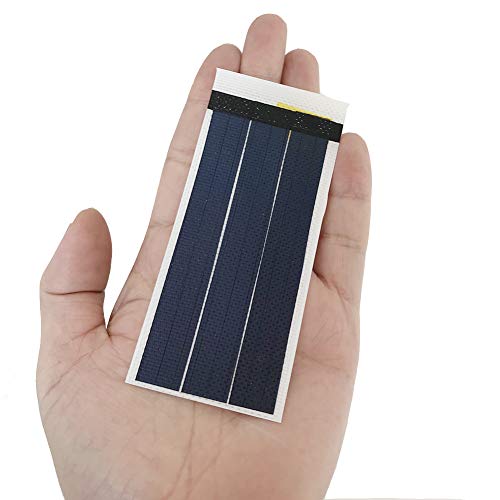
Best for: DIY projects and installations on non-flat surfaces where weight and flexibility matter. This thin-film, flexible panel can be bent or sewn to fit curved structures and irregular shapes used in campus renovations or custom builds.
Why it’s selected: It uses ETFE laminated construction, offering waterproofing and fire-resistance while remaining lightweight. It also performs reasonably well under partial shade, a common challenge for building-adjacent installations.
Caution: Flex panels can be more delicate than rigid models in some high-wind environments; ensure secure mounting to avoid damage.
YCTechCam 5W USB Solar Panel

Best for: Security cameras with micro USB or USB-C ports that need a compact, weatherproof charging option. It’s a simple, plug-and-play solution for small to medium battery-powered cameras.
Why it’s selected: It emphasizes IP65 waterproofing and robust outdoor durability, making it suitable for long-term exterior use. Note that it does not include batteries, so it powers cameras with existing battery packs.
Limitations: Not compatible with some major camera ecosystems (e.g., Arlo, Ring) that require specific power arrangements or adapters beyond USB charging.
Callsun N-Type 16BB 400W Bifacial Panels (Two Pack)

Best for: Businesses seeking high output in off-grid or roof-top installations, including RVs, vans, marine setups, or home rooftops with space for larger arrays.
Why it’s selected: These panels use N-Type cells and 25% efficiency, with bifacial technology that captures sun from the rear for up to 30% more energy. The dual-module parallel design improves shading tolerance and reliability.
Caution: Higher wattage panels require proper mounting and a capable inverter or charge controller; ensure system sizing matches energy goals to avoid underutilization.
Renogy 200W Portable Solar Panel

Best for: Businesses needing a flexible, portable power solution for events, remote sites, or backup during outages. The foldable design supports easy transport and quick deployment.
Why it’s selected: It features a 25% efficiency level via 16BB N-Type cells and a lightweight, compact form with magnetic closures for effortless setup. It’s compatible with power stations and traditional 12V batteries via MC4 connectors, offering broad adaptability.
Limitation: It is a portable panel rather than a fixed roof system, so it’s best for temporary or mobile applications rather than fixed long-term installations.
Buying Guide: Key Considerations For Commercial Solar Panels
- Power needs and scale: Assess daily energy consumption of cameras, sensors, and off-grid devices. Bigger facilities may require higher wattage or multiple panels in parallel.
- Mounting location: Roof, wall, ground, or flexible application? Rigid panels are durable for fixed installations; flexible panels suit curved surfaces or retrofits.
- Durability and weather resistance: Look for IP ratings, water resistance, and anti-corrosive housing for outdoor use in varied climates.
- Compatibility: Confirm port types (USB-C, micro USB, DC barrel) and whether batteries or power stations are required or already in place.
- Shading and site conditions: Panels with bifacial or shading-tolerant designs help in partial sun or city environments with reflections from buildings.
- Ease of installation: Consider weight, mounting hardware, and whether professional installation is advised for roof or large-array setups.
- Maintenance and safety: Fire resistance, over-current protection, and robust housings reduce upkeep and risk in busy commercial sites.
- Cost efficiency: While prices aren’t listed here, compare long-term energy savings, durability, and the total cost of ownership across options.
Frequently Asked Questions
- What type of solar panel is best for security cameras on a commercial site?
– A panel designed for camera charging with weatherproof housing and compatible connectors, such as USB-C or DC, is ideal for continuous operation and low maintenance. - Do I need batteries with solar panels for cameras?
– Some panels power cameras directly, but many setups rely on existing or separate rechargeable batteries; ensure compatibility with your camera model. - Can solar panels work in partially shaded areas?
– Yes, some panels, especially bifacial or shading-tolerant designs, perform better under partial shade than standard panels. - Is portable solar better than fixed arrays for business use?
– Portable panels are convenient for events and temporary sites, but fixed roof or ground-mounted arrays typically offer higher, steadier output for ongoing security and monitoring needs. - What maintenance should be expected with outdoor solar panels?
– Regular cleaning, secure mounting checks, and weatherproof seals are common maintenance tasks to preserve efficiency and safety.