Get reliable 12V charging on the water with compact, waterproof solar panels paired to smart MPPT controllers. This guide highlights five marine-friendly kits that maximize battery health, prevent overcharge, and suit boaters who need trickle charging, battery maintenance, or emergency starts. Best for weekend boaters, saltwater cruisers, and RVers who spend time on the water.
| Product | Best For | Key Benefit |
|---|---|---|
| Boat Owners Needing Simple Trickle Charging | Fast charging, universal 12V compatibility | |
| SOLPERK 20W Panel Kit | All-Weather Marine Applications | High durability, waterproof, Smart MPPT |
| POWOXI Upgraded 7.5W | Compact, Portable Charging | Smart protection, durable build |
| FlexSolar 20W Kit | Flexible, Easy Install On Boats | Coin-thin panel, multiple charging options |
| SUNER POWER 12W Ultra-Smart MPPT | Low-Power Maintainer For Storage | High MPPT efficiency, automatic maintenance |
Voltset 12V Solar Battery Charger — 20W MPPT Trickle Charger

The Voltset 12V Solar Battery Charger combines a 20W waterproof panel with a smart MPPT controller. It’s designed to deliver 12V charging up to 20–30% faster by tracking the maximum power point. The A+ monocrystalline cells optimize conversion, making it suitable as a boat solar charger, RV battery maintainer, or trailer solar solution.
- Best for: Boat owners needing reliable maintenance charging without heavy hardware.
- Why selected: Universal 12V battery compatibility supports LiFePO4, AGM, Gel, Flooded, and Lithium Ion batteries.
- Caution: Ensure connection to a compatible 12V battery bank to realize MPPT efficiency.
SOLPERK Solar Panel Kit 20W — Smart MPPT
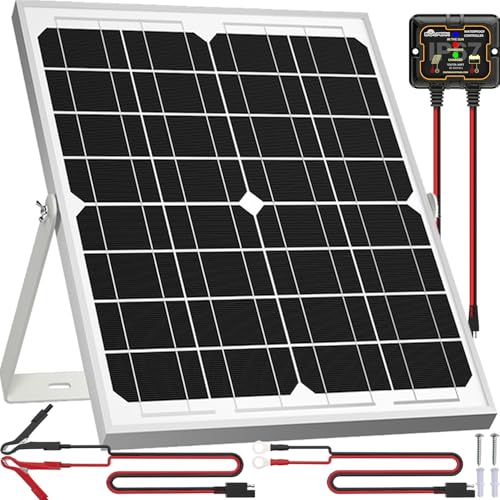
The SOLPERK 20W kit uses high-efficiency A+ monocrystalline cells with an upgraded 8A MPPT controller. It claims 21–30% cell efficiency and is designed to maintain a wide range of 12V batteries, including LiFePO4 and AGM. The kit’s corrosion-resistant frame and waterproof build support year-round marine use, with a robust 25-year panel lifespan in adverse conditions.
- Best for: Boat owners needing a rugged, all-weather, maintenance charger.
- Why selected: Superior MPPT performance and weatherproofing improve battery health when dockside or at anchor.
- Caution: Smart controller indicators help monitor charging status; check installation area for weather exposure.
POWOXI Upgraded 7.5W Solar Battery Charger
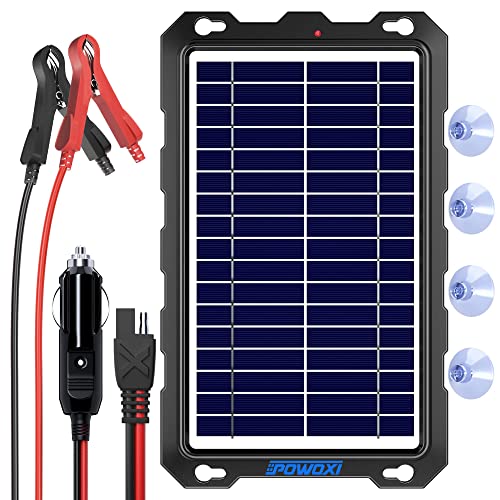
The POWOXI 7.5W kit offers a compact, portable solar charging option with an intelligent controller. It emphasizes safety with overvoltage and reverse polarity protection and uses a durable, weather-resistant panel suitable for cars, boats, RVs, and motorcycles. The design aims for safer charging in limited space or when a full solar setup isn’t feasible.
- Best for: Boaters needing a small, portable trickle charger.
- Why selected: Strong protection features reduce risk of battery damage.
- Caution: Output is modest; may not sustain larger battery banks during extended off-grid use.
FlexSolar 20W Kit — Flexible, All-Weather

The FlexSolar kit features a 20W monocrystalline core in an ultra-thin, flexible panel. It is designed to adhere to curved surfaces on boats or vehicles and includes multiple charging options (cigarette lighter, alligator clips, OBDII, and ring terminals). It’s especially easy to install on boat decks or curved surfaces without drilling.
- Better for: Boats with curved surfaces or limited mounting space.
- Why selected: Flexible design reduces installation hurdles and preserves deck space.
- Caution: Flexible panels can be more sensitive to sharp edges; handle with care during installation.
SUNER POWER 12W Ultra-Smart MPPT Battery Charger
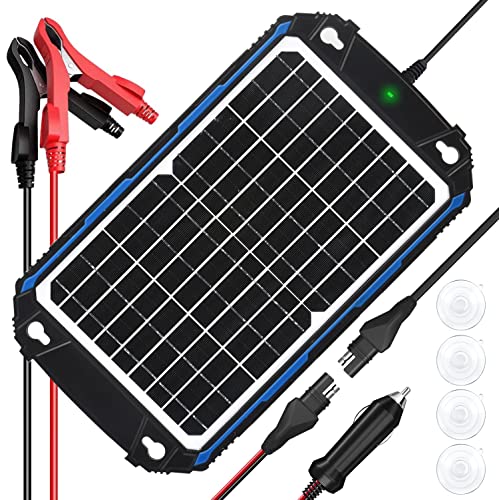
The SUNER POWER 12W charger uses Ultra-Smart MPPT for high tracking efficiency up to 99% and peak conversion around 98%. Its three-stage charging (Bulk, Absorption, Float) is designed to extend battery life and ensure safe recharging. It automatically stops charging when full, then resumes as needed, ideal for seasonal boat storage or marina use.
- Best for: Low-power maintenance on stored boats or vehicles.
- Why selected: High MPPT efficiency translates into better battery health with minimal input.
- Caution: Suitable for smaller battery banks; verify battery capacity before use.
Buying Guide: Key Considerations For Marine Solar Charging
Choosing the right solar charger for a boat battery system involves balancing space, power needs, and environmental exposure. Consider panel wattage, charging controller type, battery chemistry compatibility, and mounting options. Marine environments demand waterproofing, corrosion resistance, and reliable performance in variable sun exposure.
- Panel wattage vs. battery size: Heavier battery banks need higher wattage panels to maintain charge, especially in cloudy conditions.
- MPPT vs. PWM controllers: MPPT controllers extract more power from panels, especially in cooler or shaded conditions, but cost more. PWM is simpler and cheaper, suitable for smaller systems.
- Battery chemistry compatibility: Ensure the charger supports LiFePO4, AGM, Gel, or flooded batteries used on board.
- Durability and waterproofing: Look for weatherproof enclosures, UV resistance, and corrosion-proof framing for marine use.
- Mounting and cabling: Consider surface mounting, brackets, or flexible panels for curved hulls; plan for safe, short cable runs with strain relief.
- Maintenance and safety: Automatic stop-charge features prevent overcharging, and protection against short circuits reduces risk in rough seas.
Frequently Asked Questions
- What size solar panel should I use for a boat battery maintainer?
- It depends on your battery capacity and usage. Smaller boats often work with 10–20W kits, while larger battery banks may require 20–100W or more for effective maintenance.
- Do MPPT controllers make a big difference on boats?
- Yes. MPPT controllers maximize power from panels, especially under partial shade or cooler temperatures common on the water.
- Can I use any 12V solar panel on a boat?
- Most 12V panels work with marine batteries, but verify compatibility with your battery chemistry and the controller’s input specifications.
- What maintenance is needed for marine solar systems?
- Regularly inspect connections, clean panels, and ensure waterproof seals remain intact. Monitor the controller indicators for charging status.