Looking for reliable off‑grid power? This guide highlights five solar panels and inverters that fit common needs—from RV trips to camping and small off‑grid setups. Each pick is explained for who it’s best for and why, with practical considerations to help you choose confidently.
The table below summarizes the selected products to help you compare at a glance. Use it to quickly identify options that fit your power goals and installation context.
| Product | Best For | Key Benefit |
|---|---|---|
| ECO-WORTHY 200W Solar Panel Kit | RV/Off-Grid Enthusiasts | High efficiency monocrystalline cells, durable frame |
| SOLPERK 20W Solar Panel Kit | Small, portable charging | Waterproof, long lifespan, smart controller |
| SUMRY Hybrid Inverter 4000W | Battery-based and battery-less setups | High MPPT, LCD, pure sine wave |
| BELTTT 1000W Pure Sine Wave Inverter | Mid‑range power needs | LCD display, reliable sine wave |
| MARBERO 237Wh Solar Generator | Portable power on the go | Integrated panel, multiple outputs |
ECO-WORTHY 200 Watts 12V Kit With Controller

This kit blends a 200W solar panel with a 30A PWM controller, designed for RVs, campers, boats, and other off‑grid uses. It is best for buyers who want a straightforward system that delivers steady daily output in good sun conditions. The panel uses high-efficiency monocrystalline cells and a corrosion‑resistant frame for longer life in exposed environments. It is suitable for users who prioritize durability and easy setup over maximum instantaneous power. A potential limitation is the PWM controller, which may be less efficient than MPPT in variable sunlight.
SOLPERK Solar Panel Kit 20W With Smart Controller
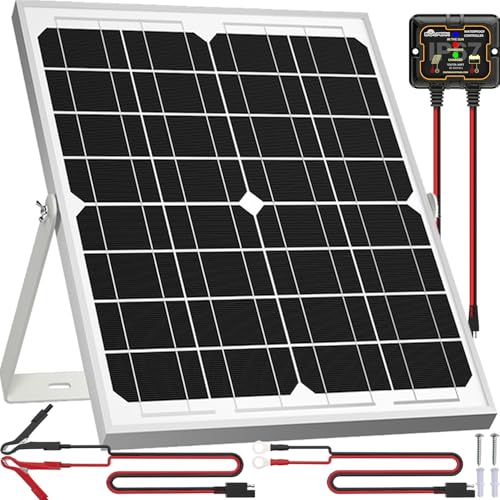
This compact 20W panel is best for small‑scale charging tasks, such as keeping 12V batteries topped up on boats, ATVs, or gate Openers. It uses monocrystalline A+ cells and claims a high efficiency range, with a durable, waterproof construction designed to last up to 25 years. The included smart controller improves charging efficiency and protects against overcharging and short circuits. Choose this when you need a lightweight, weather‑resistant charger for modest energy needs.
SUMRY Hybrid Solar Inverter With MPPT

The SUMRY Hybrid Inverter pairs a 4000W AC output with a 140A MPPT controller, supporting battery‑less or AGM/Lithium setups. It features a tempered glass top and a large LCD for real‑time monitoring, making it a strong option for users who want a robust, all‑in‑one inverter with a modern look. It is best for larger off‑grid installations where clear data visibility and a high PV input capacity matter. A limitation to consider is the size of the unit and installation space requirements.
BELTTT 1000W Pure Sine Wave Inverter

This inverter delivers 1000W continuous power with up to 2000W peak, offering a balance of capacity and portability. It uses a pure sine wave output, which is suitable for sensitive electronics and home theater gear. An intelligent LCD shows input/output voltages and battery status, aiding troubleshooting. Best for mid‑sized loads; avoid this if your power needs consistently exceed 1000W or you require multiple high‑demand appliances simultaneously.
MARBERO 237Wh Solar Generator With Panel Included

The MARBERO system integrates a 237Wh lithium battery with a foldable solar panel, delivering portable power for camping, outdoor activities, or emergencies. It provides multiple outputs, including AC, USB, and DC ports, making it a versatile option for travelers who need compact, all‑in‑one power. This is best for lightweight needs and quick deployments; note that the 237Wh capacity limits running high‑power devices for extended periods.
Buying Guide: Key Purchase Considerations
How much power do you actually need?
Estimate daily energy use (in Wh) by adding up the wattage of devices and expected run times. Match this to panel output and battery capacity to avoid overreliance on solar in low‑sun conditions.
What kind of controller suits your setup?
MPPT controllers are generally more efficient than PWM, especially in off‑grid or variable‑sun environments. PWM can be adequate for simple, smaller systems but may waste energy on larger rigs.
Pure sine wave or modified sine wave?
Choose pure sine wave inverters for sensitive electronics, home appliances, and devices with motors. Modified sine wave inverters can work for simple loads but may cause noise or damage over time.
Portability vs. capacity
For camping or occasional use, portable power stations (like MARBERO) are convenient. For extended RV trips or cabins, larger kits with rigid panels and built‑in controllers may be preferable.
Durability and weather resistance
Look for corrosion‑resistant frames, IP ratings, and glass strength suitable for outdoor exposure. A robust build reduces maintenance and replacement intervals in harsh climates.
Installation complexity
Beginner‑friendly kits with all‑in‑one components simplify setup. More complex systems offer better customization but require careful wiring and safety considerations.
Future expandability
Consider modular designs that allow adding panels or extra battery capacity later without reworking the whole system.
FAQ
- What size solar kit should I start with for RV use? A kit in the 200W to 400W range with an appropriate battery and a compatible inverter typically covers basics for RVs, depending on daily energy needs and sun exposure.
- Is an MPPT controller worth it for a small setup? Yes, MPPT controllers can increase charging efficiency, especially in marginal sunlight, by optimizing the voltage and current from panels.
- Can I run home appliances directly off a solar panel? Not directly. You need an inverter or a power station to convert DC from panels or batteries to AC for typical home devices.
- How long will a portable solar generator last on a single charge? Runtime depends on load; devices drawing more than the generator’s rated output will deplete the battery faster, while lighter loads extend runtime.
- Do I need professional installation? For simple setups, many users can wire systems themselves using manufacturer instructions, but larger or battery‑based systems may benefit from professional guidance for safety and compliance.
Notes On Product Selection
These five options emphasize practical use cases across RV, camping, and off‑grid contexts. They balance portability, efficiency, and ease of setup, while offering clear indications of who benefits most from each choice. The selections aim to avoid overpromising performance and instead provide transparent, usable guidance for buyers evaluating solar panels and inverters.