Answering the search for reliable solar panel and battery packages, this guide highlights five practical kits designed for RVs, boats, cameras, and off-grid projects. Each option targets a different use case—trickle charging, off-grid living, or security-camera backup—so you can pick the best fit for your needs. The following selections emphasize clear setup, compatibility, and practical limits to help informed decisions.
| Product | ||
|---|---|---|
| SOLPERK Solar Panel Kit 20W | 20W panel + MPPT controller | Small vehicles and marine uses |
| ECO-WORTHY 200W Starter Kit | Two 100W panels, battery, inverter, controller | Off-grid RVs and cabins |
| SECUPOE 20W Solar Panel With Battery | Built-in 26000mAh battery, USB-C output | Remote cameras and sensors |
| Voltset 20W Solar Battery Charger | 20W panel, MPPT controller | Cars, trailers, boats |
| VUEBEE 20W Solar Panel Kit | 20W panel + 24000mAh battery | Security cameras and trail cams |
SOLPERK Solar Panel Kit 20W Overview
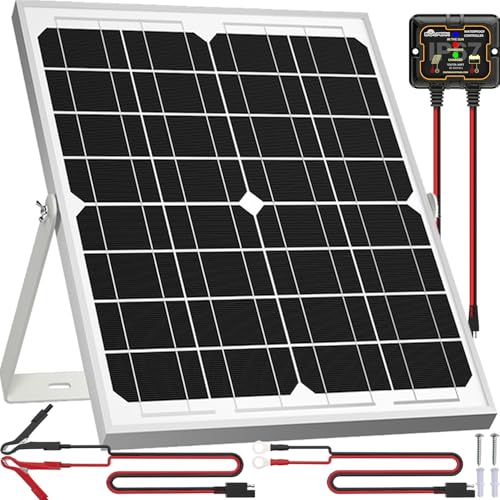
This 20W kit uses monocrystalline A+ cells for improved efficiency and supports charging 12V batteries such as LiFePO4, AGM, and more. It includes a smart MPPT controller and an adjustable mount for flexible placement on boats, cars, RVs, motorcycles, or trailers. Best for small power needs and trickle maintenance when you require reliable, weather-resistant performance.
Best for: Light-duty charging on vehicles and small boats where space and weight are concerns. A caution: performance depends on sun conditions and battery type compatibility.
ECO-WORTHY 200W Starter Kit Overview
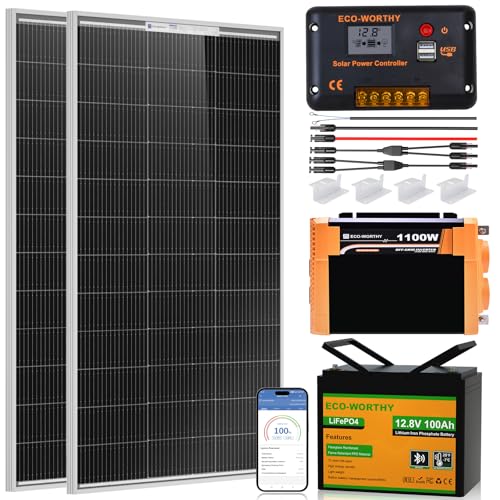
This all-in-one system provides 200W of solar generation with two 100W panels, a 30A PWM controller, a 100Ah lithium battery, and a 1100W inverter. It is designed to deliver a turnkey off-grid setup for RV trips or cabin use, with straightforward 4-step installation for users seeking a complete, ready-to-use package.
Best for: Quick, novice-friendly off-grid solar installations. Limitation: PWM controller may be less efficient than MPPT in certain conditions, affecting peak charging speed.
SECUPOE 20W Solar Panel With Battery Overview

This kit combines a 20W solar panel with an integrated 26000mAh battery and a 5V USB-C output. The built-in storage supports continuous power for security devices or outdoor sensors, with simple plug-and-play operation. It is well-suited for remote cameras or lighting that require a compact, self-contained power source.
Best for: Backup power for outdoor cameras and sensors. Caution: The 26000mAh capacity is modest for higher-energy devices, and USB-C may limit multiple simultaneous loads.
Voltset 12V Solar Battery Charger Overview

This 20W package emphasizes fast charging with an MPPT controller and A+ monocrystalline panels. It includes multi-layer protection against overcharge, over-discharge, short circuits, and reverse polarity. It accommodates 12V batteries such as LiFePO4 and AGM, making it a flexible choice for cars, RVs, boats, and trailers.
Best for: Reliable long-term 12V battery maintenance. Caution: Suitable for 12V systems; larger or higher-voltage setups require bigger kits.
VUEBEE 20W Solar Panel Kit Overview
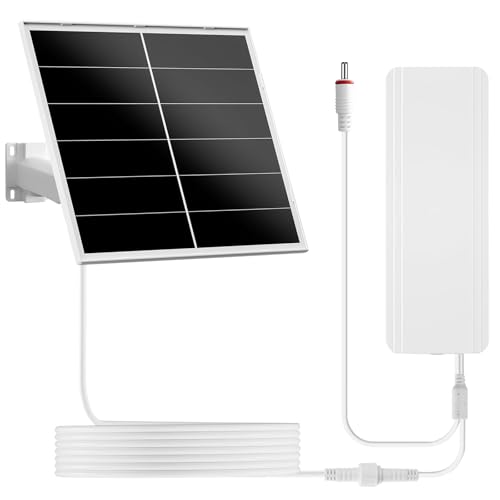
The VUEBEE kit pairs a 20W monocrystalline solar panel with a 24000mAh battery and offers 5V and 12V outputs. It supports USB-C and DC plugs with a 360° mount for optimal sun exposure. It is best for security cameras or trail cameras needing a robust, weatherproof power supply with flexible voltage options.
Best for: Security and trail cameras requiring reliable field power. Caution: Only one output can be used at a time, so plan loads accordingly.
Buying Guide: How To Choose A Solar Panel And Battery Package
What will you power?
Identify devices or systems and estimate daily energy use. For cameras and sensors, a built-in or compact battery with USB-C output is often enough. For RVs or boats, prioritize higher wattage panels, larger batteries, and an inverter for AC devices.
What kind of battery chemistry is right?
LiFePO4 offers long life and stability for off-grid use. AGM and GEL batteries are common in smaller setups. Consider capacity and depth of discharge to ensure your needs are met without oversizing.
MPPT vs PWM controllers
MPPT controllers optimize charging efficiency, especially in variable sun conditions. PWM controllers are simpler and cheaper but may be less efficient. For larger systems or where space is limited, MPPT is typically the better choice.
System expansion and compatibility
Look for modularity—can you add more panels, or upgrade to a larger battery bank later? Check connector types, voltages (5V, 12V, or 48V), and whether your kit supports common devices and mounts.
Weather resistance and durability
Waterproofing, corrosion resistance, and mounting flexibility matter for outdoor use. Panels with tempered glass and robust frames perform better in harsh environments.
Ease of installation
Begin with a clearly documented setup path. Kits that include hardware, simple wiring, and step-by-step instructions reduce setup time and errors.
Cost vs. value
Balance upfront cost with long-term reliability and potential energy savings. A higher-efficiency MPPT-based kit may pay off through faster charging and longer battery life.
FAQ
- How big a solar kit do I need for a small boat?
For basic trickle charging and battery maintenance, a 20W to 100W kit with a quality MPPT controller is often sufficient depending on battery capacity and usage patterns.
- Do these kits include installation hardware?
Many kits provide essential cables and mounting hardware; check each product’s description for specifics. Some may require additional brackets or seals for your setup.
- Can I run an inverter with these kits?
Some kits include an inverter; others provide only the charging and storage components. If you need AC power, ensure the kit supports an appropriate inverter size.
- Are 12V and 5V outputs compatible with all devices?
Most devices designed for 12V or USB power will work, but confirm voltage requirements and connector types before connecting.
- Will these panels work in cloudy conditions?
High-efficiency panels can still generate power in low light, but output will decrease. MPPT controllers help maximize whatever sun is available.
- What is the typical lifespan of these kits?
Panels often last 20–25 years, while batteries vary by chemistry, usually offering several years of service with proper maintenance.