Answering the growing need for reliable, ready-to-use solar power, this guide highlights top solar inverter with battery storage options. Each pick targets a distinct use case—from high-capacity home backups to portable emergency power. Best for homeowners seeking scalable, integrated storage; off-grid enthusiasts who want robust parallel capability; campers and RVers needing portable power; and beginners looking for a turnkey kit. The table below compares five strong choices based on capacity, compatibility, and expansion potential.
| Product | Best For | |
|---|---|---|
| ECO-WORTHY Powermega 48V System | Whole-home backup with built-in connectivity | 10 kW inverter, 48V 314Ah LiFePO4, 16.1 kWh usable, Bluetooth/WiFi |
| Aninerel 12000W Hybrid Inverter | High-load off-grid or mixed-use cabins/shops | 12 kW continuous, 2 MPPTs, 48V input, up to 6 units in parallel |
| ECO-WORTHY Home Power Backup Station | Wall-mountable, scalable home backup | 10000W inverter, 48V LiFePO4 battery, expandable with multiple units |
| SUNGOLDPOWER 10000W SPH10048P | Mid‑to‑large off-grid setups with WiFi/BMS | 10 kW, 48V, 2 MPPTs, 120/240V split-phase, WiFi/BMS |
| Camping, RVs, emergency power on the go | 88.8Wh bank with 21W panel, 110V outlets, compact |
ECO-WORTHY Powermega 48V 314Ah System
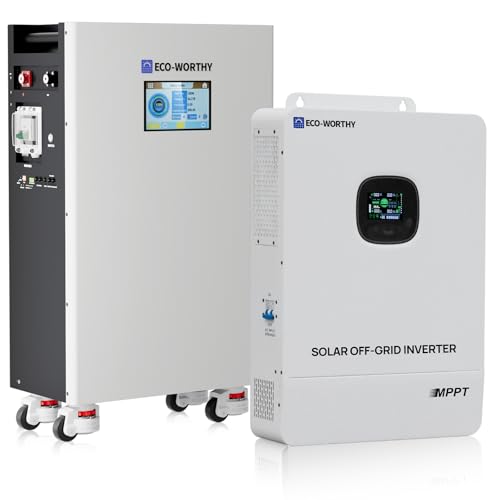
The ECO-WORTHY Powermega combines a 10 kW hybrid inverter with a 48V 314Ah LiFePO4 battery, delivering 16.1 kWh of usable energy. It supports home backup, off-grid cabin use, solar energy storage, and emergency power. The system offers RS485, CAN, and RS232 communication for broad inverter compatibility, plus built-in WiFi and Bluetooth for app monitoring. A Smart BMS with active balancing and multiple safety features protects against over-charge, over-discharge, over-current, and temperature extremes. Best for large homes or small remote properties requiring dependable, scalable storage. A potential limitation is the need for proper enclosure and professional installation to maximize safety protections and wiring efficiency.
- Best for: households seeking a high-capacity, integrated storage and inverter package.
- Why chosen: strong 10 kW inverter and 16.1 kWh usable storage, with multi‑protocol communication and mobile monitoring.
- Limitation: larger footprint and installation complexity.
Aninerel 12000W Solar Hybrid Inverter

This unit delivers 12,000W continuous output and 24,000W peak, converting 48V DC to 120V/240V AC. It includes dual MPPT controllers and supports up to 6 units in parallel for scalable power. It is compatible with various battery types, including 48V options, and can operate with or without a battery, making it flexible for different off-grid or hybrid setups. Best for workshops, off-grid cabins, or garages needing substantial peak loads. A caveat is that parallel operation requires careful configuration to ensure phase balance and safety.
- Best for: high-load off-grid or mixed-use sites needing scalable output.
- Why chosen: strong continuous and peak power with dual MPPT and parallel expansion.
- Caution: parallel setup requires proper wiring and safety considerations.
ECO-WORTHY Home Power Backup Station
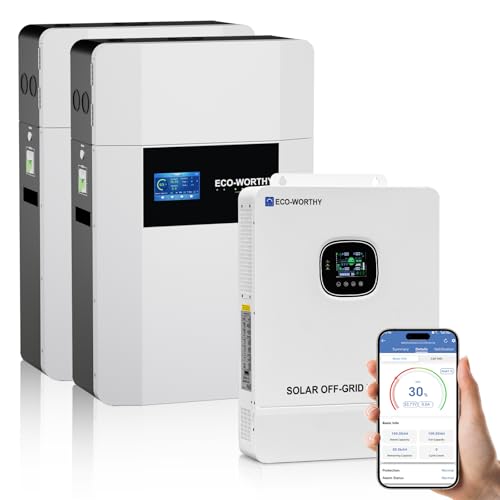
This wall-mountable system features a 10000W solar inverter charger and a 48V LiFePO4 battery with expandable capacity. It supports parallel operation up to six inverters and up to 32 batteries, enabling up to 163.84 kWh of storage. Bluetooth and WiFi enable convenient real-time monitoring, while multiple communication options integrate with standard inverters. Best for homeowners who want a scalable, modular setup with a clear upgrade path. A limitation is the note that batteries may ship separately, which could affect initial setup timelines.
- Best for: homeowners planning a scalable, modular backup system.
- Why chosen: high power, strong expansion potential, and networked monitoring.
- Caution: battery shipments may be separate from the inverter kit.
SUNGOLDPOWER 10000W SPH10048P

The SPH10048P is a 10 kW DC 48V pure sine wave inverter with 2 MPPTs and up to 200A battery charging. It supports 120V/240V split-phase or 120V single-phase output and includes a WiFi module for remote monitoring and a BMS for protection. Four charging/output modes provide flexibility for prioritizing solar, utility, or battery power. Best for users seeking a feature-rich, networked inverter with strong protection features. A limitation is that high-power continuous operation requires well-matched battery and wiring systems.
- Best for: mid-to-large off-grid setups needing reliable WiFi monitoring.
- Why chosen: robust protection, multiple charging modes, and parallel-capable design.
- Caution: requires proper matching with batteries and electrical layout.
Takki Solar Generator Portable Power Station

Takki offers a compact 88.8Wh energy bank with an included 21W solar panel. It charges from 0% to 80% in about 2 hours using the AC charger and provides two 110V AC outlets along with multiple USB ports for charging devices on the go. Best for camping, RV trips, or emergency power at home where portability and quick setup matter. Limitation: relatively low energy capacity, making it unsuitable for running many appliances for extended periods.
- Best for: portable, lightweight power needs during travel or short outages.
- Why chosen: pocketable power with a bundled solar panel for off-grid use.
- Caution: limited runtime for high-wattage devices.
Buying Guide: What To Consider When Choosing a Solar Inverter With Battery Storage
- Power needs: Assess continuous and peak load. If you run heavy appliances, prioritize higher continuous output and robust surge capacity.
- Storage capacity: Consider usable kWh versus total battery capacity. LiFePO4 is common for long life and safety.
- System architecture: Decide between integrated inverters with built-in BMS or modular kits that allow future expansion. Parallel configurations enable scalable power.
- Battery compatibility: Verify compatibility with your preferred battery chemistry and voltage (commonly 48V). Some inverters support multiple chemistries or operation without battery.
- Monitoring and connectivity: WiFi/Bluetooth apps, RS485/CAN interfaces, and compatible display panels help track performance and health.
- Installation considerations: Some units require professional wiring, dedicated enclosures, and proper grounding. Check local electrical codes and warranty implications.
- Expansion potential: If future power needs may grow, choose systems with parallel options and modular components.
FAQ
- What is the difference between grid-tied and off-grid inverters with battery storage?
Grid-tied inverters typically tie into the utility grid and may offer backup features, while off-grid inverters are designed for standalone operation with batteries and may require larger storage to meet loads during outages. - Do I need a special permit to install a home solar inverter system?
Permit requirements vary by location. Many homes require electrical permits and inspections, especially for high-capacity systems and parallel configurations. - Can all inverters work without a battery?
Some models can operate without a battery, using PV input to power loads directly. Batteryless operation is typically limited to specific modes and conditions. - What maintenance is required for LiFePO4 storage in these systems?
LiFePO4 cells generally offer long cycle life with low maintenance. It is important to monitor battery temperatures, keep terminals clean, and ensure proper protection circuits are intact. - Is parallel operation safe for multiple inverters?
Parallel setups can increase power and redundancy but require correct synchronization, phase balance, and safe electrical practices as outlined by the manufacturer.