When outages threaten perishable food, a reliable solar generator can keep your refrigerator running and your essentials safe. This guide highlights five top-rated options that balance capacity, recharge speed, portability, and safety features. Each entry references real-world performance to help you compare. A quick summary table below provides a snapshot of specs, ideal use cases, and standout capabilities to aid quick scanning.
| Product | Battery Capacity | Output | Portability | Notable Feature |
|---|---|---|---|---|
| Anker SOLIX C1000 Gen 2 | 1,024 Wh | 2,000 W | High | UltraFast recharging |
| Jackery Solar Generator 1000 v2 | 1,070 Wh | 1,500 W | Medium | Fast one-hour charging option |
| ZeroKor Portable Solar Generator | ~280 Wh | 300 W | High | Integrated solar panel included |
| Apowking Portable Generator | 146 Wh | 200 W (peak 200 W) | Very portable | Multiple outlets with MPPT |
| BLAVOR 1024Wh Solar Generator | 1,024 Wh | 1,600 W | Medium | Built-in solar panel option |
Anker SOLIX C1000 Gen 2 Portable Power Station
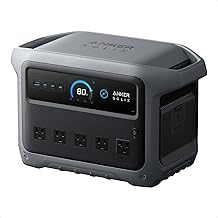
The Anker SOLIX C1000 Gen 2 offers a robust 1,024Wh LiFePO4 battery with a high 2,000W continuous output (3,000W peak). Its HyperFlash recharge enables 1,600W input for rapid recharging, making it suitable for outage prep, camping, or tailgating. With ten output ports, it can power multiple devices simultaneously, including a refrigerator during a brief outage. It is designed to be 14% smaller and 11% lighter than similar models, aiding portability for home and outdoor use.
Jackery Solar Generator 1000 V2

The Jackery Solar Generator 1000 V2 delivers 1,500W continuous power with a 3,000W surge, a 1,070Wh capacity, and a relatively light design (about 23.8 lbs). Its one-hour fast charging mode via the Jackery app accelerates replenishment, while ChargeShield 2.0 enhances charging safety and speed. The unit’s long lifespan is highlighted by a LiFePO4 battery designed to retain capacity well past 4,000 cycles, supporting reliability for extended outages or remote living scenarios.
Portable Solar Generator With 60W Panel (ZeroKor)

ZeroKor combines a compact 300W-class portable generator with a foldable 60W solar panel. It features two 300W max AC outlets, multiple USB ports, and a DC output, enabling versatile charging options for smartphones, laptops, cameras, and small appliances. While its capacity is smaller (suitable for light-duty use and quick top-ups), the integrated solar panel and portability make it practical for camping and off-grid scenarios where space and weight are considerations.
Apowking Solar Powered Generator

The Apowking unit provides a compact 146Wh battery with up to 200W peak output across seven outlets, including two AC outlets and multiple USB ports. The included 40W solar panel helps with daylight charging, and its multiple DC and USB outputs enable charging of laptops, drones, cameras, and other devices during outdoor use or emergencies. It is best for light electronics and essential loads rather than high-wattage appliances.
BLAVOR Portable Power Station 1024Wh

BLAVOR’s 1024Wh capacity supports a wide 1,600W continuous output with a 3,200W surge, making it capable of running refrigerators and other essential appliances during outages. It also features a built-in solar panel option, plus eight outlets and a smart BMS that protects against overheating and short circuits. The LiFePO4 battery promises longer life and more charge cycles, enhancing reliability for frequent use in home backup and outdoor activities.
Buying Guide: Key Purchase Considerations
- Power needs and surge capacity: Fridges require a reliable baseline plus surge capability for compressors. Look for at least 1,000–2,000Wh and at least 1,500–2,000W continuous output, with a suitable surge rating.
- Battery chemistry and lifespan: LiFePO4 batteries offer longer life and safety advantages, typically lasting thousands of cycles with stable performance in heat and cold.
- Recharging speed and solar input: For outage readiness, faster recharge times reduce downtime. Models with HyperFlash or high solar input capacity help shorten replenishment windows.
- Portability vs. capacity: Heavier units deliver more power, but you may prioritize lighter units for mobility. Consider whether you’ll move the unit between rooms, a vehicle, or campsite.
- Number and type of outlets: Ensure sufficient AC outlets or USB-C/USB-A ports to power fridge accessories, charging devices, and fans concurrently.
- Solar panel compatibility: Some units include built-in panels; others require separate solar panels. Check MPPT or efficient charging to maximize daylight recharging.
- Build quality and safety: Look for robust enclosures, effective BMS, overheat protection, and short-circuit safeguards to protect both the device and your appliances.
- Warranty and support: A longer warranty and accessible customer support can be valuable for home backup gear.
These considerations help balance the need to keep a refrigerator running during outages with practical constraints like space, budget, and typical outdoor use. When selecting, assess your typical outage duration, climate, and whether you want a model that also powers other critical devices.