Answering the question, the best solar generators for running a fridge off-grid are those that deliver steady 1000–1500W AC output, strong LiFePO4 batteries, and fast charging options. This guide highlights five top options and explains who each is best for, so you can choose confidently for camping, RVing, or emergency backup. The selections emphasize fridge-safe capacity, safety, and practical charging flexibility for everyday reliability.
Overview of top picks:
- Jackery Solar Generator 1000 V2 with 200W Panel — best for extended outdoor trips with fridge power and quick recharges.
- Jackery Explorer 1000 V2 Portable Power Station — best overall for home backup and versatile use, with fast charging.
- EnginStar Portable Solar Generator — best budget-friendly option with solid capacity and multiple outlets.
- ZeroKor Portable Solar Generator — best for compact trips requiring multiple outputs and solar flexibility.
- EF ECOFLOW Delta 2 — best expandable, high-output option for larger appliances and home backup.
Jackery Solar Generator 1000 V2 With 200W Panel

This model offers a high 1,500W continuous AC output with a 3,000W surge, plus a 1,070Wh LiFePO4 battery. It weighs 23.8 lbs and includes a foldable handle for easy transport. Best for campers and RV travelers who need reliable fridge power on the go and a compact, safe design.
Best for: Outdoor enthusiasts who require strong appliance support and fast, safe charging under varied conditions. This unit’s listed specs emphasize robust power delivery suitable for a fridge and other essentials during outages.
Caution: Real-world full-cycle longevity depends on charging practices; plan for regular but conservative cycling to preserve battery health.
Jackery Explorer 1000 V2 Portable Power Station

This 1,070Wh unit also uses LiFePO4 chemistry with a 1,500W AC output and 100W USB-C, plus a one-hour fast-charge capability via emergency charging in the Jackery App. It’s engineered for safer, faster charging and includes a long lifespan with a durable battery design.
Best for: Home backup and scenarios where rapid recharging and reliability matter, including fridge operation during outages. Choose this if you want a jack-of-all-trades power station with strong safety features.
Limitation: While fast-charging is emphasized, charging time can vary with input source and solar conditions; plan accordingly for non-sunny days.
EnginStar Portable Solar Generator

EnginStar provides a 300W portable power station with a foldable 60W solar panel included, 296Wh capacity, and 6.5 pounds weight. It offers 110V pure sine wave AC, multiple ports, and eight output options, making it a practical option for powering a small fridge during trips or emergencies.
Best for: Budget-conscious buyers who still want a capable, portable fridge power source for camping or short-term outages. It’s a strong everyday carry option with decent versatility.
Limitation: 300W continuous output may limit fridge startup demands or larger appliances; avoid high-wattage spikes beyond capacity.
ZeroKor Portable Solar Generator 300W

ZeroKor pairs a 300W capacity with two 300W max AC outlets, a DC port, multiple USB ports, and a built-in flashlight with SOS. It includes a 60W solar panel and supports versatile charging via wall, car, or solar input for off-grid usage.
Best for: Short trips where multiple ports are necessary and a solar panel is included, helping run a compact fridge during light outages or RV stops.
Caution: Using appliances above 300W may damage the unit; monitor continuous draw and avoid high-load devices simultaneously.
EF ECOFLOW Delta 2 Portable Power Station

The Delta 2 offers 1,024Wh LiFePO4 capacity with up to 1,800W continuous AC output (and 15 outlets). It supports fast charging and expandable capacity when combined with optional solar panels, making it a strong option for home backup and RV use.
Best for: Users who expect to power a broader array of appliances and want expandable capacity for longer outages or larger fridges. The model blends high output with flexible charging options.
Limitation: The degree of performance depends on input and panel availability; consider expansion plans for longer outage scenarios.
Jackery HomePower 3600 Plus
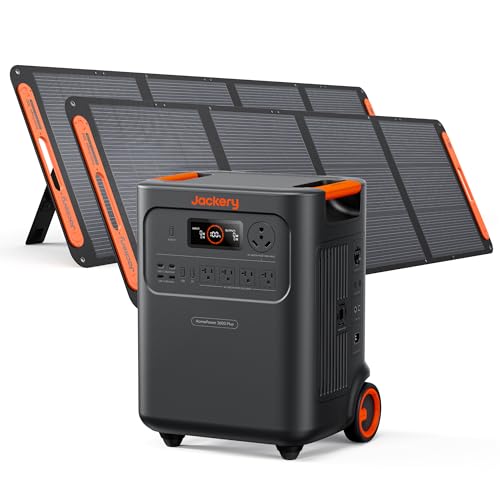
This system delivers 3,600W continuous output with 7,200W surge potential, and 3,584Wh expandable up to 21kWh per unit. It includes two 200W solar panels and is designed for essential home backup, RV use, and emergencies with parallel expansion options.
Best for: Homes seeking significant backup capacity for a fridge and other essentials during extended outages or for larger off-grid setups. This is a scalable solution that grows with needs.
Limitation: Higher upfront cost and complexity; best used where substantial backup power is a priority and installation is straightforward.
Jackery HomePower 3000

The HomePower 3000 provides 3,600W continuous output (7,200W surge) and a 3,072Wh LiFePO4 battery. It’s designed for home backup with TT-30 RV port and multiple ports for quick, reliable power to refrigerators and other essentials.
Best for: Home use where a strong, reliable fridge power backup is needed along with flexible plugging and RV compatibility. It’s suited for mid-to-large outages and remote locations.
Limitation: Heavy and higher wattage means it’s less portable; plan for a stationary setup or cart when used as home backup.
Anker SOLIX C1000 Gen 2

The C1000 Gen 2 delivers 2,000W continuous output with 3,000W peak and a 1,024Wh LiFePO4 battery. It charges quickly (HyperFlash) and supports portable use with a compact form factor, ideal for emergencies and remote work setups.
Best for: Those who want a fast-charge capability and reliable multi-device power in a compact footprint, suitable for small fridge setups during outages or trips.
Limitation: While fast charging is a key feature, the 1,024Wh capacity may require recharging more often on longer outages if power needs are high.
Buying Guide: Key Considerations For Fridge-Power On The Go
- Power Requirement: Find a unit with at least 1,000–1,500W continuous power to reliably run a household fridge and essential accessories during outages.
- Battery Type And Lifespan: LiFePO4 batteries offer longer life and safer chemistry for frequent charging cycles, making them preferable for fridge safety over many standard lithium types.
- Capacity vs. Runtime: Higher Wh (watt-hours) translates to longer fridge operation; balance capacity with weight and portability for your use case.
- Charging Speed: Fast-charge capabilities reduce downtime; consider models with 1-hour or 80-minute full-charges when quick returns to power are needed.
- Solar Panel Compatibility: If you plan to recharge via solar, verify panel compatibility, input power, and the ability to expand with additional panels.
- Port Variety: Look for a mix of AC outlets, USB-C, USB-A, and DC ports to cover fridge power and other devices (phones, routers, small appliances).
- Expandability: For longer outages or larger fridges, expandable systems (additional batteries or parallel units) can be advantageous.
- Portability vs. Capacity: Lightweight models are easy to transport for trips; larger models excel as home backup with more stable runtimes.
Frequently Asked Questions
- What size solar generator is best for a fridge?
– A generator with a continuous 1,000–1,500W output and 1,000–2,000Wh capacity is typically sufficient for a standard residential fridge during outages. - Do LiFePO4 batteries matter for fridge use?
– Yes. LiFePO4 provides longer lifespan, stable performance, and safer chemistry for multiple charge cycles, which matters for ongoing fridge power needs. - Can these units be charged while running a fridge?
– Many models support pass-through charging or can recharge while supplying power, but performance depends on input source and current draw. - Is it better to buy a single high-capacity unit or multiple smaller units?
– For fridge power, a single high-capacity unit reduces complexity and risk of power drop; multiple units provide redundancy but increase setup complexity. - Will solar panels fully recharge a fridge-power unit quickly?
– Solar recharge speed depends on panel wattage, sunlight, and battery health; in optimal sun, high-watt panels can top up batteries within hours. - What makes a solar generator “best for fridge use”?
– A balanced combination of high continuous output, ample capacity, safe battery chemistry, and dependable charging options tailored to fridge startup and running loads.
Summary of top picks for fridge power on the go:
| Model | Best For | Key Benefit |
|---|---|---|
| Jackery Solar Generator 1000 V2 | Outdoor trips | Strong 1,500W output, 1,070Wh, fast 1-hour charge |
| Jackery Explorer 1000 V2 | Home backup | Balanced power and safety, fast charging, long life |
| EnginStar Portable Generator | Budget trips | Affordable, portable, multiple ports |
| ZeroKor Portable Generator | Compact, solar-ready | Multiple ports, solar panel included |
| EF ECOFLOW Delta 2 | Expandable backup | High output, expandable capacity |