Discover compact three‑phase generators designed for teaching, hobby projects, and small wind or wind-assisted systems. The following hand‑held and tabletop units illustrate how three‑phase AC power can be generated, rectified, and used in demonstrations or micro‑renewable setups. This guide highlights five accessible models with adjustable voltages, brushless designs, and durable builds to support hands‑on learning and experimentation.
| Product | Brand | Voltage Range | Approx. Output |
|---|---|---|---|
| CrocSee Micro 3 Phase AC Mini Hand Brushless Motor Generator | CrocSee | 3V–24V | 0.1A–1A |
| ECSiNG 2PCS 3-24V 3 Phase AC Micro Hand Brushless Motor Mini Generator | ECSiNG | 3V–24V | — |
| Acxico 1Pcs 3 Phase AC Micro Mini Wind Hand Brushless Generator | Acxico | 3V–24V | 0.1A–1A |
| Mini Wind Turbine Alternator 12V, 3-Phase AC Generator | Bebykilemi | 3V–24V | ≤12W |
| Small 3 Phase Wind Turbine Generator, Handheld Model | Pumixiy | 3V–24V | — |
These units are built to illuminate how three‑phase generation works, support classroom demonstrations, and serve as entry points for wind or hobbyist projects. They emphasize brushless designs for longer life, portability for on‑site experiments, and broad voltage ranges to accommodate different teaching aids and DIY power systems.
CrocSee Micro 3 Phase AC Mini Generator
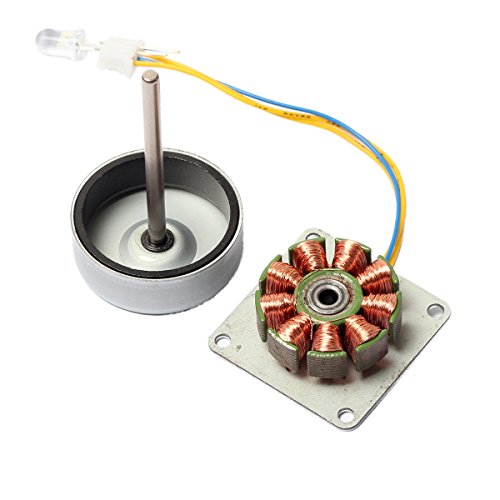
This micro three‑phase, brushless AC generator is designed for science experiments and teaching aids. It demonstrates how three‑phase output is generated from a compact device, making it a practical starter for larger projects. Its rated output spans 3V to 24V with currents from 0.1A to 1A, enabling experiments in voltage scaling, phase balance, and rectification concepts. The unit emphasizes ease of use, simple assembly, and hands‑on exploration of AC generation fundamentals.
ECSiNG 2PCS 3-24V 3 Phase Generator Set

Offering a two‑pack, this kit covers the same 3–24V range and showcases a three‑phase brushless design for stable operation. It is suited for models, experiments, and teaching tools, with emphasis on versatility across toys, education kits, and hobby projects. The three‑phase architecture helps students observe smoother AC generation and learn how to integrate these units with loads or rectifier circuits for DC output experiments.
Acxico 1Pcs 3 Phase Micro Mini Generator

Designed as a micro wind generator, this unit provides a 3–24V output with a 0.1–1A current range. Its compact form makes it ideal for classroom demonstrations and small DIY projects that model wind‑driven generation. The product highlights a brushless design and clear voltage appraisals for educational purposes, enabling learners to explore energy conversion and practical wiring with three‑phase AC sources.
Bebykilemi Mini Wind Turbine Generator

This small 12V, 3‑phase generator is tailored for teaching and small school experiments. It demonstrates how a wind turbine can produce AC power in a three‑phase configuration, with a voltage window of 3–24V. The device emphasizes sturdy metal and plastic construction for frequent classroom use and a practical power rating for demonstrations and limited DIY wind projects.
Pumixiy 3 Phase Wind Turbine Generator
This handheld or classroom‑friendly three‑phase generator is well suited for quick demonstrations of energy conversion. It delivers stable 3V–24V output, facilitating experiments on phase balance, frequency, and rectification. Its portable build supports both indoor demonstrations and outdoor lab setups, making it a practical addition to STEM education resources and DIY wind projects.
Garosa 3 Phase Permanent Magnet Generator

While anticipated for broader applications, this permanent magnet generator shows the practical advantages of a three‑phase PMG design, including direct drive compatibility and simple operation. It emphasizes robust construction and reliable performance, making it a firm reference point for students comparing brushless micro units against larger PMG configurations. The included rectifier feature assists in converting AC to DC for experiments on charging, storage, or DC loads.
CCXTOTOM 2pcs Small Generator Set

This two‑pack provides two compact three‑phase units designed for low‑power wind turbine applications. They deliver three‑phase AC output within a 3–24V range and emphasize brushless motor technology for longevity and reduced maintenance. The design supports educational models, DIY wind projects, and off‑grid demonstrations, offering flexibility for classroom labs and creative experiments.
Buying Guide: Key Considerations for Selecting a Small 3‑Phase Generator
When evaluating compact three‑phase generators for education or DIY projects, consider efficiency, voltage range, current capacity, and ease of integration with rectifiers or loads. Brushless designs tend to offer longer life with less maintenance, which is valuable for frequent classroom use. A wider voltage range (3–24V) supports multiple teaching scenarios, from low‑voltage demonstrations to higher‑voltage experiments with rectification to DC loads.
- Voltage and current needs: Match the device’s output to your intended experiments or models. Some kits list current ranges, others focus on voltage—knowing your end use helps filter options.
- Three‑phase behavior: Look for clear demonstrations of phase balance, startup behavior, and how the generator handles load changes. Packaging that includes example wiring or rectification scenes is helpful for instruction.
- Durability and material quality: Classroom and school lab environments require robust housings and durable connectors. Metal housings and brushless motors generally provide longer life under repeated use.
- Ease of integration: Check compatibility with common rectifiers, DC motors, and load resistances. Some kits benefit from included documentation or wiring diagrams suitable for students.
- Portability: If demonstrations move between rooms or outdoor environments, a compact, lightweight unit reduces setup time and handling risks.
- Educational value: Consider whether the kit includes explanatory materials, diagrams, or data sheets that support STEM learning objectives and assessment activities.
In summary, the best small three‑phase generators for education balance portability with practical output, showcasing how phase‑based generation works while remaining approachable for students and hobbyists. Comparing units by voltage range, ease of use, and durability helps educators and makers select devices that align with their teaching goals or DIY wind projects.