Looking for a compact, quiet, and reliable power source for apartment living? This guide highlights practical small generators and power stations that fit inside an apartment lifestyle, offering safe backup power for essential devices during outages or outdoor mini-adventures. Each pick is suited for apartment-dwellers who need portability, USB-C/AC outputs, and reliable lithium or inverter-based systems. Below, you’ll find quick-fit recommendations, who they’re best for, and what to watch out for in your space.
| Product | Best For | Why It Stands Out |
|---|---|---|
| MARBERO Portable Power Station 88Wh | Urban apartments, light electronics | Slim design, multiple ports, portable with solid charging speed |
| HOWEASY Portable Power Station 88Wh | Emergency kits, small devices | Compact, versatile inputs, clear status display |
| DARAN Portable Power Station 89.6Wh LiFePO4 | Laptops and gadgets on the go | LiFePO4 chemistry, fast charging, multiple outputs |
| ENOFLO 300W Portable Power Station, 228Wh | Multi-device families, CPAP or gadgets | Higher capacity, MPPT recharge option, robust ports |
| Portable Power Station 120W, ZeroKor | Travel-friendly backup | Lightweight, clear readout, compact 120W limit |
Note: Each product below is selected for apartment-friendly form factors, multiple output options, and safe operation in living spaces. Read each section thoroughly to determine which unit best matches your daily needs and storage constraints.
MARBERO Portable Power Station 88Wh
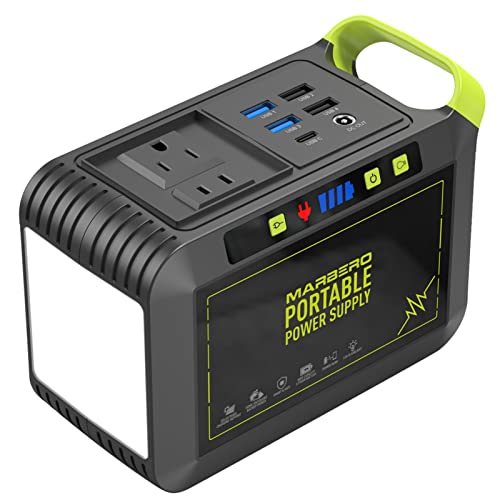
Best for: apartment dwellers who want a compact, all-purpose power bank for essential devices while camping or during outages. This unit features eight output ports and a lightweight, portable body that fits in a small space.
- Output versatility: 8 ports to power USB devices, USB-C, and AC appliances.
- Compact and portable: 6.5 x 4.6 x 3.1 inches, ~3.2 lbs with ergonomic handle.
- Fast charging efficiency: 0–80% in about 2 hours with the included adapter; solar panel compatibility adds outdoor flexibility.
Who it’s best for: individuals needing a compact backup for smartphones, tablets, laptops, small TVs, or a mini fridge in emergencies. Best for light daily use and short outages. Caution: With an 88Wh capacity, it will power low-watt devices for limited durations; plan for longer outages with a higher-capacity option.
HOWEASY Portable Power Station 88Wh

Best for: outdoor enthusiasts and apartment users who want a reliable companion for powering multiple devices during outages or outdoor trips, with a straightforward LED display for status checks.
- Eight outputs: 2 AC sockets (110V), USB-C, USB-A, QC ports, and DC ports.
- Low weight and compact footprint (6.6 x 4 x 3 inches) with hidden handle.
- Three charging modes: AC, solar (panel not included), and car; supports simultaneous charging while in use.
Who it’s best for: residents needing a versatile, compact station for charging phones, tablets, cameras, and small lights during outages or outdoor use. Caution: While capable, the 88Wh capacity means limited runtime for larger appliances; avoid high-wattage devices above its limit.
DARAN Portable Power Station 89.6Wh LiFePO4

Best for: users seeking a compact unit with LiFePO4 chemistry, fast charging, and a diverse port mix in a small footprint suitable for travel or apartment use.
- LiFePO4 battery: 89.6Wh capacity with 100W output; 7 ports including two AC sockets and multiple USB-C/USB-A ports.
- Ultra-fast charging: 0–80% in about 1.5 hours.
- Portable design: 6.5 × 3.3 × 4 inches, around 2.54 pounds with ergonomic handling.
Who it’s best for: shoppers prioritizing fast recharging, a balanced port selection, and a resilient lithium chemistry for longer lifecycle. Caution: Solar panel and solar charging accessories are not included; plan for external charging options if you want solar recharging on the go.
ENOFLO 300W Portable Power Station, 228Wh

Best for: families or individuals who need a higher-capacity, multi-device capable unit for longer outages or multi-device charging at once in an apartment setting.
- Capacity and power: 228Wh capacity, 300W continuous output (600W surge) with multiple outlets including AC, USB-C, USB-A, and DC ports.
- Three charging modes: AC wall charging, USB-C PD fast charging, car charging, and solar charging via panels sold separately.
- MPPT solar charging readiness: built-in MPPT controller for faster solar recharging when panels are available.
Who it’s best for: choose this if you need to run laptops, projectors, small TVs, and essential devices during outages while keeping a reasonable footprint. Caution: Higher capacity comes with a larger footprint than the smallest units; ensure storage space fits your apartment layout.
Portable Power Station 120W, ZeroKor

Best for: compact travelers and apartment residents needing a light but capable backup with a straightforward display and multiple charging options.
- Output and capacity: 97.6Wh with 120W AC output; multiple ports including USB-C, USB-A, DC, and a built-in flashlight.
- Three charging methods: solar (panel not included), USB-C wall adapter, and car USB port; LED readout shows remaining power and status.
- Weight and portability: around 2.2 lbs, designed for backpack-friendly use and easy transport.
Who it’s best for: ideal for daily carry, light camping, and apartment use where space is at a premium. Caution: The 120W AC limit means higher-wattage appliances should be avoided to prevent overload.
Buying Guide
What size power bank do you actually need? For apartment use, prioritize capacity in the 88–228Wh range with multiple output options (AC, USB-C PD, USB-A, and DC). Consider the following when choosing:
- Output needs: List essential devices (phone, laptop, router, small fridge). If you must power a laptop or a small fridge during outages, aim for at least 150–300W continuous output and 200–500W surge if possible (within compact form factors).
- Port variety: USB-C PD is increasingly standard for fast charging laptops and phones. Include a unit with at least one AC outlet and multiple USB ports for versatility.
- Battery chemistry: Li-ion is common; LiFePO4 offers longer lifecycle and stability, especially for frequent charging cycles. If you expect many cycles, LiFePO4 can be advantageous.
- Charging options: AC charging is reliable; solar compatibility is useful for outdoor use but panels are usually sold separately. Car charging is a helpful extra for on-the-road recharging.
- Portability: In apartments, size and weight matter for storage and movement. Slim, portable units fit better in closets or under beds.
- Safety and maintenance: Look for built-in protection features (short-circuit, overcurrent, thermal protection) and a clear LED or display showing remaining capacity and status.
FAQ
- What is the best portable power station for an apartment?
– For compact needs, units around 88Wh with multiple ports offer a good balance of portability and usefulness for essential devices. If you frequently need to charge laptops or run more devices, a 228Wh class unit provides more headroom. - Can these power stations power a refrigerator in an outage?
– Small 88–120W units can power small devices but may not sustain a standard refrigerator for long. Higher-capacity models (200W+ continuous) are more suitable for short-term fridge use. - Will solar panels be necessary?
– Solar panels are optional but beneficial for outdoor use or extended outages. Panels are typically sold separately and are compatible with many models via dedicated charging modes. - Are LiFePO4 models safer for apartments?
– LiFePO4 chemistry generally offers longer lifecycle and stable thermal performance, which can be advantageous for frequent charging and storage in living spaces. - How long do these power stations take to recharge?
– Recharging times vary by model and method. AC charging is often fastest; some units offer 0–80% in about 1.5–2 hours depending on the charger and battery chemistry. - What is the daily practical use of these units in an apartment?
– They provide backup power for essential devices during outages, support remote work with a laptop, charge phones and cameras, and operate small household electronics during power interruptions.