When camping, reliable power is essential for charging devices, running lights, or keeping small appliances running. This guide highlights compact, gas-powered generators that balance portability with dependable output. Each option is selected for camping efficiency, quiet operation, and ease of use, making them suitable for tents, RV sites, and remote campsites. The table below summarizes five top picks to consider.
| Product | Approximate Output | Weight | Key Benefit |
|---|---|---|---|
| Aceup Energy 1,200W Ultralight | 1200 Peak / 900 Running Watts | 35.3 lb | Compact, recoil start, EPA & CARB compliant |
| Aceup Energy 1,200W Camping Ultralight | 1200 Peak / 900 Running Watts | 35.3 lb | Portable home-use capable, easy carry |
| Oxseryn 4400-Watts Inverter | 4400 Peak / 3400 Running | Not specified | RV ready, ECO mode, multiple outputs |
| PowerSmart 1200-Watt | 1200 Starting / 900 Running Watts | 约 37.6 lb | Super quiet, built-in carry handle |
| ERAYAK 2400W Inverter | 2400 Peak / 1800 Running | Not specified | Ultra-quiet, ECO mode, compact |
Note: All models listed are gas-powered and designed for portable camping use. Each product features at least a 120V outlet and some include RV or USB ports for versatile charging options. Review weight, runtime, and noise level to choose the best fit for your camping style.
Aceup Energy 1,200W Ultralight Generator

Power: 1200 peak watts and 900 running watts. Frequency 60Hz, 120V outlet. Features include an American-style duplex socket, overload protections, a 12V DC output, and an indicator light. Engine is a 71cc Aceup single-cylinder 2-stroke with air cooling and recoil start. Weight: 35.3 lb. EPA and CARB compliant, designed for portable home or camping use.
Aceup Energy 1,200W Portable Camping Generator

Output mirrors the ultralight model with 1200 peak watts and 900 running watts at 60Hz and 120V. It uses a 71cc Aceup single-cylinder 2-cycle engine with air cooling and recoil start, weighing 35.3 lb. The unit is positioned as a compact option for camping and light-home use, combining portability with stable power for small devices.
Oxseryn 4400-Watts Inverter Open Frame
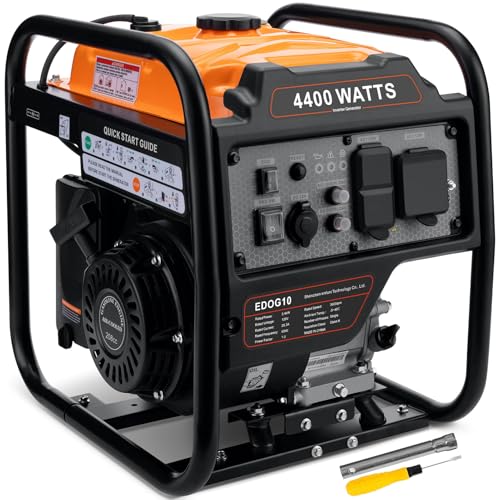
Power output: 4400 peak watts and 3400 running watts. It includes two 120V AC ports, one 30A RV port, and a 12V DC port. Runtime up to 14 hours at 25% load with a 2-gallon fuel tank. Features ECO mode, inverter technology, and EPA compliance. Designed for RVs, camping, and home backup with open-frame portability.
PowerSmart 1200-Watt Portable Generator

Output: 1200 starting watts and 900 running watts. Weight around 37.6 pounds with a built-in handle for easy transport. Provides one 120V household outlet and one 12V DC output for charging devices. Marketed as a quiet, ultralight option suitable for camping, tailgating, and light home backup needs.
ERAYAK 2400W Inverter For Camping

Output: 2400W peak and 1800W running. Ultra quiet at 52.5 dB at 7 meters under 25% load. Compact and lightweight with ECO mode to optimize fuel efficiency. Suitable for sensitive electronics and small appliances, making it a practical choice for campers seeking quiet operation and stable power.
Oxseryn 4400W Open Frame Inverter (RV Ready)

Output: 4400 peak watts and 3400 running watts with multiple outlets including 2×120V, 1×12V DC, and 1×RV port. Runtime up to 14 hours at 25% load with ECO mode. Fuel tank and visual gauge simplify monitoring. RV compatibility and robust multi-output support make it a strong camping and home backup option.
Oxseryn 2500W Inverter, Portable

Output: 2500 peak watts and 1800 running watts. Gas-powered by a 79.8cc 4-stroke OHV engine, with a 1.1-gallon fuel tank and indicator. Runs up to 9.5 hours at 25% load. Features parallel capability, multiple outputs including USB and Type-C, and Eco-mode for efficiency. Compact enough for camping with flexible charging options.
Buying Guide: Key Purchase Considerations
- Power needs: Determine your base load (phones, lights, small appliances) and plan for additional devices. Inverter models deliver clean power suited for sensitive electronics.
- Portability: Weight and handle design affect transport between car and campsite. Look for models under 40 pounds for easier hauling.
- Runtime and fuel: Consider tank size and efficiency. Longer runtimes reduce fuel top-ups during trips, especially in remote areas.
- Noise levels: Quieter generators minimize nuisance at campgrounds. ECO or quiet modes can significantly cut noise.
- Outlets and ports: Ensure the generator provides the needed outlets (120V, USB-C, RV 30A, etc.) for your devices and power stations.
- Safety and compliance: EPA and CARB compliance help ensure environmental and local regulatory alignment. CO sensors are a helpful safety feature on some models.
- Budget vs. features: Higher-widelity inverters and multiple outputs add versatility but weigh on price. Prioritize essential features for camping.
- Maintenance and warranty: Look for accessible service options and reasonable warranty terms to protect your investment.