Looking for a compact, affordable cement mixer that fits small jobs at home or on the farm? A small electric cement mixer offers portability, simple setup, and steady mixing for mortar, stucco, seeds, and light concrete tasks. This guide highlights five compact models ideal for DIYers, hobby builders, and small-scale contractors. Each pick balances power, portability, and price while clarifying who benefits most and when to choose one over another.
Product comparison at a glance
| Product | Best For | Key Benefit | Limitations |
|---|---|---|---|
| 4.3 Cu.Ft. Cement Mixer, 3/5HP | DIY homeowners; light construction | Portable with stand and wheels | Moderate drum size; 450W |
| 4.3 Cu. Ft. Portable Concrete Mixer, 3/5 HP | Small jobs; quick setup | Blue, heavy-duty wheels included | Compact capacity |
| 5.3 Cu. Ft. Portable Concrete Mixer, 1 HP | More demanding home projects | Bigger drum; higher power | Heavier, less nimble |
| 3.0 Cu.Ft. Concrete Mixer, Orange | Seed mixing; small-scale projects | 70L drum; 120V motor | Smaller drum volume |
| IMAYCC Cement Mixer, 2100W | Pro-style mixing; thick materials | Six speeds; overheating protection | Higher power, may be bulkier |
4.3 Cu.Ft. Cement Mixer, 3/5HP

Product overview
This model combines portability with a ready-to-use stand and wheels, ideal for DIYers tackling small patios, garden paths, or light concrete tasks. The 4.3 cubic foot drum accepts moderate batches and the 450W motor provides steady mixing without excessive power demands.
4.3 Cu. Ft. Portable Concrete Mixer, 3/5 HP

Product overview
Best for quick setups and smaller batches, this model emphasizes mobility and ease of use. The drum capacity and 450W motor keep tasks tidy without overkill. It’s a solid choice for homeowners who mix mortar, stucco, or light concrete for small projects.
5.3 Cu. Ft. Portable Concrete Mixer

Product overview
Better for bigger home projects, this mixer offers a larger drum and more power (1 HP). It suits concrete-heavy tasks, mass mortar mixing, and scenarios where cycle time matters. Choose this if you frequently handle medium-scale pours and require quicker batching.
3.0 Cu.Ft. Concrete Mixer, Orange
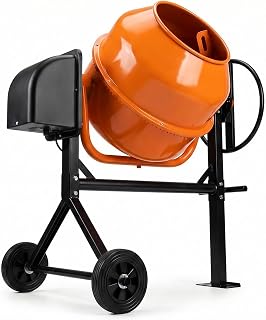
Product overview
Best for seed inoculation, feed mixing, and light-duty tasks, this compact orange mixer features a small drum and 120V operation. It’s a strong pick for agricultural or hobby projects where occasional concrete use is needed alongside other mixing tasks.
IMAYCC Cement Mixer, 2100W

Product overview
Best for demanding mixing tasks, this model offers six speeds and a high-power motor. It’s suitable for thick mortars, plasters, and heavier materials. It includes overheating protection for longer jobs. Consider this if you need precision control and more consistent shear in thicker mixes.
Buying Guide
What size drum do you need?
Drum capacity affects batch size. For small home projects, 3.0–4.3 cubic feet is usually enough. Larger drums handle bigger batches but add weight and reduce portability.
How much power is right?
Most small electric mixers range from 450W to 2100W. Higher wattage provides faster mixing and handles denser materials, but uses more energy and may require sturdier supports.
Portability and setup considerations
Look for a built-in stand and wheels for easy movement. A powder-coated steel frame offers durability in wet environments, while a simple, foldable design saves space.
Materials and use cases
Common uses include concrete, mortar, stucco, plaster, seed mixing, and light feed mixing. If you need to blend paints or adhesives, verify the motor and paddle design suitability for non-concrete mixes.
Safety and maintenance
Check for overheating protection and stable mounting. Regularly clean the drum and paddles to prevent material buildup. Ensure electrical safety with a properly rated outlet and dry surroundings.
Choosing by scenario
- DIY homeowner with occasional small pours: select a 3.0–4.3 Cu.Ft mixer with 450–750W.
- Hobbyist or gardener doing periodic seed and feed mixing: 3.0–4.3 Cu.Ft is often sufficient; consider smaller drums for space.
- Light contractor or frequent medium pours: 5.3 Cu.Ft with around 1 HP is a good balance of capacity and power.
- Projects involving plaster or mortar with longer run times: a model with six speeds and robust cooling protection can help.
Maintenance checklist
- Inspect the drum and paddles for wear; replace as needed.
- Lubricate moving joints per manufacturer guidance.
- Keep the motor and electrical components dry and clean.
- Store in a dry location to prevent rust and corrosion.
FAQ
- What size cement mixer should I buy for small projects? A 3.0–4.3 cubic foot drum is typically sufficient for home use and light construction tasks.
- Is a higher wattage mixer better for concrete than mortar? Yes, higher wattage generally improves mixing of dense materials, but ensure the mixer remains manageable in weight.
- Can these mixers mix seeds or feed? Some models are suitable for seed or feed mixing; check the product features for versatility in mixes beyond concrete.
- Do I need a special outlet for these mixers? Most small electric mixers run on standard 120V outlets, but check the motor wattage and local electrical codes.
- What maintenance is required after use? Rinse the drum promptly, dry thoroughly, and inspect paddles for wear before storage.
- Are these mixers appropriate for thick plasters? Models with higher power and multiple speeds are better suited for thick plasters and mortars.