Discover compact, beginner-friendly wind generator kits built around small DC motors. These selections convert wind or manual action into usable electricity, ideal for STEM projects, educational demonstrations, and hands-on experiments. Each item below includes a quick overview of key features to help you compare options quickly.
| Product | Brand | Voltage Range | Notable Use |
|---|---|---|---|
| EUDAX 6 Set Mini Generator Motors | EUDAX Store | DC 3V – DC 12V | DIY wind/solar experiments, educational kits |
| EUDAX Mini Generator Motors (Plastic Holder) | EUDAX Store | DC 3V – DC 12V | Mini wind turbine and toy projects |
| A-iPower 4600W Portable Inverter Generator | A-iPower Store | AC 120V | Off-grid power and backup scenarios |
| 6 Pack DC 3V 1730RPM Mini Motors | Unbranded | DC 3V | Mini fan, wind turbine demonstrations |
| EUDAX DIY DC Power Micro Motor Wind Turbine | EUDAX Store | DC 3V | Micro wind turbine demos, teaching aids |
Note: All products support hands-on experiments with wind, manual cranking, or small solar/battery power sources. The listed features cover kit contents, motor specs, and typical educational uses to help you choose the right setup for your project goals.
EUDAX 6 Set Mini Generator Motors

This multi-piece kit features six mini generator motors with mounting brackets, propellers, LEDs, and a color‑coded manual. It supports DC operation at 3V, 4.5V, and 12V with corresponding rated speeds of 1500 RPM, 2500 RPM, and 6500 RPM. The set is designed for hands-on learning as a wind-driven or gear-driven current generator to illuminate LEDs or power simple toys.
EUDAX Mini Generator Motors (Plastic Holder)

This compact motor set provides DC 3V to 12V operation with rated speeds up to 6500 RPM. The plastic motor holder keeps components organized for quick assembly in small wind turbine projects or DIY educational toys. It’s suitable for experiments that demonstrate how rotating motors can generate electricity under varying wind or manual crank speeds.
A-iPower 4600W RV-Ready Inverter Generator
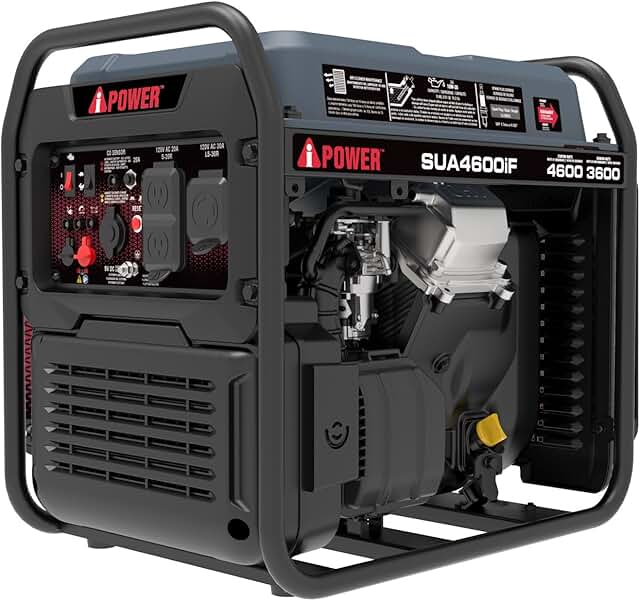
This portable, gas-powered inverter generator delivers up to 4600 starting watts and 3600 running watts, with a compact 56 lb design for easy transport. It provides a clean 120V AC output suitable for RVs and home backup, incorporating inverter technology to keep power stable for sensitive electronics. It’s a practical option when wind or small-scale DC experiments need higher, reliable AC power.
6 Pack DC 3V 1730RPM Mini Motors

Each compact motor runs at 3V with a nominal 1730 RPM. The motors are silver-colored, with a 25mm body diameter and a 9x2mm shaft. They’re ideal for small LED projects, mini fans, wind turbine experiments, and STEM activities that illustrate how velocity and torque affect electrical output.
EUDAX DIY DC Power Micro Motor Wind Turbine

This micro motor wind turbine module is designed for teaching demos and compact wind-energy experiments. It operates at DC 3V with a variety of rated speeds (up to 6500 RPM at 12V). The kit emphasizes simple demonstration of how turbine blades and motor interactions convert wind into electrical energy, making it a suitable classroom or home project tool.
Buying Guide: Key Purchase Considerations
- Voltage range and RPM: Match the motor’s voltage and rotational speed to your intended wind source or crank mechanism. Higher RPM typically yields more electricity, but efficiency depends on blade design and gearing.
- Kit contents: Look for sets that include propellers, brackets, connectors, LEDs, and manuals. A well-rounded kit reduces extra shopping and setup time.
- Durability and materials: Plastic holders and metal shafts influence longevity in wind-based experiments. Consider environmental exposure and storage needs.
- Educational value: Choose kits with clear documentation and reference materials to support learning goals, especially for STEM activities or classroom use.
- Portability and weight: For field demos or camping backups, lighter and compact devices are easier to transport.
- Power use cases: If you plan to drive LEDs or small electronics, verify that the output characteristics (voltage, current) align with your devices.
- Safety and assembly: Ensure components are simple to assemble, with secure mounting and safe handling of small parts.
- Expansion potential: Some kits support future upgrades, such as integrating solar panels or larger wind devices, enabling scalable projects.
External factors, such as wind availability and environmental conditions, influence performance. For classroom or hobby projects, choosing a kit with clear instructions, reliable parts, and versatile operation—capable of wind, manual cranking, or solar power—will help ensure consistent, educational outcomes.