Small DC motor generator kits are ideal for hands-on science, tech, engineering, and math (STEM) activities. They let students and hobbyists explore how motors and generators convert electrical energy and mechanical power, learn about wind turbines, hand-cranked power, and basic circuitry. Below is a curated selection of five practical kits that cover wind-driven, hand-cranked, and educational applications. Each entry includes a concise overview, key features, and how it can fit into classroom or at-home experiments.
Quick Summary Of Selected Products
| Product | Brand | Voltage Range | Highlights |
|---|---|---|---|
| EUDAX 6 Set DC Motors Kit | EUDAX | 3V-12V | 6 motors, shafts, propellers; great for multi-motor experiments |
| EUDAX Mini Generator Motors (Metal Holder) | EUDAX | 3V-12V | Generator-capable motors; wind/hand-crank projects |
| Runseaway 3Pcs Mini DC Motor Kit | Runseaway | 3V | Three motors with straightforward wiring for STEM demos |
| Coliao 10pcs Mini Generator Motors | Coliao | 3V-12V | Bundle of 10 motors; versatile for many builds |
| Topoox 6 Pack DC 3V 1730RPM | Topoox | 3V | Compact, fast-spinning motors for micro wind projects |
EUDAX 6 Set DC Motors Kit

This kit bundles six small DC motors suitable for low-voltage experiments. Voltage range spans 3V to 12V, with a no-load speed that can reach up to 25,000 RPM. The set includes a shaft propeller and multiple color options for the housing, enabling a range of hands-on projects—from simple fans to high-speed demonstrations. It is important to follow included diagrams to avoid short circuits and ensure safe operation during assembly.
Key features include: 6 motors, 2xx shaft dimensions, 10×2.0 mm shaft, and 38 mm motor body length. The included propellers and mounting parts help students form quick demonstrations of motor power versus load. This kit is well-suited for classroom demonstrations of speed control, basic circuitry, and the relationship between voltage and RPM.
EUDAX Mini Generator Motors (Metal Holder)

Designed as a beginner-friendly kit, this set includes six mini generator motors with mounting brackets and propellers. It demonstrates how wind, gears, and pulleys can drive generators to light LEDs, and it supports experiments with solar panels or batteries for diversified energy learning. Operating voltages at 3V, 4.5V, and 12V correspond to different rotational speeds, enabling scalable experiments from gentle wind to more active demonstrations.
Highlights include: 6 motors, 2 mm shaft, 24 mm motor diameter, 14 cm line length, and a clear pathway to build mini wind turbines or hand-crank generators. The variety of RPM ranges allows students to observe speed-dependent behaviors and energy conversion in practical terms.
Runseaway 3Pcs Mini DC Motor Kit

This set provides three compact DC motors, each rated for DC 3V with a nominal speed of about 4000 RPM. The motors come with flexible wires and clear terminals, making wiring straightforward for beginners and students. They are suitable for STEM demonstrations, small fan builds, and simple wind turbine models. The predictable performance supports reliable classroom experiments and hobby projects alike.
Coliao 10pcs Mini Generator Motors

Coliao offers a bulk pack of ten mini generator motors, designed for versatile DIY projects, including small wind turbines or hand-cranked generators. Specifications mirror the standard 3V to 12V operation with similar shaft dimensions and motor body size to fit compact housings. The bundle is ideal for group activities or classroom stations where multiple builds run in parallel, enabling comparative experiments and rapid prototyping.
Topoox 6 Pack DC 3V 1730RPM
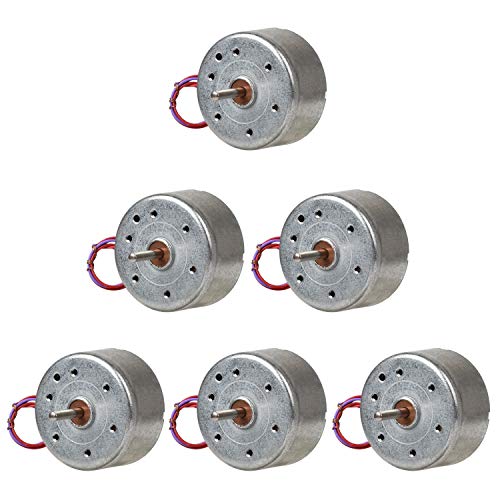
Topoox offers six compact motors with a rated speed of 1730 RPM at 3V. These motors are well-suited for small-scale wind turbine projects, micro fans, and STEM demonstrations that require steady, manageable RPM. The dimensions—approximately 25 mm in diameter and 9×2 mm shaft—couple easily with compact housings and quick-release connectors for quick setup and testing.
Buying Guide
When selecting a small DC motor generator kit, consider these factors to optimize learning outcomes and project success:
- Voltage range and RPM: A broad voltage window (3V-12V) enables both gentle and high-speed demonstrations. Look for motors with well-documented RPM figures at each voltage point to predict performance under different loads.
- Motor shaft and mounting compatibility: Check shaft dimensions (commonly 8×2 mm or 10×2 mm) and motor diameter to ensure compatibility with propellers, gears, and brackets included in or compatible with the kit.
- Wiring and accessibility: Kits with clearly labeled terminals and included connectors simplify wiring for beginners. A pre-wired setup reduces time spent on electrical basics and lets students focus on energy concepts.
- Included accessories: Propellers, brackets, LEDs, and mounting hardware expand project possibilities. A kit that includes multiple propeller types or mounting options supports diverse experiments.
- Educational value: Look for kits with manuals or project ideas that align with core concepts such as energy conversion, speed vs. load, and how wind or manual input can generate electricity.
- Durability and safety: Choose kits with robust enclosures or metal holders when possible, especially for wind-tunnel or cranking demonstrations. Follow safety guidelines to avoid short circuits and overheating.
For classrooms, consider grouping kits into stations that demonstrate parallel energy conversion: one station with wind-driven generators, another with hand-crank generators, and a third exploring LED lighting powered by the motors. The variety in the selected products supports differentiated instruction and hands-on inquiry into how small motors function as generators under different energy sources.