If you’re shopping for a compact back up power solution, a small back up generator can keep essential devices running during outages or while off-grid. These units are ideal for campers, RVs, apartments, and emergency kits where portability and quiet operation matter. The following five options balance size, power, and practicality for different buyer needs—from ultra-light portability to higher-output camping readiness.
| Product | Estimated Capacity | Output Range | Best For |
|---|---|---|---|
| MARBERO Portable Power Station 88Wh | 88Wh | Up to 120W peak | Minimalist travelers, quick-charge devices, back-up gadget power |
| Jackery Explorer 300 | 292Wh | 300W continuous, 600W peak | Laptop use, small appliances, off-grid weekends |
| ALLWEI Portable Power Station 256Wh | 256Wh | 300W continuous, 600W peak | Multi-device camping and home backup |
| Portable Power Station 120W (ZeroKor) | 97.6Wh | 120W AC max | Compact essentials, light travel and quick top-ups |
| EF ECOFLOW Delta 2 | 1024Wh | 1800W output | Higher-demand appliances, longer off-grid time |
MARBERO Portable Power Station 88Wh
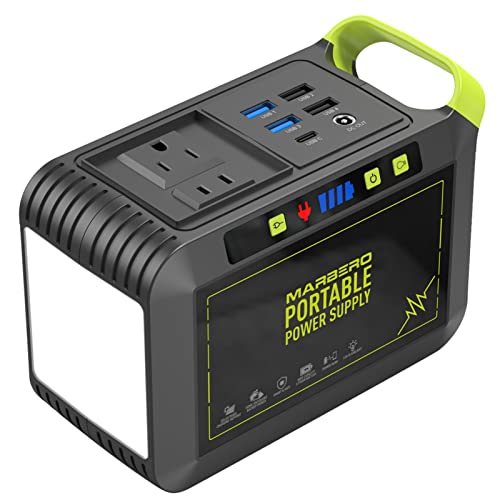
The MARBERO unit is a compact 88Wh power station designed for quick, on-the-go charging. It features eight output ports and a built-in BMS for safety, with USB, USB-C PD, and AC outlets. It also supports fast charging via MARBERO’s own solar panel ecosystem and includes a handle for easy transport. This model is best for travelers who need a small, light option to top up phones, tablets, and other low-power devices during camping or short trips.
- Best for: Light-duty travel, quick device top-ups, and basic backup power.
- Why selected: Ultra-compact design with multiple outputs and a safety-focused BMS.
- Caution: The 88Wh capacity limits runtime for higher-draw appliances or longer outages.
Jackery Explorer 300

The Jackery Explorer 300 offers a robust 292Wh LiFePO4 battery with a lightweight frame and integrated handle. Its versatile output includes two AC outlets, a 100W USB-C PD port, USB-A ports, and a 120W car port. It uses LiFePO4 chemistry for extended cycle life and higher reliability, making it suitable for campers, fieldwork, or as a reliable solar-powered backup for essential electronics.
- Best for: Off-grid use with laptops, cameras, drones, and CPAP devices when paired with solar panels.
- Why selected: Strong balance of capacity, weight, and output in a single, portable package.
- Caution: Heavier than ultra-compact models, which may affect portability for some hikers.
ALLWEI Portable Power Station 256Wh
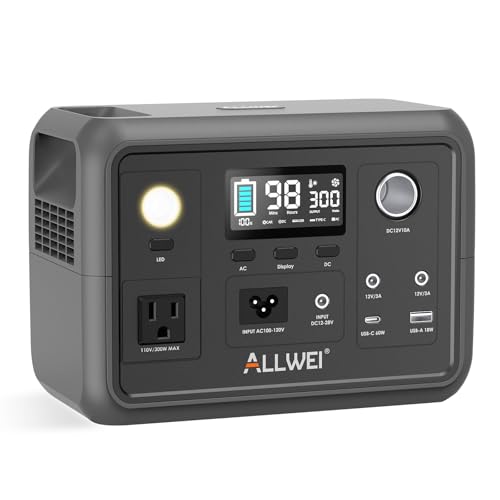
ALLWEI’s 256Wh power station delivers 300W continuous output with six ports and a pure sine wave AC outlet. It uses LiFePO4 cells offering thousands of charge-discharge cycles and a multi-layer BMS for protection. The unit’s pass-through charging lets you power devices while recharging the station, which is beneficial for both home backup and outdoor adventures when you need multiple devices powered at once.
- Best for: Families or groups needing multiple devices powered during camping or emergencies.
- Why selected: High output options plus strong durability and a long cycle life.
- Caution: Slightly heavier due to LiFePO4 cells and multiple outlets.
Portable Power Station 120W (ZeroKor)

The ZeroKor unit is a compact 97.6Wh power bank with two 120W AC outlets and multiple USB ports, including USB-C and USB-A. It’s designed for light-duty use, providing a balance of portability and enough power to run phones, tablets, laptops, and light electronics. A built-in display shows remaining power and port activity for clear power management.
- Best for: Pocketable backup power for travel, camping, and small devices.
- Why selected: Very light and easy to carry with essential outlets for daily use.
- Caution: Limited capability for high-wattage appliances or long outages.
EF ECOFLOW Delta 2

The Delta 2 is a high-capacity portable power station with 1024Wh LiFePO4 storage and an 1800W AC output. It supports rapid charging and expandable capacity, with the ability to run a wide range of appliances and devices, especially when longer off-grid periods are anticipated. This model suits users who require significant power for multiple devices or longer outages.
- Best for: Home backup power, camping with higher energy needs, and RV use.
- Why selected: Large capacity and robust output suitable for extended off-grid usage.
- Caution: Higher price and bulk compared to ultra-compact models.
Buying Guide
What should you consider when choosing a small back up generator?
- Power needs: Estimate total wattage of essential devices to determine capacity and continuous output. For example, laptops and phones require less power than mini-fridges or CPAP machines.
- Portability: If you plan to carry it in a backpack or vehicle, weight and dimensions matter. LiFePO4 batteries offer long life with additional weight considerations.
- Battery chemistry: LiFePO4 cells provide longer cycle life and safer chemistry, but may add weight. Consider whether you need a long-lasting unit for frequent use.
- Expansion and charging speed: Some units support fast charging or expansion with additional batteries. If you anticipate quick recharging, look for AC fast charge and solar compatibility.
- Outlets and compatibility: Check the mix of AC, USB-C PD, USB-A, and car outlets to ensure compatibility with your devices and charging cables.
- Durability and protection: A solid BMS helps protect against short circuits and overvoltage. Consider safety features for outdoor use.
Frequently Asked Questions
- What size back up generator is best for daily essential power?
Choose a unit with enough capacity to support your essential devices for the expected outage duration, prioritizing units with USB-C PD and multiple outputs for flexibility.
- Can I run appliances directly from a portable power station?
Yes, within the unit’s continuous and peak wattage ratings. Avoid plugging high-wattage appliances beyond the rated limits.
- Are LiFePO4 powered stations safer for outdoor use?
LiFePO4 chemistry is known for stability and longer cycle life, making it a common choice for outdoor and long-term use.
- Do these devices support solar charging?
Many listed models are designed for solar compatibility with optional panels, providing flexible off-grid recharging.
- How do I decide between 256Wh and 1024Wh?
256Wh is lighter and more portable for basic devices; 1024Wh powers more devices for longer periods but adds weight and size.
- Is a built-in display important?
Displays help monitor remaining power and port activity, which improves management during trips or outages.