Finding a durable, quiet, and fuel-flexible generator can be vital for home backup readiness and remote power needs. The following five models offer tri-fuel or natural gas compatibility, inverter or traditional configurations, and features designed to minimize noise while maximizing efficiency. Each entry highlights core capabilities, runtime, and notable advantages to help you compare at a glance.
The table below provides a quick reference for the featured products, including fuel type, peak and running wattage, and notable features.
| Product | Fuel Type | Peak / Running Watts | Key Features |
|---|---|---|---|
| Westinghouse 14500 Peak Watt Tri-Fuel | Gas / Propane / Natural Gas | 14,500 / 11,500 (gasoline); 13,500 / 10,500 (propane); 12,000 / 9,500 (natural gas) | Remote start, transfer switch ready, long runtime on large tank |
| WEN 14500-Watt Tri-Fuel (TF1450) | Gasoline / Propane / Natural Gas | 14,500 / 11,500 (gas); 12,500 / 10,300 (propane); 10,500 / 8,750 (natural gas) | Electric start, transfer-switch ready, wheel kit |
| A-iPower 4600W Inverter | Gas | 4,600 / 3,600 | Ultra-lightweight, CO sensor, pure power for sensitive electronics |
| Westinghouse 8200 Peak Watt Inverter | Gas / Propane / Natural Gas | 8,200 / 6,600 (gas); 7,380 (propane); 6,560 (natural gas) | Inverter with home backup, CO sensor, parallel capable, 50A outlet |
| Westinghouse 13500 Peak Watt Tri-Fuel | Gas / Propane / Natural Gas | 13,500 / 10,500 (gasoline); 12,500 / 9,500 (propane); 10,000 / 8,500 (natural gas) | Remote start, multiple outlets, long runtime, digital hour meter |
Note: All models cater to different needs—from compact RV use to whole-home backup. The following sections call out each unit’s balance of fuel flexibility, noise levels, and power management capabilities.
Westinghouse 14500 Peak Tri-Fuel Generator

This model blends flexibility and robust output for larger homes or demanding outdoor setups. It operates on gasoline, propane, or natural gas and delivers high peak wattage with solid running watts depending on fuel. A heavy-duty 550cc Westinghouse engine supports a long runtime, and the unit includes a dual-fuel design that broadens fuel availability during power interruptions. The generator is designed for compatibility with transfer switches and includes features to ease multi-appliance operation, such as a built-in fuel gauge and sizeable fuel tank. Users can rely on electric start for quick deployment.
Key advantages include its tri-fuel versatility, substantial peak power, and the ability to sustain prolonged operation with a large gasoline tank. Noise levels are consistent with traditional outdoor portable units but are engineered to stay within acceptable ranges for residential use when operated at moderate loads. It is particularly suitable for homeowners who want a single unit that adapts to available fuel sources.
Considerations include weight and size, which may require a sturdy towable setup or a permanent outdoor location. As with all multi-fuel generators, performance can vary by fuel quality and environmental conditions, so having a backup fuel plan is prudent.
WEN 14500-Watt Tri-Fuel Generator (TF1450)

The WEN TF1450 delivers a competitive tri-fuel option with transfer-switch readiness and an electric start, making it a practical choice for home backup systems. It can switch between gasoline, propane, and natural gas with a simple dial turn, providing flexibility when fuel supplies are uncertain. It supports both 120V and 240V outputs, which broadens compatibility with standard home circuits and emergency loads. The wheel kit adds portability for moving the unit around a yard or campsite, though its bulk requires mindful handling.
From a power management perspective, this generator is designed for reliability and ease of use during outages. The inclusion of 120/240V coverage and a straightforward engine setup helps minimize downtime when electricity is scarce. Users benefit from the ability to select the most convenient fuel source without sacrificing essential appliance support. Noise levels stay reasonable for a generator of this class, especially under moderate loads.
Potential trade-offs include the need for a surface robust enough to accommodate its footprint and the necessity to regularly check fuel lines and the tri-fuel system for optimal performance. The TF1450 is well-suited for homeowners seeking a balanced, flexible, and capable tri-fuel option.
A-iPower 4600W Inverter (Gas)
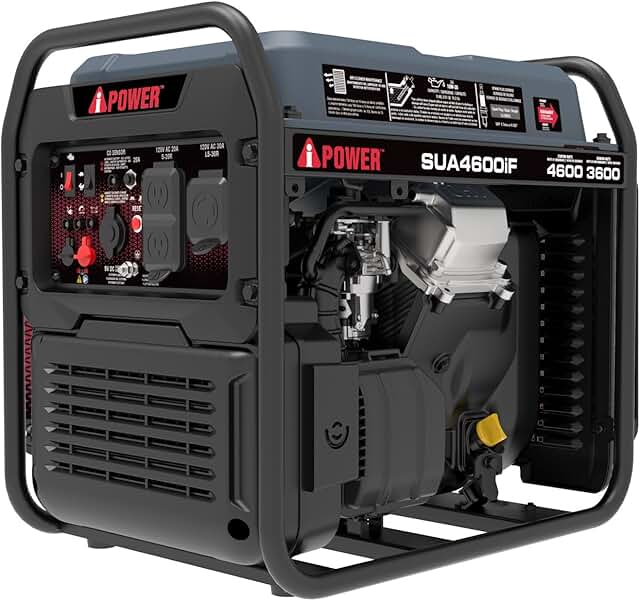
The A-iPower 4600W inverter generator emphasizes portability and clean power suitable for sensitive electronics. With a 149cc engine delivering 4,600 starting watts and 3,600 running watts, it supplies ample AC power for camping, tailgating, or small backup loads. Weighing around 56 pounds, it’s designed for easy carrying and transport, making it a popular choice for outdoor enthusiasts and off-grid scenarios. The inverter technology yields a low total harmonic distortion (THD) around 3%, helping to protect laptops, TVs, phone chargers, and other electronics from power fluctuations.
Noise is typically lower than comparable open-frame models, matching the expectations of a quiet practical unit. The unit’s compact design and CO sensor add safety for indoor or semi-outdoor use in enclosed spaces. While it’s best suited for lighter loads, it remains a flexible option for essential devices during outages or remote events.
Considerations include shorter runtime on small fuel tanks and the need to manage fuel carefully during longer events. The A-iPower is ideal when portability and clean power are prioritized over maximum peak wattage.
Westinghouse 8200 Peak Watt Inverter (Tri-Fuel)

This tri-fuel inverter generator blends the benefits of inverter technology with essential home backup power capabilities. It delivers 6,600 running or 8,200 peak watts on gasoline, with comparable figures for propane and natural gas. The inverter design helps optimize fuel efficiency and reduce noise, making it suitable for households seeking quieter operation during outages. A 50A outlet supports high-demand commercial or residential loads when used with a transfer switch or interlock kit, and multiple outlets increase versatility for running appliances and devices in tandem.
Key strengths include fuel flexibility, lower noise relative to traditional open-frame units, and safety features such as a CO sensor. It is particularly appealing for homeowners who want a robust yet relatively quiet unit that can handle larger loads and extended run times. The presence of parallel capability also supports scaling power for intense events, though setup requires proper interconnection and safety considerations.
Possible drawbacks involve the need for routine maintenance and the added cost of optional accessories like interlock kits or parallel cords. The Westinghouse iGen8200TFc is a solid option for users prioritizing quiet operation alongside substantial backup power.
Westinghouse 13500 Peak Tri-Fuel Backup Generator

The 13500 Peak Watt Tri-Fuel model centers on substantial output with tri-fuel flexibility and modern safety features. It offers gasoline-based peaks up to 13,500 watts and running power around 10,500 watts, plus propane and natural gas equivalents. A remote start feature adds convenience for quick responses to outages, while multiple outlets and a transfer switch-ready design simplify installation with home electrical systems. The unit’s heavy-duty 500cc Westinghouse engine and a durable cast-iron sleeve contribute to long-term reliability, with a digital hour meter to help track maintenance needs.
In terms of usage, this generator is well-suited for medium-to-large homes or workshops that require reliable, consistent power. It is designed to handle a wide range of appliances and equipment, from refrigerators to sump pumps, while offering a broad selection of outlets for flexible connections. Its tri-fuel capability helps minimize downtime during fuel shortages, further strengthening its role as a dependable backup solution.
Considerations include the unit’s larger footprint and weight, which means a stable outdoor installation or trailer-compatibility is advisable. Regular maintenance and periodic testing can maximize the life and performance of the tri-fuel system.
Buying Guide: Key Purchase Considerations And Comparisons
- Fuel flexibility: Tri-fuel units provide resilience during fuel outages, but may involve higher upfront costs and more complex maintenance. Consider how often you expect to rely on natural gas vs. propane or gasoline, and check your home’s connections and local fuel infrastructure.
- Power needs: Assess essential loads (refrigerator, sump pump, HVAC, lighting) and determine whether you want peak wattage to cover simultaneous usage. For larger homes, prioritize higher peak and running watts and verify transfer switch compatibility for your panel configuration.
- Inverter vs. traditional: Inverter generators typically run quieter and deliver cleaner power suitable for electronics, at the cost of peak wattage. Traditional models often deliver higher raw power but may be louder and less efficient at partial loads.
- Noise levels: If you plan to run indoors or near living spaces, prioritize units with inverter technology and sound-dampening designs. Check dBA ratings at typical loads and consider installation spacing away from living areas.
- Portability and installation: Weigh the importance of wheels, handles, and weight. If you have a permanent installation, factor in weather protection and ventilation. For transfer-switch readiness, confirm compatibility with your home panel and any required interlock kits.
- Safety features: Look for CO sensors, automatic shutdown on low oil or high CO, and appropriate outlet protection. GFCI outlets add an extra layer of protection for wet or humid environments.
- Maintenance and serviceability: Check engine displacements, oil capacities, and recommended service intervals. Tri-fuel systems involve more components; ensure you have access to fuel system maintenance resources and spare parts.
- Cost vs. value: Higher wattage, tri-fuel flexibility, and inverter technology typically come with a higher price. Compare total cost of ownership, including possible transfer switch and parallel kit additions if you anticipate scaling power needs.
In sum, a choice among these models should balance fuel options, expected load, noise tolerance, and long-term maintenance. Each unit below brings distinctive strengths—from silent inverter designs to rugged tri-fuel configurations—so matching features to your home’s power profile yields the most reliable backup solution.