Find the right sawzall blade for concrete with strong carbide or diamond teeth designed to handle masonry, aerated concrete, brick, and fiber cement. This guide focuses on blades that deliver straight cuts, reduce dust, and minimize vibration for demanding demolition or construction tasks. The best picks below target different job types: aerated concrete, hollow brick, mortar joints, and fiber cement. They’re suited for professional jobsites and serious DIY projects alike.
| Product | Best For | Key Advantage |
|---|---|---|
| Masonry Reciprocating Saw Blade, 12-Inch, 2-Pack | Aerated concrete, brick, cement boards | Carbide tooth strip for durability and straight cuts |
| 3-Piece 9 Inch Diamond-Grit Edge Blade | Fiber cement, masonry, fiberglass | Diamond-coated edge with long life |
| Reciprocating Saw Blades 12 Inch/305mm, 2-Pack | Porous aerated concrete, hollow brick, drywall | Wide compatibility and suitable for many brands |
| EZARC Carbide Reciprocating Saw Blade, 12-Inch | Aerated concrete, hollow brick, drywall | Wide-body design with brazed carbide teeth |
| 12Inch Masonry Recip Saw Blade, 20TPI | Masonry demolition, concrete, brick | Carbide steel with high hardness and low dust |
Masonry Reciprocating Saw Blade, 12-Inch, 2-Pack

Best for straight cuts in aerated concrete, hollow brick, and cement boards. This blade uses a carbide tooth strip to handle masonry materials where standard bi-metal blades struggle. It’s designed to reduce vibration and dust, providing cleaner cuts with less operator fatigue. Best for contractors working on masonry walls or ventilation blocks where precise, linear cuts matter.
Who it’s best for: professionals cutting aerated concrete or bricks in straight-line operations. Limitations: not suitable for stones, hard rocks, reinforced concrete, cement blocks, or fine branches.
3-Piece 9 Inch Diamond-Grit Edge Blade

Best for fiber cement and masonry where a diamond grit edge extends blade life. The diamond-coated edge provides up to six times the cutting life of comparable products and supports extended reach for confined spaces. This set includes multiple sizes for varied tasks, with reinforced body for heavy-duty cutting.
Who it’s best for: users tackling dense or fibrous materials like fiber cement and fiberglass. Limitation: not ideal for stones or very hard rocks where carbide blades excel more in some conditions.
Reciprocating Saw Blades 12 Inch/305mm, 2-Pack

Best for cutting porous aerated concrete, hollow brick, or drywall with universal compatibility. This blade uses a 1/2-inch shank and is designed for clean, efficient cuts with reduced vibration. It’s a practical choice when you need a versatile blade that fits most reciprocating saws found on job sites.
Who it’s best for: builders needing a multipurpose blade for various masonry tasks. Caution: not recommended for stones, hard rocks, cement blocks, or fine branch pruning.
EZARC Carbide Reciprocating Saw Blade, 12-Inch
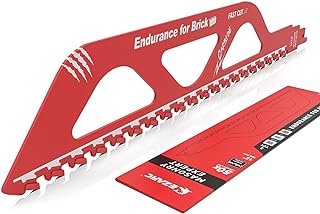
Best for aerated concrete, hollow brick, drywall, and fiber cement. This blade features brazed carbide teeth and a wide-body design for stability and precise cuts. The set includes blades of different sizes to cover multiple job requirements, with durability for long demolition sessions.
Who it’s best for: professionals needing consistent performance on porous masonry. Limitation: not suitable for stones or reinforced concrete in some applications.
12Inch Masonry Recip Saw Blade, 20TPI

Best for demolition work requiring high-hardness carbide teeth and high-speed cuts in concrete and brick. The 20TPI design helps balance cutting speed and control, with a sturdy steel backing to withstand harsh demolition conditions. It minimizes dust and vibration for cleaner operation.
Who it’s best for: demolition crews and experienced DIYers handling heavy masonry tasks. Caution: not intended for fine pruning or very delicate materials where finer blades are preferred.
Buying Guide
How to choose the right concrete sawzall blade depends on material type, cutting environment, and tool compatibility. Consider tooth geometry, blade length, shank size, and blade construction to match your job.
- Material compatibility: Diamond blades excel on fiber cement and hard masonry, while carbide blades perform well on aerated concrete and hollow bricks.
- Tooth design: Diamond-grit edges provide longevity for dense materials; carbide teeth offer quick cuts and good straight-line performance.
- Blade length and shank: Ensure the blade length fits your reciprocating saw and that the shank matches the saw’s arbor (common is 1/2 inch).
- Dust and vibration: Wide-bodied blades and carbide/diamond edges with proper weight distribution reduce vibration and dust generation.
- Application limits: Some blades are explicitly not suitable for reinforced concrete, hard rocks, or stones—plan around these restrictions.
Common questions buyers ask
- What blade is best for aerated concrete? Carbide or diamond blades designed for aerated concrete deliver clean cuts with less wear.
- Can I use the same blade on brick and drywall? Some universal blades work across masonry materials, but check material compatibility to avoid damage.
- Do I need a 12-inch blade for large demolition cuts? For long straight cuts, a longer blade reduces re-cutting and improves efficiency.
- Are diamond blades worth it for DIY? Diamond blades offer longer life on dense materials but may cost more upfront; evaluate project scope.
- Will a wider blade reduce dust? Blades designed for low-dust cutting and proper dust management on-site help minimize mess.
- Do blades wear out quickly on hard masonry? Carbide or diamond blades typically outlast standard blades under heavy use on masonry.
FAQ
- Q: Which blade lasts longest on aerated concrete? A: Diamond or carbide blades engineered for masonry typically provide longer life in aerated materials.
- Q: Can I cut hollow brick with a standard bi-metal blade? A: It’s better to use blades designed for masonry to prevent uneven cuts or rapid dulling.
- Q: Are 12-inch blades necessary for small jobs? A: For tight spaces, shorter blades can offer better control; 12-inch options balance reach and maneuverability.
- Q: Is dust reduction a feature I should prioritize? A: Yes, lower dust blades improve visibility and reduce cleanup on dusty demolition tasks.
- Q: Do these blades fit all reciprocating saws? A: Most blades use a universal 1/2-inch shank, but always verify your tool’s arbor size.