When choosing an RV built-in generator, prioritize models designed for RV power needs, noise levels, fuel type, and run-time. This guide highlights five versatile options suitable for campers, full-timers, and emergency backup scenarios. Each product is evaluated for RV readiness, runtime, and practical limitations to help you pick the right fit.
The following quick reference table compares essential specs to help you scan at a glance. For deeper details, scroll to each product section below.
| Product | Power (Peak / Running) | Fuel Type | RV Ready Ports | Run Time (approx.) |
|---|---|---|---|---|
| Westinghouse 4650 | 4650 / 3600 W | Gas | TT-30R 30A, L5-30R 30A | Up to 14 hrs |
| Oxseryn 4400 | 4400 / 3400 W | Gas | RV port, 120V/12V ports | Up to 14 hrs |
| EFURDEN 4300 | 4300 / 3300 W | Gas | 1×120V 30A RV port, USB, 12V | Noted runtime varies by load |
| Evernexta 4000 | 4000 / – | Gas | 1×30A RV outlet, 12V DC | Up to 9 hrs |
| WEN DF680iX | 6800 / 5100 W | Gas/Propane | RV-ready 30A, other outlets | Depends on fuel mix |
Westinghouse 3650-4650 RV-Ready Portable Generator
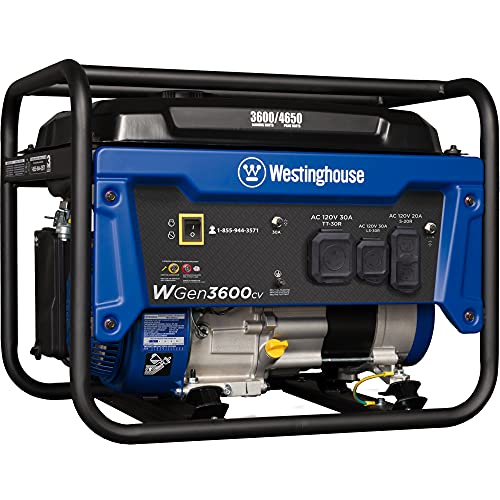
Best for: RV owners who need a proven, mid-to-large portable generator with dedicated RV outlets. Westinghouse provides multiple 30A receptacles (TT-30R and L5-30R) and a 30A RV-friendly kit, along with a CO sensor for safety. This model is suitable for powering essentials during camping trips or long-haul stops without frequent refueling.
Why selected: The unit balances power and practicality with a 4-gallon tank, a 14-hour run-time per tank under steady conditions, and plug-and-play accessories included. It’s a solid choice for RV travelers who require two 120V outlets plus dedicated RV connections and safety features.
Caution: Run-time can vary with load and appliances; high-wattage devices may shorten battery life. Ensure cooling and ventilation in an open area to prevent overheating.
Oxseryn Power Equipment 4400-Watt Inverter Generator

Best for: RV campers who want a compact, quieter generator with multiple outputs, including an RV port and DC options. The 4400 peak watts and 3400 running watts support typical RV loads and provide flexibility for outdoor activities.
Why selected: Its multi-output design supports RV connectivity and on-site electronics with an extended runtime up to 14 hours at moderate loads. The inverter technology helps deliver cleaner power suitable for electronics and sensitive devices.
Caution: Ensure fuel management for longer trips; the 2-gallon tank means more frequent refueling under heavier loads. Noise levels may still be noticeable in very quiet camping areas.
EFURDEN 4300-Watt Portable Inverter Generator
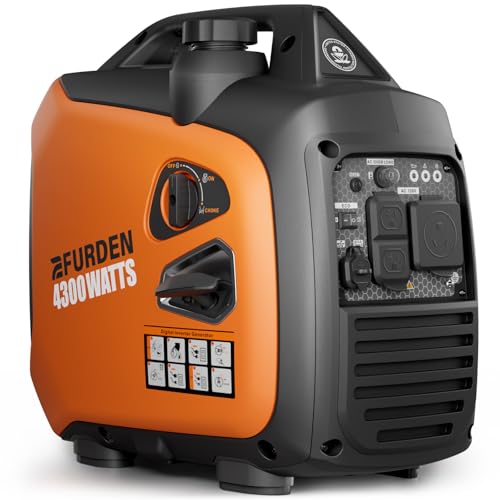
Best for: RV users who need clean power for sensitive electronics and a compact, lightweight design for easy transport. The RV-ready 30A outlet and multiple 120V/USB ports provide versatile connectivity for camping or small-home backup scenarios.
Why selected: The unit delivers 4300 peak and 3300 running watts with low THD (<2%), helping power laptops, phones, drones, and medical devices with stable output. Multiple ports support modern device charging and running smaller appliances.
Caution: Runtime depends on load; higher power draws will reduce endurance. Consider a fuel plan for longer trips to avoid frequent refueling.
Evernexta 4000-Watt RV-Ready Inverter Generator

Best for: RV travelers seeking a medium-size, EPA-compliant option for camping and home backup. The 4000-watt inverter design supports refrigerators, electronics, and essential devices with steadier performance.
Why selected: It offers a 208cc engine with a 72 dBA rating at a reasonable distance, implying quieter operation for camping and overnight use. The 30A RV outlet and additional 12V ports facilitate multiple devices on the road.
Caution: The runtime is influenced by load; users should plan fuel accordingly if staying off-grid for extended periods.
WEN DF680iX 6800-Watt Dual Fuel Generator

Best for: RV owners who want dual-fuel capability and higher wattage for heavier loads or electric backup scenarios. The 30A RV-ready output and dual-fuel design provide flexibility in fuel choice and power delivery.
Why selected: The 6800 surge / 5100 running watts range covers larger appliances and simultaneous devices. The CO watchdog safety feature adds a protective layer when relying on generator power in closed spaces.
Caution: Heavier unit with higher fuel consumption; consider transportation and storage requirements if you travel with limited space.
Buying Guide
What to consider when selecting an RV built-in generator
- Power needs: List your essential appliances and their startup surges. Choose a model with enough peak watts to handle first-start loads without overloading the unit.
- RV readiness: Confirm dedicated RV outlets (such as TT-30R 30A) and integrated safety features like CO shutoffs or watchdog sensors.
- Fuel type and run-time: Gasoline is common but consider propane or dual-fuel models for flexibility and longer trips. Examine run-time ratings at typical loads to estimate fueling needs.
- Noise and portability: Look for inverter technology and decibel ratings suitable for camping. Weight and handle design impact installation in an RV bay or storage area.
- Safety and maintenance: Consider CO sensors, automatic shutdown features, and included maintenance accessories (oil, funnel, tools).
- Warranty and support: Check the manufacturer’s warranty terms and the availability of local service options for your travel region.
Frequently Asked Questions
- What does RV-ready mean for a generator?
It means the generator includes RV outlets (such as a TT-30R 30A) and configurations compatible with RV electrical systems.
- What is running watts vs peak watts?
Running watts are the continuous power output, while peak watts (surge) cover brief startup loads of appliances.
- Are inverter generators quieter for RV use?
Yes. Inverter models typically produce cleaner power with lower noise levels compared to traditional non-inverter units.
- How do dual-fuel generators benefit RV travelers?
Dual-fuel units can run on gasoline or propane, offering extended fuel options when gas stations are scarce on long trips.
- Is CO monitoring necessary in RV applications?
CO sensors provide an automatic shutdown if carbon monoxide levels rise, increasing safety for enclosed spaces.
- How should I size a generator for my RV?
Select a model with adequate peak wattage for your largest startup loads and sufficient running watts for everyday devices.