Roll up solar panels deliver portable, lightweight, and bendable energy solutions for campers, RVers, boats, and off-grid travelers. This guide highlights five versatile options, showing who each panel is best for and why it fits different surface contours and power needs. If you need lightweight, curved-surface compatibility or emergency charging on the trail, one of these foldable options can keep devices powered where traditional rigid panels struggle.
| Product | Best For | Notable Benefit |
|---|---|---|
| Renogy 200W Flexible Panel | Marine, RVs, curved surfaces | High power; 240° bendability |
| FlexSolar 100W Portable Panel | Casual outdoor power, small stations | High efficiency; multiple outputs |
| FlexSolar 36W Ultra-Portable | Backpacking, hiking | Ultra-light; durable foldable design |
| TWELSEAVAN 200W Portable Panel | Power stations, outdoor crews | 8-in-1 MC4, fast Type-C/USB charging |
| Renogy 100W Flexible Panel | Curved surfaces on a budget | Lightweight; half-cut PERC tech |
Renogy 200W Flexible Solar Panel – 240° Bendable

The Renogy 200W flexible panel is designed for curved surfaces such as roofs on boats, vans, RVs, and cabins. It uses half-cut PERC cells to enhance light capture and efficiency. The panel is lightweight and highly bendable, accommodating up to 240 degrees of curvature. It can deliver a daily average of around 1000 watt-hours under typical sun exposure, making it suitable for mid-sized power needs. Best for boat heads, camper exteriors, or any surface with irregular geometry.
Best for: Owners of curved vehicles or cabins who want substantial power with flexible mounting. Why selected: Strong balance of high output, bendability, and glare-free appearance. Limitation: Flex panels can be more sensitive to abrasion; care is essential on rough surfaces.
FlexSolar 100W Portable Solar Panels

This 100W foldable panel emphasizes portability and universal compatibility. It weighs roughly 4.1 pounds and folds down compactly, yet unfolds to a generous size for maximum sun exposure. It includes PD 3.0 USB-C, USB-A, and DC outputs, plus multi-adapter cables. Best for: Campers with a small power station or travelers needing flexible charging for phones, tablets, and small devices. Why selected: Versatile outputs and robust efficiency for its class. Caution: With heavy shade or low light, performance will decline, as with most portable panels.
Key specifications and strengths include a high-efficiency monocrystalline construction and an energy conversion rate in the 23%+ range, which translates to faster charging under varying conditions. This panel is well-suited for off-grid adventures where you want reliable device charging across multiple devices.
FlexSolar 36W Ultra-Portable Solar Panel Charger
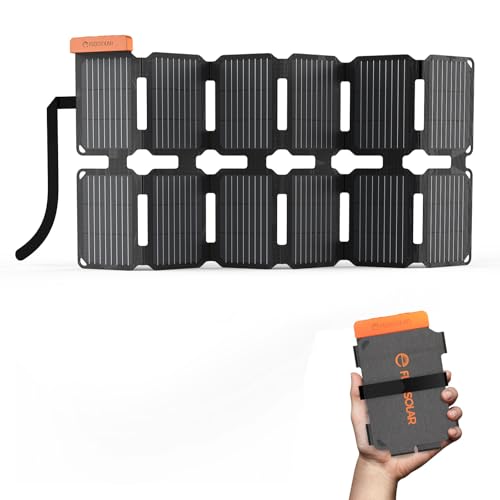
This compact 36W panel is designed for backpackers and hikers who need dependable charging on the go. It folds to a pocketable size and weighs about 1.7 pounds, making it easy to stash in a pack. It offers USB-A, USB-C, and DC outputs, with smart charging that manages current to protect devices. Best for: Lightweight outdoor enthusiasts who want quick device charging and emergency power on short trips. Why selected: The ultra-compact form factor and durable fold design. Caution: Lower wattage means slower charging for larger devices or power banks in high-demand scenarios.
Advantageous features include multi-port outputs and MPPT-style efficiency benefits, ensuring better energy capture in partial shade. The triple-layer protective construction helps withstand outdoor use, particularly on rugged trails or windy campsites.
TWELSEAVAN 200W Portable Solar Panel Kit

TWELSEAVAN’s 200W panel is designed for power stations and outdoor setups, combining a rugged yet portable foldable form with a flexible mounting approach. It includes a 9.8-foot MC4 connector cable and an 8-in-1 MC4 and DC adapter set to broaden compatibility with popular power stations. Best for: Off-grid travelers who rely on a portable power station and need flexible connections. Why selected: High output for a foldable kit and broad compatibility. Caution: Heavier than smaller packs, requiring solid mounting on vehicle roofs or campsites.
Its Type-C 60W PD and 18W QC3.0 fast charging ports support simultaneous charging of multiple devices, including phones and tablets, improving overall charging efficiency during trips or emergencies. The integrated protections help reduce risk during use in variable weather conditions.
Renogy 100W Flexible Panel – 240° Bendable
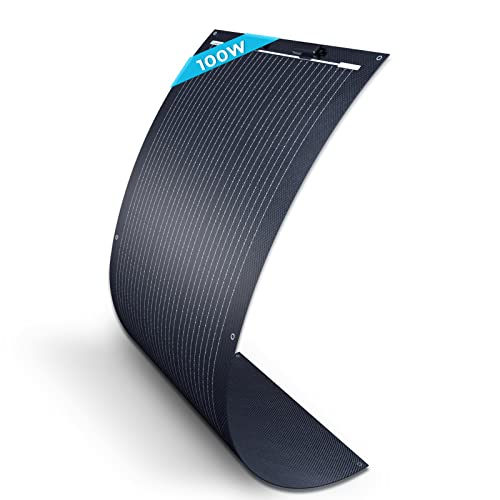
Renogy’s 100W flexible panel is a lighter option designed for curved surfaces, providing around 500 watt-hours per day under favorable sun. It uses half-cut PERC technology to improve efficiency and reduce unnecessary energy losses. Best for: Budget-conscious buyers who still need reliable flexible performance on curved RV or boat surfaces. Why selected: Excellent balance of weight, bendability, and efficiency. Caution: As with any flexible panel, ensure the surface is smooth to avoid wear over time.
This panel weighs roughly one-third of a rigid counterpart and presents a glare-free, all-black appearance. It’s a practical choice for smaller flexible installations where space and weight are at a premium but you still require solid daily energy intake.
Buying Guide: Roll Up Solar Panels
- Flexibility vs. Power: Flexible panels excel on curved surfaces; however, they often carry trade-offs in peak efficiency compared to rigid panels. Assess whether your mounting area is curved or flat and pick accordingly.
- Output and Daylight: Look at the wattage rating and typical daily watt-hours under your sun conditions. Higher wattage helps during cloudy days, but you still need enough sun hours to meet daily needs.
- Ports and Compatibility: Consider what devices you plan to charge and ensure the panel includes compatible outputs (PD-C USB-C, USB-A, DC). For power stations, an MC4 or adapter compatibility is important.
- Durability and Weather Resistance: ETFE coatings, UV resistance, and protective layers extend panel life in outdoor environments. Marine and RV users should favor panels with saltwater and UV resistance.
- Weight and Portability: If you travel by foot or bike, lighter panels roll up easily and fit in compact bags. Heavier kits are better for vehicle mounting but harder to transport.
- Installation and Mounting: Check mounting options and whether you need supplementary hardware. Flexible panels are often installed with adhesives or lightweight brackets, while foldables require securing straps or carabiners.
- Battery and Controller Considerations: If pairing with a battery bank, ensure the controller or BMS supports your setup and protection needs (overcharge, reverse polarity, short-circuit).
Frequently Asked Questions
- Are roll up solar panels suitable for marine use? Yes, many models offer marine-grade coatings and curved-surface compatibility, but verify saltwater resistance and mounting methods for boats.
- How much power can I expect per day? Daily watt-hours vary by sun exposure, panel size, and angle. A higher wattage typically yields more energy in similar conditions.
- Can I use these with a portable power station? Most models provide USB-C, USB-A, or DC outputs and include adapters for common power stations. Check compatibility with your specific model.
- Do flexible panels last as long as rigid panels? Flexible panels are designed for contour mounting and light use, but surface wear and edge stress can affect longevity. Proper mounting extends life.
- What’s the best panel for backpacking? Ultra-portable panels around 20–40W are ideal for hiking, due to light weight and compact folds. Larger panels are better for base camps or vehicle lots.
- Do these require a battery to store energy? Most off-grid setups benefit from a battery or power station to store energy for later use, especially for nighttime or cloudy days.