Answering the question of which solar panels fit a residential rooftop best, this guide selects five top options designed for home installation. Each product is evaluated for energy output, installation flexibility, and suitability for 24V/48V battery backups, grid-tied or off-grid systems. Ideal buyers include homeowners seeking long-term savings, RV or tiny home enthusiasts needing compact systems, and those planning roof-or-ground installations with scalable options. The table below highlights key choices to compare at a glance.
| Product | Best For | Output Type | Form Factor |
|---|---|---|---|
| SUNGOLDPOWER 590W 6-Panel Kit (Bifacial) | High-savings rooftop setups | Bifacial, 590W per panel | 6 panels |
| SUNGOLDPOWER 5000W Monocrystalline Kit | Off-grid or hybrid homes | Monocrystalline, 5000W total | Multiple panels |
| Epoch 800W Bifacial Kit | Durable RV/Marine/off-grid | Bifacial, 400W×2 | 2×400W modules |
| Callsun 400W Bifacial Kit | Rooftop or ground-mounted with shading tolerance | Bifacial, 200W×2 | 2 modules |
| JJN 425W Bifacial Kit | Compact residential rooftops | Bifacial, 425W | Single module |
SUNGOLDPOWER 590W Bifacial Panel, 6 Pack

Best for high-output rooftops where space can be optimized. Each 590W panel uses N-Type 16BB cells and up to 22.8% efficiency, delivering more power per square foot. Front-and-back illumination enables up to 30% more energy output, accelerating payback on home-energy projects. Installation is versatile for rooftop or ground-mounted arrangements, accommodating various project layouts.
Who it’s best for: homeowners with sun-rich rooftops and a need for elevated wattage per panel. Why selected: strong bifacial performance and flexible mounting options improve overall system efficiency. Limitation: bifacial benefits are maximized on reflective surfaces and specific tilt, which may reduce gains in non-ideal conditions.
SUNGOLDPOWER 5000W Monocrystalline Kit

Better for larger home installations needing a robust on-grid or hybrid solution. This kit emphasizes high-efficiency mono PERC modules with strong output per surface area, and superior tolerance due to half-cell construction. It suits off-grid, on-grid, or hybrid systems and is adaptable for RVs, tiny houses, or residential use where space and grid reliability are considerations.
Who it’s best for: larger homes or those seeking a scalable, high-output array. Why selected: high module efficiency and versatile use across multiple system types. Limitation: data notes focus on efficiency and use cases rather than warranty or installation details.
Epoch 800W Bifacial Panel Kit
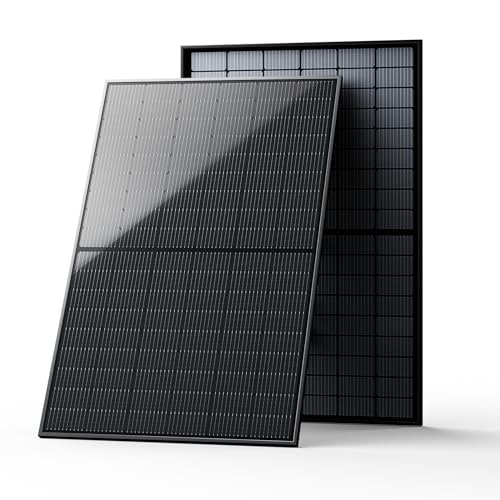
Ideal for RVs, camping, boats, and off-grid home back-up needs where durability matters. This kit provides two 400W bifacial modules with a Class A cell design and IP68 junction box protection. Its high conversion rate (up to 25%) and double-sided capture improve energy harvest in challenging light. Endurance under adverse weather is emphasized with strong waterproof and wind resistance features.
Who it’s best for: customers prioritizing rugged outdoor use and reliable back-up power. Why selected: robust waterproofing and a double-sided approach boost efficiency in less-than-ideal conditions. Limitation: primarily presented as two 400W modules, which may complicate small rooftop installations compared to smaller wattage kits.
Callsun N-Type 400W Bifacial Panels

Choose this for rooftop or ground-mounted installations needing shading tolerance and improved power output. The two 200W bifacial modules use N-Type 16BB cells, offering up to 30% more power due to rear-side capture. TwinCell anti-shade technology helps maintain output when parts of the panel are shaded, making it more reliable on varied rooftops.
Best for: homeowners dealing with partial shading or reflective installation surfaces. Why selected: shading tolerance and bifacial gains provide steadier performance. Limitation: as a dual-module setup, overall system complexity can be higher than single-module configurations.
JJN 425W Bifacial Panel

Best for compact residential rooftops needing reliable bifacial output. This 425W panel uses N-Type 16BB cells with up to 25% efficiency improvement versus standard panels. Its weather resistance, including IP65 junction box and IP68 connectors, suits outdoor roof installations with varying climates.
Who it’s best for: homeowners seeking a balance of wattage and space on a standard rooftop. Why selected: solid bifacial performance in a single-module format. Limitation: higher efficiency data is not paired with a full kit in this listing, which may require additional components for complete installation.
SUNGOLDPOWER 590W Bifacial Panel, 31 Pack

Choose this for very large rooftop projects or multi-family installations that require substantial energy capture. The 31-panel configuration mirrors the 6-panel approach but expands scale, with bifacial technology enabling up to 30% more energy output. This setup is suitable for ambitious home energy storage or grid-tied systems where space permits.
Best for: large-scale home solar deployments with room for expansion. Why selected: maximum output potential with bifacial gains. Limitation: requires substantial roof area and careful layout planning to optimize rear-side benefits.
Buying Guide
What to consider when selecting residential rooftop solar panels
- System type: On-grid, off-grid, or hybrid. Define whether you want net metering, energy storage, or backup power and select panels that align with your inverter and battery choices.
- Wattage and footprint: Higher wattage panels save space but require roof real estate and mounting hardware compatible with your roof slope and orientation.
- Bifacial vs monofacial: Bifacial panels capture light from both sides, boosting output under reflective surfaces. They’re best when roof orientation and local conditions support rear-side gains.
- Cell technology and durability: N-Type and A+ cells offer higher efficiency and durability. Look for robust frames, water ingress protection, and reliable junction boxes for long-term performance.
- Installation environment: Consider shading, weather exposure, and maintenance needs. Panels with shading tolerance and IP ratings tend to perform more consistently in challenging climates.
- Scalability: If you plan future expansion, choose modular kits or panels that integrate easily with existing inverters and batteries.
FAQ
- Q: Are bifacial panels worth it for a typical home roof? A: They can be, especially if the roof receives sunlight on both sides or sits over reflective surfaces; gains depend on installation conditions.
- Q: Can I mix different panel types on one system? A: It’s possible but not recommended; matching wattage, voltage, and electrical characteristics helps optimize performance and reliability.
- Q: Do these panels require special mounting hardware? A: Most residential roofs require standard mounting systems; verify compatibility with your chosen panels and roof type.
- Q: What is the importance of IP protection in panels? A: IP ratings indicate weatherproofing; higher protection reduces risks from water, dust, and humidity, extending panel life.
- Q: How does rear-side power affect energy bills? A: In suitable conditions, bifacial gains can improve overall energy harvest and shorten payback periods.
- Q: Should I hire a professional for installation? A: For rooftop solar, professional installation ensures correct wiring, safety, and compliance with local codes.