Answering the need for convenient, remote-start power with propane fuel, this guide highlights five top options. These units are best for homeowners, RVers, and campers who want quick start capability and clean propane efficiency. Remote start can speed up warmups, while dual-fuel models add versatility when gasoline isn’t available. The summary table below helps compare key features at a glance.
| Product | Best For | Key Feature | Fuel | Power Type |
|---|---|---|---|---|
| Westinghouse 4650 Peak Watt Dual Fuel Portable Generator | Backup power for home or RVs | Remote Start, 30A RV outlet | Gas/Propane | Dual Fuel |
| Westinghouse 4000 Peak Watt Super Quiet Dual Fuel Portable Inverter | Travel trailers and sensitive electronics | CO Sensor, parallel capable | Gas/Propane | Dual Fuel |
| Westinghouse 6600 Watt Dual Fuel Home Backup Generator | Whole-house standby with transfer switch | Remote start, transfer switch ready | Gas/Propane | Dual Fuel |
| Westinghouse 12500 Watt Dual Fuel Home Backup Generator | Full home backup with high power demand | Remote start, transfer switch ready | Gas/Propane | Dual Fuel |
| Pulsar 6000 Watt Dual Fuel Inverter Generator | Camping and job sites with quiet operation | Remote start, CO sensor, parallel capable | Gas/Propane | Dual Fuel |
Note: Each entry focuses on remote start capability and propane compatibility, with practical considerations for use cases like RVs, homes, or off-grid camping.
Westinghouse 4650 Peak Dual Fuel Generator

Power: 3600 running watts on gasoline and 3240 running watts on propane with 4650 peak watts in both fuels. The unit features a 4-gallon fuel tank with a gauge, and a remote start option for convenient activation. It includes multiple outlets: 5-20R 120V duplex, RV-ready TT-30R 30A, and L5-30R 30A. Best for homeowners and RV enthusiasts who need flexible fuel sourcing and remote control. Avoid if you require full-time 240V operation without generator transfer switches.
Westinghouse 4000 Peak Watt Inverter Generator

Best for travel trailers and home use requiring clean power. It delivers 3300 running watts at under 3% THD on propane or gasoline, with remote start, a 5-20R outlet, TT-30R 30A RV outlet, two USB outlets, and CO monitoring. It’s ideal for electronics and sensitive devices. Choose this if you value low emissions and quiet operation; may be limited for heavy load power at high elevations.
Westinghouse 6600 Watt Dual Fuel Home Backup Generator

Best for reliable home backup with transfer switch readiness. Gasoline provides up to 5300 running watts and 6600 peak watts; propane provides 4800 running watts and 5900 peak. This unit uses a 4.7-gallon tank for extended runtime and includes a remote key fob starter. It supports multiple outlets and the transfer switch connection. Limitation: heavier and bulkier than portable inverter models, requiring proper setup and maintenance.
Westinghouse 12500 Watt Dual Fuel Home Backup Generator

Best for high-demand homes and backup power with transfer switch capability. Gasoline delivers 9500 running watts and 12500 peak watts; propane delivers 8500 running watts and 11200 peak watts. Features remote start, a 6.6-gallon tank with gauge, and multiple outlets including a 50A RV outlet and a L14-30 30A transfer switch receptacle. Best for large homes; consider installation complexity and fuel availability as limitations.
Pulsar 6000 Watt Dual Fuel Inverter Generator
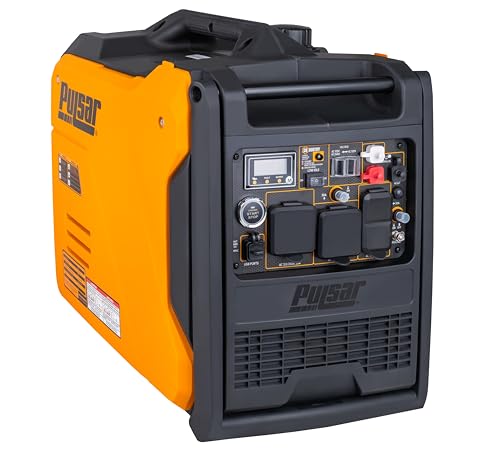
Best for RVs and outdoor use where quiet operation matters. It provides 6000 peak/5400 running watts on gasoline and 5400 peak/4600 running watts on propane, with a CO sensor, 12V battery requirement for remote start, and parallel capability. It’s a solid option for camping and job sites. Limitation: battery-dependent remote start may require ongoing maintenance and replacement.
WEN 4800- Watt Quiet Dual Fuel Inverter

Best for portable quiet power with clean output. Gasoline provides 4000 rated watts, 4800 surge; propane provides 4000 rated watts, 4320 surge. Notable for sensitive electronics due to clean power features and a compact form factor. Consider this when quiet operation is a priority; it may not provide as much peak power as larger units.
Buying Guide
What is remote start, and why choose propane?
Remote start lets you power up the unit from a distance, reducing cold starts and enabling quicker readiness. Propane offers clean burning, longer shelf life, and easier storage in some setups, making it a practical choice for backup and RV use.
Key considerations for selecting a remote-start propane generator
- Power needs: Assess essential vs. nonessential loads and total wattage requirements.
- Fuel availability: Determine propane supply chains and tank capacity for expected runtime.
- Portability vs. standby: Decide between portable gen sets and transfer-switch-ready home backup units.
- Starting method: Remote start reliability, access, and battery maintenance.
- Safety and emissions: Look for CO sensors and automatic shutdown features.
Usage scenarios and best-fit picks
- Home backup: 6600–12500 watt dual-fuel with transfer switch readiness.
- RVs and camping: 4000–4650 watt dual-fuel with RV outlets and CO sensors.
- Remote job sites: Higher wattage dual-fuel with durable construction and parallel capability.
Durability and maintenance tips
- Regular oil checks and CO sensor testing are essential for safety and longevity.
- Keep spare fuel lines and hoses in case of propane connection needs.
- Store in a dry, ventilated area and perform annual service checks.
FAQ
- What does “dual fuel” mean? – It means the generator can run on gasoline or propane, offering flexibility depending on fuel availability.
- Is remote start necessary for propane models? – It adds convenience but isn’t required; many models also offer key fob or push-button start.
- Can these generators power a whole house? – Larger dual-fuel models aligned with transfer switches can support many circuits, but load names and electrical capacity matter.
- What safety features are common? – CO sensors, automatic low-oil shutdown, and rubber-covered outlets for weather protection.
- Which models are best for RV owners? – Inverter-style dual-fuel units with RV outlets and parallel capability suit travel needs well.