Discover versatile devices that generate random numbers for games, experiments, or cryptographic applications. Below is a curated selection of five Amazon products that cover consumer-grade party machines, laboratory-grade RNGs, USB hardware generators, and useful dice sets. Each entry highlights key features to help you compare options without price distractions.
| Product | Brand | Key Features |
|---|---|---|
| AI Lottery Number Picker, USB Rechargeable Automatic Lottery Ball Machine | LNOYGN | Gyroscope-based screening, AI probability history, supports multiple lotto games |
| RNG-01 Laboratory RNG for PSI Testing | imagesco | Radioactivity-based true randomness, 1–3 numbers per minute, cryptography use |
| TrueRNG V3 USB Hardware RNG | ubld.it | High speed >400 kbps, whitening, cross-platform support |
| TrueRNGpro v2 USB Hardware RNG | ubld.it | High speed >3.2 Mbps, mode selection, standard RNG tests |
| Blue Random Number Generator d10 Dice Set | Rook Robot | Rolls 1–10,000, four dice for large ranges, RPG-friendly |
The following sections examine each option in detail, focusing on utility, reliability, and how well they fit common use cases—from gaming and education to cryptography experiments and hobby science.
AI Lottery Number Picker, USB Rechargeable Automatic Lottery Ball Machine
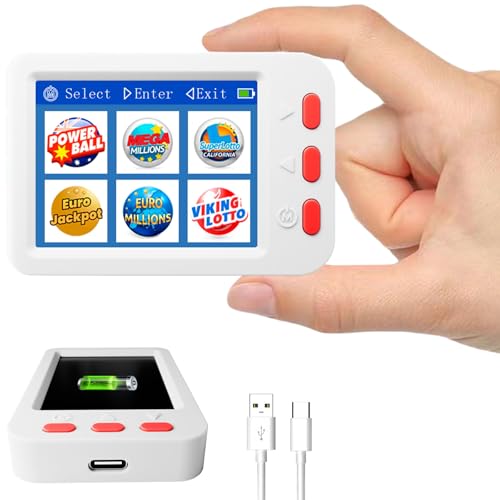
This device combines a user-friendly physical lottery ball mechanism with an AI-based probability algorithm. A built-in gyroscope activates during shaking to help filter numbers as they are displayed, creating a sense of randomness while leveraging historical data trends. It supports multiple lottery formats, making it suitable for casual gaming nights or informal group draws.
Key considerations include portability, battery life via USB rechargeability, and the balance between AI-assisted selection and human preference. The machine emphasizes ease of use through a simple shake-to-draw interaction, which can reduce decision fatigue when selecting numbers for a game night or informal pool.
Random Number Generator – PSI Testing RNG-01

This option markets itself as a laboratory-quality instrument rather than a consumer toy. It relies on the immutable randomness associated with background radiation and is positioned for PSI testing, PK experiments, and cryptographic applications. Users should expect a slower output rate—approximately one to three random numbers per minute—but with the appeal of “true randomness” suitable for data encryption and research simulations.
Pros include a strong emphasis on statistical integrity and compatibility with experiments requiring robust randomness. Potential drawbacks involve the practical pace for everyday gaming and the specialized use-case focus that may be more than what a casual user needs.
ubld.it TrueRNG V3 – USB Hardware RNG

The TrueRNG V3 stands out for high throughput, delivering more than 400 kilobits per second. It includes internal whitening and broad operating-system support (Windows and Linux), making it a strong option for developers, security researchers, and hobbyists who need rapid, hardware-based randomness with straightforward integration.
Consider its portability and plug-and-play usability versus the more feature-rich or configurable RNGs. The V3 is well-suited for applications where a steady, fast stream of random data is key, such as simulations or cryptography experiments that benefit from hardware-based entropy.
ubld.it® TrueRNGpro v2 – USB Hardware RNG

The TrueRNGpro v2 focuses on higher data rates, offering speeds above 3.2 Mbps. It also provides mode selection (Whitened, Raw, Diagnostic) and passes industry-standard tests (Dieharder, ENT, Rngtest), making it a solid choice for researchers and advanced developers who require precise control over randomness characteristics and extensive validation options.
Selecting this device involves weighing the need for very high throughput against the simplicity of more basic RNGs. For projects that demand rigorous testing and flexible data formats, the RNGpro v2 is a compelling option. For simpler tasks, a quicker-to-use model may suffice.
Blue Random Number Generator D10 Dice Set

This four-dice set covers a wide range from UNIT to THOUSANDS, enabling users to generate numbers up to 10,000. It’s especially useful for tabletop RPGs, loot tables, or classroom activities where large-number ranges are desirable. The dice are marketed for reliability and straightforward randomness, making them a practical physical RNG option for players who prefer tactile interaction.
Considerations include dice quality, readability, and whether the physical dice meet the gaming group’s aesthetics. While convenient, dice-based RNG is inherently less precise for cryptographic tasks, but excellent for education and entertainment contexts that benefit from a tangible random mechanism.
Buying Guide
- Use case alignment: Choose a device that matches your primary need—casual gaming, research-grade randomness, or cryptography-grade entropy. Consumer devices emphasize ease of use, while lab-grade generators prioritize statistical rigor and speed.
- Speed and throughput: If you need fast streams of random data for simulations or software testing, prioritize hardware RNGs with higher Mbps or kbps as applicable. Slower devices suit learning experiments or simple games.
- True randomness vs pseudo randomness: Laboratory and hardware RNGs often rely on physical processes to provide true randomness, whereas consumer devices may use algorithms with historical data or gyroscopic filtering. Decide based on whether predictability must be minimized.
- Interface and integration: USB-based RNGs typically offer straightforward integration with PCs and development boards. For non-technical usage, plug-and-play devices with visible physical feedback may be preferable.
- Validation and testing: If statistical validation matters, look for devices that document test results (e.g., Dieharder or ENT tests). This is especially important for cryptographic or research applications.
- Portability and power: Battery-powered handheld units are convenient for travel or fieldwork. Hardware RNGs often rely on USB power; check compatibility with your operating system and hardware.
- Physical vs digital: Dice sets provide a tactile, verifiable RNG experience, ideal for education and games. Digital RNGs excel in speed and repeatability for software needs.
- Cost vs value: Compare the intended use with the cost. A high-end RNG may offer extensive features and certifications, while a basic consumer model may be perfectly adequate for casual use.
In sum, the right random number generator depends on whether your priority is accessibility, speed, verification, or cryptographic reliability. The options above cover a spectrum from playful and practical to scientifically rigorous, enabling informed decisions for both hobbyists and professionals.