Choosing the right quiet box for a generator helps reduce outdoor noise, protect equipment from the elements, and simplify maintenance. The following selections focus on durable construction, effective ventilation, and sound insulation, covering a range of generator sizes and outdoor environments. This guide highlights practical options with clear specifications to help homeowners make an informed choice.
The table below summarizes five well-regarded generator enclosures. Each product emphasizes noise reduction, weather resistance, and heat management to keep generators operating safely.
| Product | Key Benefit | Best For | Approximate Size Range |
|---|---|---|---|
| LUNTHINK Generator Box | Double-layer noise isolation with fire-proof insulation | All-weather residential use | Up to 15,000 W |
| GDLF Generator Shed | Built-in cooling fans and sound-absorbing interior | Quiet operation with active cooling | Portable power sources |
| TroyStudio Portable Sound Proof Box | High-density foam panels for noise dampening | Compact, portable setups | Small to mid generators/backups |
| GenArmor Generator Tent Cover | 100% waterproof and heavy-duty shell | Extreme weather protection | 4000–13000 W ranges |
| GENSHED Generator Shed | Dual function running and storage enclosure | Versatile outdoor placement | Multiple generator sizes |
LUNTHINK Generator Box: Substantial Exterior Box with Thermal Venting

The LUNTHINK enclosure uses high-temperature galvanized steel with a rust-resistant coating, designed for outdoor use and long-term durability. Interior space of 39.4″ x 35″ x 35.5″ accommodates most generators up to 15,000 watts, simplifying installation with a straightforward placement process. Notably, the top is filled with high-density fire-proof sound-absorbing cotton to reduce operational noise, while a double-layer air inlet/outlet design helps block sound propagation and protect against rain. A weather-resistant metal paint finish further enhances outdoor performance, including resistance to ice and snow. This model emphasizes practical protection against environmental elements and noise in residential settings.
GDLF Generator Shed: Noise Reduction With Built-In Cooling
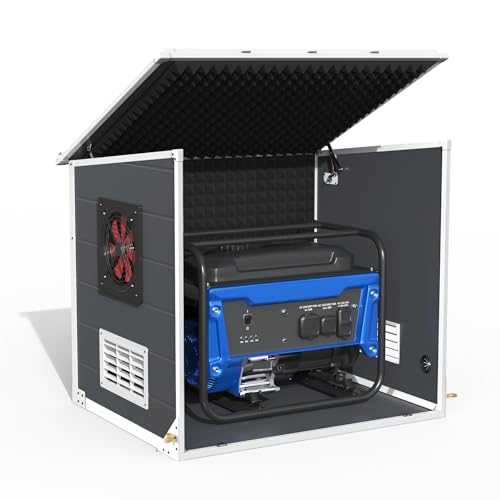
The GDLF enclosure focuses on ventilation and acoustic comfort. It includes built-in cooling fans and side vents that actively move air to minimize heat buildup, supporting generator safety and performance during operation. Inside, sound-absorbing interior panels help dampen noise for a quieter living environment. Constructed from lightweight, weather-resistant PP panels, the shed resists rain, splashes, and UV exposure, making it suitable for prolonged outdoor use without rust or corrosion. This option balances noise attenuation with practical weatherproofing.
TroyStudio Portable Sound Proof Box: Compact Acoustic Enclosure

The TroyStudio unit is a compact, portable soundproof enclosure designed for small to mid-sized devices, including portable generators. It features exterior dimensions of 16″ x 12″ x 16.2″ and an interior space of 12″ x 8″ x 14.2″, with a foldable design for storage. The kit includes five high-density acoustic panels plus accessories, delivering up to 21.5 dB of noise reduction across key frequencies. Although compact, it accommodates devices like CPAP machines, rock tumblers, and small generators, making it a flexible option for limited spaces while still moderating sound and blocking light leakage.
GenArmor Generator Box: Aluminum Construction With Air-Cooled Venting

This Hudson SD aluminum enclosure prioritizes lightweight strength and corrosion resistance, offering a spacious interior of 39.4″ x 32″ x 31.7″ while weighing about 95 pounds—significantly lighter than traditional steel housings. The design includes fire-proof sound-absorbing cotton and a louvered vent system, complemented by a built-in high-speed fan that creates negative pressure to draw in cool air for effective heat dissipation. It aims to balance quiet operation with robust ventilation and straightforward maintenance, making it suitable for both heavy-duty and portable generator setups.
GENARMOR Generator Tent Cover: Waterproof, Heavy-Duty Shelter

The GenArmor generator tent combines waterproof coverage with heavy-duty construction for outdoor operation. The 100% waterproof design protects the running generator in rain, snow, sleet, and wind, while the reinforced metal frame adds stability against strong winds. The flip-top design facilitates refueling without removing the cover, streamlining maintenance. This option prioritizes weatherproof protection while maintaining accessibility for routine generator care.
GENSHED Generator Shed: Running and Storage in One

The GENSHED unit blends a running cover with outdoor storage, enabling quick transitions between active operation and secure storage. The design uses a steel frame with fabric covers attached to the exterior, reducing heat risk by isolating fabric surfaces from the hot engine. It also features easy movement and locking options to reposition or secure the setup as needed. This approach suits users who want a dual-purpose solution without requiring multiple installations or devices.
Buying Guide: Key Purchase Considerations And Comparisons
- Size compatibility: Verify interior dimensions to ensure your generator fits with space for airflow and maintenance access. Larger models may benefit from enclosures with more generous clearances and access panels.
- Ventilation and heat management: Look for units with built-in fans, louvers, or fire-proof insulation that balance noise reduction with effective cooling. Poor ventilation can reduce generator efficiency and lifespan.
- Noise reduction: Acoustic panels, double-layer air paths, and sound-absorbing materials significantly lower decibel levels. For residential zones, prioritize products with higher attenuation ratings and compliant noise standards.
- Weather resistance: Outdoor enclosures should feature rust-proof or corrosion-resistant materials, waterproofing, and UV protection. Consider the climate in your area (humid, snowy, or sandy environments) when selecting materials.
- Durability and portability: Steel and aluminum enclosures offer different durability-to-weight ratios. Portable options help with seasonal shifts or reconfiguration, while heavier builds provide lasting stability in high-wind areas.
- Maintenance access: Easy access for refueling, battery checks, and routine servicing reduces downtime. Flip-top lids or removable panels can simplify maintenance workflows.
- Security and stability: For outdoor installations, ensure the unit can be anchored or secured to prevent movement during storms. Locking mechanisms or ground anchors can add protection beyond weatherproofing.
- Ventilation path design: Look for models with strategically placed air inlets and outlets to promote efficient airflow and negative-pressure cooling, which helps pull in cooler air and expel hot exhaust.
- Weight and installation: Some enclosures are heavy and require tools or professional installation. If you plan a DIY setup, prioritize lighter, modular designs that allow easy handling and leveling.
- Cost-to-value: Compare initial cost against the expected lifespan, warranty coverage, and maintenance requirements. A higher upfront investment can pay off through longer service life and quieter operation.