Whether you’re keeping a classic car ready for spring, maintaining a fleet, or ensuring your weekend toy fires up after storage, a fast and reliable 12V battery charger is essential. This guide highlights five top options that excel at quick charging, maintenance, repair, and safety. Each pick suits different buyer needs—from compact maintainer users to heavy-duty jump-start assist. The summary table below helps you compare key strengths at a glance.
| Product | Best For | Why It Stands Out |
|---|---|---|
| TowerTop 2/10/25 Amp 12V Smart Charger | Multi-vehicle owners and those needing faster charging | Wide current range, auto-desulfation, memory of last settings |
| NOCO GENIUS1 1A 6V/12V | Small battery fleets and continuous maintenance | Smart, compact, precise temperature compensation |
| YONHAN 20A 12V/24V | Fast charger for larger batteries | 7-stage charging, repair mode, winter/summer modes |
| Schumacher Electric Wheeled 10A + 200A Start | All-in-one charging with engine starting | Manual control with timer, versatile boost/start options |
| NOCO Boost GB20 500A Jump Starter | Emergency jump-starts and power bank | High peak current, UltraSafe protection, USB power |
TowerTop 12V Smart Charger and Maintainer

The TowerTop charger offers 4 adjustable current settings (2A, 10A, 25A, AUTO) with a maximum 25A charge. It is designed to fully charge a 100Ah battery in under 3.5 hours and claims 85% charging efficiency, which is higher than typical 2A units. Its auto-detect feature starts charging within 30 seconds if you forget to press Start. After full charge, it enters a pulse repair mode and maintains safe voltage for storage. It remembers the last settings, even after outages. Best for vehicle owners who need rapid charging across different battery chemistries.
Who it’s best for: Owners of cars, boats, RVs, and deep-cycle batteries who want fast, automatic charging with memory settings. This is especially helpful for seasonal storage where a quick, safe recovery matters.
Limitations to consider: Some users may want a lighter unit for very small batteries; verify compatibility with lithium batteries beyond conventional lead-acid types.
NOCO GENIUS1: 1A 6V/12V Smart Charger

The NOCO GENIUS1 is a compact, all-in-one charging solution that acts as a battery charger, maintainer, trickle charger, and desulfator. It supports 6V and 12V lead-acid and lithium-based batteries (LiFePO4), including flooded and maintenance-free variants. An integrated thermal sensor dynamically adjusts charging for ambient temperature, protecting from overcharging in heat and undercharging in cold conditions. This model is ideal for small to mid-size batteries and continuous maintenance.
Who it’s best for: Individuals with limited space or a small battery fleet who value precision charging and temperature-based control.
Limitations to consider: It has a lower current output (1A), so it can be slower for larger or deeply discharged batteries; not a heavy-duty fast charger.
YONHAN 20A 12V/24V Auto Maintainer

The YONHAN charger provides 20A for 12V and 10A for 24V operation, designed to charge, maintain, and repair a wide range of lead-acid and LiFePO4 batteries, including AGM, GEL, EFB, and deep-cycle variants. It features winter and summer modes to adapt current delivery by temperature, along with protections against reverse polarity, overcurrent, and short circuits. It includes a high-efficiency pulse repair mode intended to recover idle or aging batteries. It’s a strong choice for users who need faster charging and winter-safety features.
Who it’s best for: Car owners and yachtsmen seeking faster upkeep and winter preservation of larger batteries.
Limitations to consider: Not a jump starter; it requires an outlet to operate, and repair mode may not revive totally dead batteries.
Schumacher Electric Wheeled 10A + Engine Start

This 2-in-1 device blends charging with engine starting capability. It offers 200A engine start, 40A boost, 20A 6V/12V boost, and 10A 12V charging. Complete manual control is provided through a 135-minute timer, enabling precise management of charging stages. This option suits users who need a rugged, portable solution for on-the-spot power and reliable engine start assistance.
Who it’s best for: Users who require both a steady charger and a strong engine-start capability in a wheeled format, ideal for boats, trucks, and performance vehicles.
Limitations to consider: The unit is larger and heavier; use when you need a combined charging and starting tool, not a compact maintainer.
NOCO Boost GB20: 500A Jump Starter
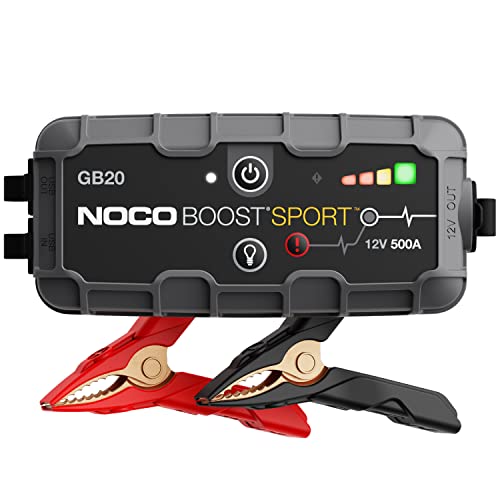
The NOCO Boost GB20 provides 500A peak for jump-starting engines up to 4.0L gas. It doubles as a portable power bank and features UltraSafe technology with spark-proof and reverse polarity protection to simplify connections. The unit can recharge devices via USB-C/USB ports and can recharge in about 3 hours, making it a reliable emergency power source when you’re away from a power outlet.
Who it’s best for: Drivers who want a compact, high-peak jump-starter that also serves as a portable power bank for phones and tablets.
Limitations to consider: It is a jump-starter first and a charger second; not designed for steady, long-term battery maintenance like a dedicated maintainer.
Buying Guide: Quick Start Car Battery Chargers
- Keen on speed or maintenance? If you want fast top-offs for large batteries, pick higher current units like 20A–25A or a dedicated jump-starter. For ongoing maintenance, a lower current model with auto-sensing and trickle modes works best.
- Battery type compatibility Verify support for lead-acid variants (AGM, GEL, WET, EFB) and LiFePO4 if you own mixed fleets. Some models emphasize lead-acid only while others handle lithium chemistries.
- Winter mode and temperature compensation In cold climates, temperature-aware charging helps prevent undercharging and extends battery life. Look for thermal sensing or temperature compensation features.
- Safety features Prioritize reverse polarity protection, spark proof connections, and overcurrent/short-circuit protection to minimize risk during hook-up.
- Portability and form factor Choose a design that fits your setup: compact units for storage confidence; wheeled or heavier units when you anticipate frequent use away from the garage.
- Smart maintenance and memory Some chargers remember last settings and provide automatic re-start after outages, reducing setup time and preserving your preferred charging profile.
- Not a jump starter? If you need jump-start capability, consider models specifically built for starting power or keep a separate jump-starter unit on hand.
Frequently Asked Questions
- What is the difference between a battery charger and a maintainer? A charger actively increases a discharged battery’s voltage; a maintainer keeps a fully charged battery at optimal voltage over time, often with float or pulse-repair features.
- Can these chargers repair a dead battery? Some offer a repair or pulse mode intended to revive idle or sulfated batteries, but results vary by battery condition. Do not rely on repair mode for a completely dead battery.
- Is a jump starter enough for cold starts? Jump starters provide quick engine starts, especially in cold weather, but are not substitutes for regular charging maintenance over time.
- Do these devices require professional installation? Most are plug-in devices for household outlets and require no professional installation unless you plan to hard-wire a dedicated system.
- Are lithium-capable chargers safe for all my batteries? Only use chargers specified for your battery type. Some models support LiFePO4; others support only lead-acid chemistries.
- How do I choose the right amperage? For everyday maintenance of small batteries, 1A–2A is sufficient. For faster charging of large batteries (100Ah+), 20A–25A or a jump starter may be better suited.