Pure sine wave generators deliver clean, stable electricity ideal for sensitive electronics, RVs, and home backups. This guide highlights five reliable models and explains who each is best for, plus practical buying tips. Whether you need quiet operation for camping, reliable backup for essential devices, or portable power for outdoor work, you’ll find a strong option below.
Summary of chosen products:
| Product | Power (W) | Best For | Notes |
|---|---|---|---|
| Oxseryn Power Equipment 4400/3400 | 4400 peak / 3400 running | RV trips and home backup | Eco mode; 14h runtime at 25% load |
| PowerSmart 4300/3500 | 4300 peak / 3500 running | Sensitive electronics on the go | 30A RV outlet; low 3% THD |
| Genkins 4500/3700 | 4500 peak / 3700 running | Portable power with multiple outlets | Lightweight, pure sine wave |
| Oxseryn 4400-Watts Inverter | 4400 peak / 3400 running | Emergency home backup | 2x120V, 30A RV port; EPA compliant |
| Westinghouse 12500/11200 | 12500 peak / 11200 prop | Home backup with transfer switch | Remote start; multiple outlets |
Oxseryn Power Equipment 4400/3400 Pure Sine Wave Generator
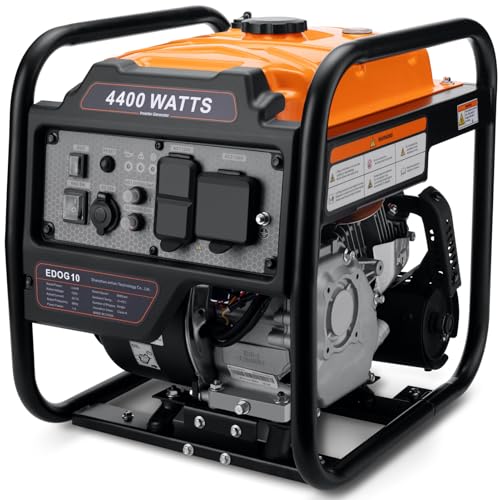
The Oxseryn 4400/3400W model provides robust peak output and solid running watts, making it suitable for RV camping and emergency home backup. With ECO mode and a 2-gallon tank, it offers up to 14 hours runtime at light loads. Best for: campers who need dependable power without frequent refueling. Limitation: 2-gallon tank may require refueling on longer trips.
WEN 6800-Watt Dual Fuel RV-Ready Inverter Generator

The WEN DF680iX runs on gasoline or propane with dual-fuel flexibility and provides a bonded-neutral 240V configuration for Level 2 charging. Its CO watchdog helps shut off in dangerous conditions, adding safety for home or RV use. Best for: users needing high wattage with vehicle charging capabilities. Caution: dual-fuel performance depends on fuel quality and availability.
PowerSmart 4300W Portable Inverter Generator
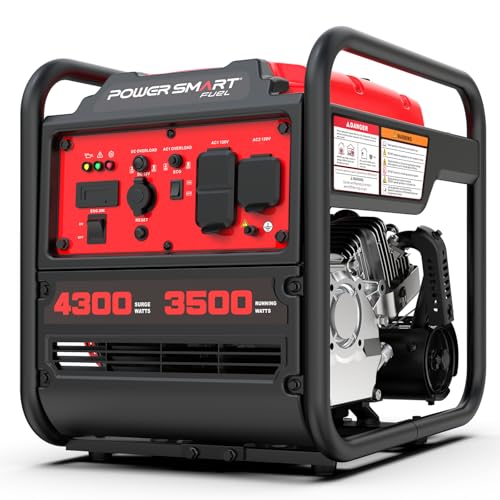
PowerSmart’s 4300 starting watts with 3500 running watts delivers clean power (less than 3% THD) and offers a 30A RV outlet for convenient outdoor use. Runtime is about 6.5 hours at 50% load. Best for: campers and home users who need stable power with moderate runtime. Caution: louder at full load compared with higher-end inverters.
Genkins 4500 Watt Open Frame Inverter

Genkins offers 4500 peak watts and 3700 rated watts with a lighter, more compact design and a 212cc engine. It includes one 120V L5-30R and one 120V 5-20R outlet, delivering pure sine wave power for sensitive devices. Best for: travelers who need strong output without excess weight. Caution: performance may vary with fuel quality and altitude.
Oxseryn 4400-Watts Inverter Generator
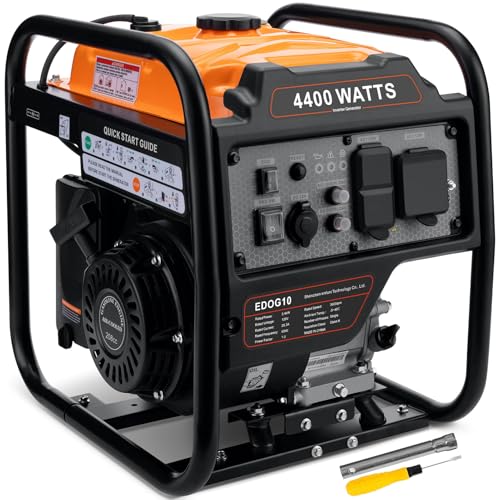
This Oxseryn model delivers 4400 peak and 3400 running watts with two 120V outlets and a 30A RV port. It runs up to 14 hours at 25% load on a 2-gallon tank and features ECO mode and overload protection. Best for: RVs and homes that require a moderate, reliable backup source. Limitation: compact fuel capacity may require more frequent refueling on extended use.
Westinghouse 12500 Watt Dual Fuel Backup Gen

Westinghouse provides substantial power with 12500 peak watts (gas) and 11200 peak watts (propane), plus a 6.6-gallon tank for up to 12 hours. It offers multiple outlets, transfer-switch readiness, and remote electric start. Best for: homes requiring robust backup capability with transfer switch readiness. Caution: higher wattage units can be less portable and louder than smaller models.
PowerSmart 3600-Watt Portable Inverter

PowerSmart’s 3600-watt class generator emphasizes quiet operation and essential RV/camping use. It provides a stable 3200 running watts with a maximum 3600 surge, plus a 1.3-gallon tank for up to 8 hours at 25% load. Best for: light camping or emergency power with portability. Caution: shorter runtime than larger models when used at higher loads.
Buying Guide: Key Considerations For Choosing A Pure Sine Wave Generator
- Power needs: Determine peak watts vs. running watts. Choose a model with a headroom margin above your largest load.
- Output quality: Look for pure sine wave, THD under 3% for sensitive electronics.
- Fuel type and economy: Gasoline vs dual-fuel; consider fuel capacity and runtime at typical loads.
- Portability: Weight, frame design, and wheels affect how easily you can move the unit.
- RV and home compatibility: Check RV outlets (30A/50A) and transfer-switch readiness if you plan home backup.
- Safety features: CO watchdog, low-oil shutdown, automatic shutoff, and enclosed design reduce risk.
How to choose between models: If you need maximum output for a larger RV or home backup, consider the Westinghouse or WEN units with larger wattage and transfer switch compatibility. For portability and frequent travel, Genkins or Oxseryn inverter models offer strong clean power with lighter weight. For sensitive electronics, favor models with THD under 3% and robust overload protection, such as the PowerSmart and Oxseryn options.
Frequently Asked Questions
- What is a pure sine wave generator?
A generator that outputs clean, stable AC power with a smooth sine wave, safe for sensitive electronics.
- Why is THD important?
Lower total harmonic distortion reduces risk of damage to microelectronics and chargers.
- What should I consider for RV use?
Look for RV outlets (30A/50A), portability, and compatibility with your RV electrical system.
- Is dual-fuel beneficial?
Yes, it offers fuel flexibility and can extend runtime depending on fuel availability.
- How do I estimate runtime?
Runtime depends on load, tank size, and engine efficiency; check manufacturer spec sheets for estimates at specific loads.
- What safety features matter most?
CO monitoring, automatic shutdown, and low-oil protection are essential for safe operation.