When weather events or outages strike, a propane backup generator can keep essential lights, refrigeration, and communication running. The following selections focus on propane compatibility, portability, and long-running performance to meet typical American home and RV needs. Each model balances dual-fuel capability, power output, and user-friendly features like electric start and transfer switch readiness. Use this guide to compare propane-run watts, run-time, and safety features across popular options from trusted brands.
| Product | Brand | Propane Running Watts | Type | Key Feature |
|---|---|---|---|---|
| Westinghouse 12500 Watt Dual Fuel | Westinghouse Store | 8500 Running Watts | Portable Generator | Remote Start; Transfer Switch Ready |
| WEN 6800-Watt Dual Fuel | WEN Store | 6000 Surget Watts | Portable Inverter | RV-Ready; CO Watchdog |
| A-iPower 4600W RV-Ready | A-iPower Store | 3600 Running Watts | Portable Inverter | CO Sensor; Lightweight |
| Westinghouse 14500 Peak Watt | Westinghouse Store | 13,500 Peak / 10,500 Running (Propane) | Portable | Tri-Fuel; Remote Start |
| Westinghouse 6500 Watt Dual Fuel | Westinghouse Store | 4800 Running Watts | Portable | Multiple Outlets; CO Sensor |
Westinghouse 12500 Dual Fuel Backup Generator

The Westinghouse 12500 Watt dual-fuel model offers robust power with gasoline or propane options. On propane, it delivers up to 8500 running watts and 11200 peak watts, making it suitable for mid-sized homes or essential loads during outages. Features include remote start via key fob, electric and recoil start, and a large 6.6-gallon tank for extended runtimes. The unit includes a transfer-switch-ready outlet and an RV-ready receptacle, with a digital hour meter and VFT display for real-time voltage, frequency, and runtime monitoring. Built with a heavy-duty 457cc engine and safety measures like rubber outlet covers and low-oil shutdown, this model emphasizes reliability in emergencies.
WEN 6800-Watt Dual Fuel Inverter Generator

The WEN DF680iX is designed for quiet, reliable power with dual-fuel versatility and an RV-ready output. Propane mode delivers about 6000 surge watts and 4500 running watts, enough for RVs and critical home loads, while gasoline mode provides higher peak power. A bonded-neutral 240V configuration offers low-power Level 2 charging for EVs and hybrids. Additional safety comes from the CO watchdog sensor that automatically shuts down the unit if dangerous carbon monoxide levels are detected, a key feature for campsites or urban outages where ventilation may be limited.
A-iPower 4600W RV-Ready Inverter Generator
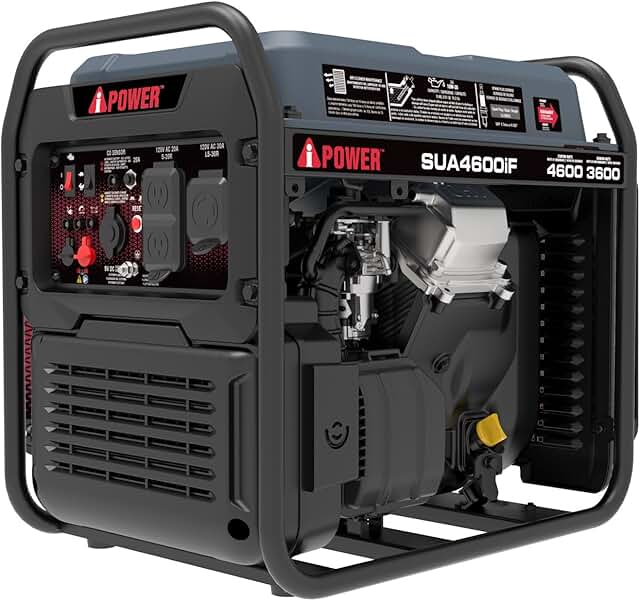
The A-iPower unit delivers 4600 starting watts and 3600 running watts, suitable for camping, tailgating, and home backup tasks. It weighs about 56 pounds, prioritizing portability while maintaining a reliable power supply for sensitive electronics thanks to a clean 3% total harmonic distortion inverter output. The unit is designed for RV compatibility and general off-grid use, providing a balance between lightness and power for everyday back-up scenarios.
Westinghouse 14500 Peak Watt Tri-Fuel Generator

This tri-fuel powerhouse supports gasoline, propane, and natural gas for maximum flexibility during outages or outdoor events. With 11,500 running watts on gas and 13,500 peak on propane, it can sustain large home circuits or multiple appliances. The heavy-duty 550cc engine emphasizes durability, and a long runtime is provided by a sizable 9.5-gallon fuel tank with a fuel gauge. A second benefit is the ability to run on different fuels to match fuel availability, plus a remote electric start for quick activation.
Westinghouse 6500 Watt Dual Fuel Generator

The 6500-watt model provides solid dual-fuel capability with propane delivering 4800 running watts and 5800 peak watts. A 4.7-gallon fuel tank supports long runtimes, and the unit includes essential outlets, a CO sensor, and a transfer-switch-ready configuration for seamless home backup. With a compact footprint and user-friendly features, it serves as a dependable option for smaller homes or apartments seeking propane-powered resilience.
Buying Guide
- Power needs: Assess essential circuits and total wattage to determine peak and running watt requirements. If you want to support HVAC or refrigeration, prioritize higher running wattage and longer runtime on propane.
- Fuel versatility: Dual- or tri-fuel models offer flexibility during fuel shortages. Propane efficiency and availability often become deciding factors in rural or urban outages.
- Start options: Remote or electric start adds convenience, especially after storms. Check battery life and ease of manual recoil backup if the battery fails.
- RV and home readiness: Look for RV-ready outlets and transfer-switch compatibility to integrate with a home distribution panel via a professional installation.
- Safety features: CO sensors, rubber outlet covers, and automatic low-oil shutdown are important for safe operation in enclosed spaces.
- Portability vs. capacity: Heavier, higher-watt units deliver more power but require more space and handling effort. Consider wheel kits, lifting points, and storage constraints.
- Maintenance: Long-term reliability comes from durable engines, cast-iron sleeves, and fuel efficiency. Review oil changes, spark plugs, and cooling considerations for prolonged outages.
- Noise and emissions: In suburban areas, quieter inverter models reduce disruption. Check exhaust design and regulatory compliance for quiet operation.
When selecting a propane backup generator, align the model with your home size, climate risks, and fuel accessibility. The options above span robust, multi-fuel capability to portable RV-ready units, enabling you to choose based on required power, runtime, and installation flexibility.