When outages strike, you need reliable, portable power stations that can run essential devices. This guide highlights five compact, high-value options suited for home backup, outdoor trips, and off-grid living. Best for caravans, cabins, or RVs, these units offer a mix of AC outputs, USB-C PD, and LiFePO4 or lithium batteries for safety and longevity. See a quick comparison below to pick the right fit for your needs.
| Product | Capacity | Best For | Key Advantage | Approx. Weight |
|---|---|---|---|---|
| MARBERO Portable Power Station 88Wh | 88Wh | Compact backups, light travel | Ultra-portable with multiple outputs | ≈3.2 lbs |
| Jackery Explorer 1000 v2 | 1070Wh | Home backup, RV trips | High capacity with fast charging options | ≈23.8 lbs |
| LIBRIDS Portable Power Station C600 | 640Wh | Home backup, camping | LiFePO4 chemistry with UPS feature | ≈16 lbs |
| Anker SOLIX C1000 Gen 2 | 1024Wh | Emergency backup, remote work | UltraFast recharge and high output | ≈26 lbs |
| EF ECOFLOW Delta 2 | 1024Wh | RVs, camping, home backup | Expandable capacity and fast AC charging | ≈31 lbs |
Note: All products listed are suitable for different outage scenarios. Choose based on capacity needs, mobility, and the number/type of devices you plan to power.
MARBERO Portable Power Station 88Wh
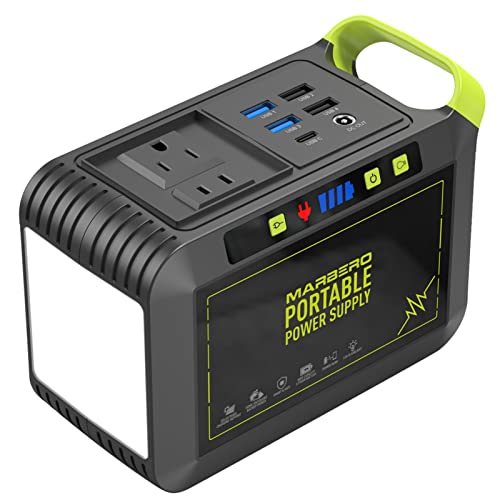
Features: 88Wh, 120W peak, 8 outputs, fast charging with included adapter, compatible with MARBERO solar panels. A compact and lightweight unit designed for quick outages, camping, and light home backup. Built-in BMS enhances safety for multiple devices. The included AC output ports support small appliances and electronics. Best for: individuals needing a small, portable backup for essential devices like phones, lights, and a router. Better for: travelers and solo campers who require ultra-portable power. Caution: Limited capacity means running high-draw appliances for long periods is not ideal.
Jackery Explorer 1000 v2

Features: 1,070Wh LiFePO4 battery, 1,500W continuous output, 3,000W surge, 1-hour fast charging option via app, durable build with a long lifespan. Best for: households needing substantial power for appliances like refrigerators, small air conditioners, or multiple devices during outages. Better for: longer outages and RV enthusiasts seeking robust performance. Caution: Heavier unit may be less ideal for truly portable use on foot trips.
DaranEner Portable Power Station

Features: 192Wh LiFePO4 battery, 300W continuous output (600W surge), USB-C PD 60W, solar charging compatibility, and a compact form. Best for: light-off-grid use, mobile work, and short-term outages. Better for: those who want a safe, long-life battery with fast USB-C charging. Caution: Not suitable for high-power appliances or devices beyond 300W running load.
LIBRIDS Portable Power Station C600

Features: 640Wh LiFePO4 battery, 600W continuous output (1200W surge), 8 ports including USB-C and AC. Includes 10ms UPS to immediately switch during outages. Best for: home backup and reliable power for CPAP machines or Wi-Fi routers. Better for: users who want a robust UPS feature in a portable package. Caution: Higher output devices may require a larger unit for longer outages.
Anker SOLIX C1000 Gen 2

Features: 1,024Wh LiFePO4 battery, 2,000W continuous output (3,000W peak), 49-minute recharge with HyperFlash, 10 ports for powering multiple devices. Best for: home backup, remote work setups, and emergency power where fast recharge matters. Better for: rapid readiness and flexible device support. Caution: Heavier and more expensive than smaller models; consider storage space and routine use.
EF ECOFLOW Delta 2

Features: 1,024Wh LiFePO4 battery, 1,800W AC output, 15 outlets expandable with optional panels, fast charging from AC. Best for: campers and households needing high versatility and expandability for longer outages. Better for: sunny locations where future expansion is anticipated. Caution: Larger footprint and higher price point relative to smaller units.
Buying Guide: How To Choose A Power Station For Outages
- Capacity and load: Match the watt-hour rating to the appliances you intend to run. For essentials like lights and phones, 600–1000Wh may suffice; for longer outages with fridges, consider 1000Wh+ with stable surge support.
- Output types: Look for a mix of AC outlets, USB-C PD, and USB-A, plus a car-style DC outlet if you plan to run a variety of devices and small appliances.
- Battery chemistry: LiFePO4 batteries offer longer life and better safety than standard lithium-ion for repeated charging cycles; they’re a good long-term investment even if heavier.
- Charging speed: Fast recharge capabilities (AC, car, solar) reduce downtime between outages. If solar charging is important, verify max input wattage and panel compatibility.
- Durability and portability: Lighter units are easier to transport for camping or travel; larger units are better for stationary home backup. Consider built-in UPS features for seamless outages.
- Solar compatibility: If you plan to use solar panels, check included solar panel compatibility, input types, and MPPT support for efficient charging.
Frequently Asked Questions
- What size power station do I need for a blackout?
It depends on your essential devices. For a basic setup (router, lights, phone charging), 400–800Wh can cover a few hours. For a fridge and lights, aim for 1000–1500Wh or more. - Is LiFePO4 safer than standard lithium for outages?
Yes. LiFePO4 chemistry generally offers longer cycle life, better thermal stability, and safer chemistry in many use cases. - Can these units run a AC fridge?
Some do, especially those with 1000W+ continuous output. Check the surge rating and the fridge’s starting wattage before power planning. - Do power stations require solar panels to work?
No, but solar input can extend usage during extended outages or while off-grid. Confirm panel compatibility and input limits. - How long do power stations last between charges?
Battery longevity depends on chemistry and usage. LiFePO4 typically handles thousands of cycles, while standard lithium varieties may have fewer cycles before capacity drops.